Wig Spray: What Each Type Does, Which Works Best for Synthetic vs Human Hair, and How to Use Them
July 30, 2026 · Marcus Vore
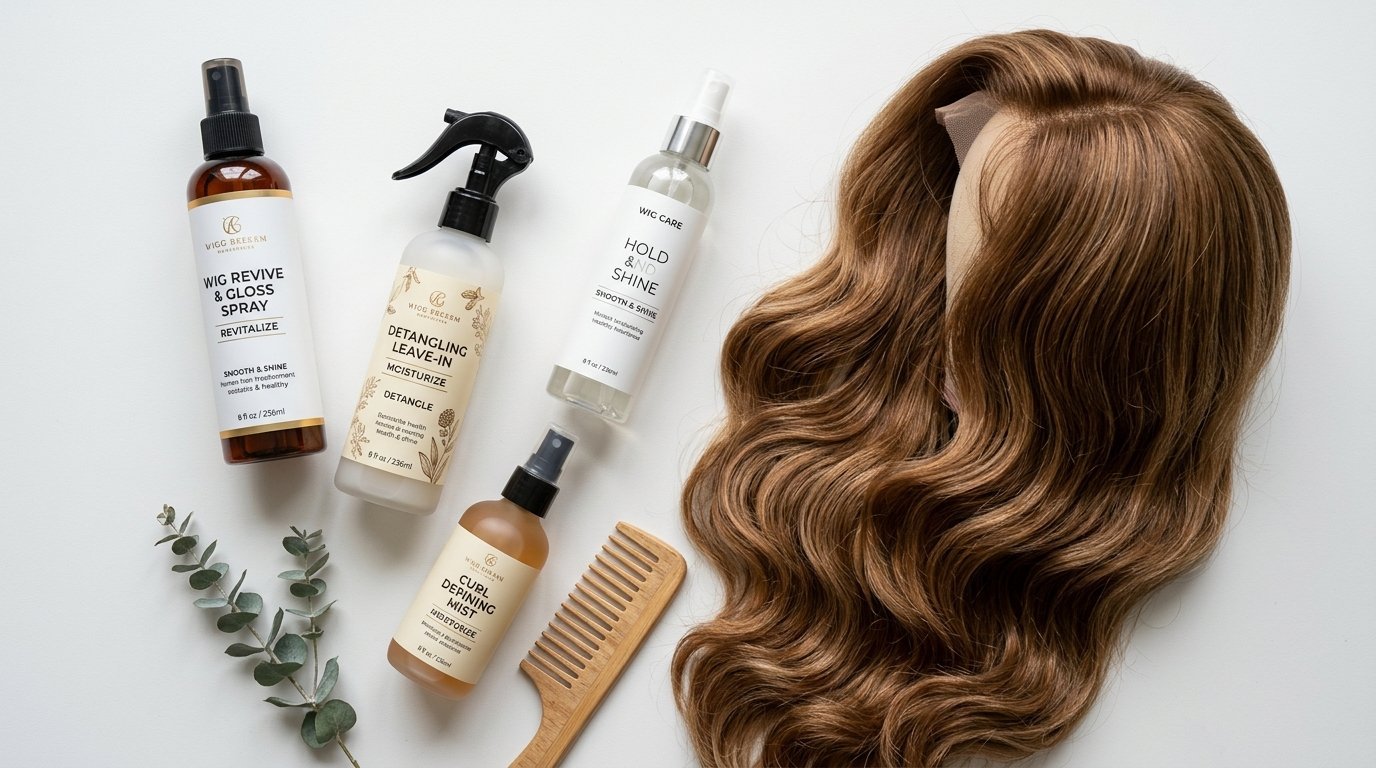
The wig spray category covers a wider range of products than most buyers expect. "Wig spray" is not a single product -- it is a category that includes detangling sprays, refreshing sprays, anti-static treatments, shine enhancers, anti-frizz serums in spray form, and holding sprays. Each addresses a different need, and the formulation appropriate for synthetic hair is often different from what works on human hair wig fiber.
The stakes of getting this wrong are meaningful. Using regular hairspray -- designed for natural hair -- on a synthetic wig coats the fiber with polymers that are designed to bond to biological hair's protein structure. On synthetic fiber, those polymers create a sticky buildup that attracts dust, makes the fiber clump together, and is genuinely difficult to remove with the products most wig owners have available. Knowing which spray to reach for and why saves wigs from preventable damage.
The Types of Wig Spray and What Each Does
Before getting into synthetic versus human hair specific products, understanding what the different spray categories do is the foundation of choosing correctly.
Detangling Spray
A detangling spray for wigs is a leave-in conditioner in spray form that reduces friction between fiber strands, making combing and brushing easier and reducing the breakage and frizz that rough detangling creates. This is the single most useful spray product for any wig -- synthetic or human hair -- because tangles are the primary mechanical damage that shortens wig lifespan, and a detangling spray before and during combing reduces that damage significantly.
Detangling spray for synthetic hair is formulated to work on polymer fiber rather than biological hair -- it reduces inter-fiber friction without the heavy conditioning agents that are intended for hair cuticles and that leave buildup on synthetic fiber. Detangling spray for human hair wigs typically contains more moisturizing agents appropriate for biological hair.
Wig Refresh / Revitalizing Spray
A wig refresh spray is used between washes to maintain the wig's appearance and reduce the buildup of environmental exposure (odors, light product residue, static) that accumulates with wear. A light mist over the wig and a gentle finger-through styling restores some of the freshly-washed appearance that wigs lose after several days of wear.
Synthetic wig spray in the refresh category typically includes anti-static agents, light conditioners compatible with synthetic fiber, and sometimes a subtle fragrance to address the odor absorption that synthetic fiber does more readily than human hair. For human hair wigs, refresh sprays often include more substantive leave-in conditioning to maintain the hair's moisture balance between washes.
Anti-Static Spray
Static is a more significant problem for synthetic wigs than for human hair wigs because synthetic polymer fiber generates and holds static charge more readily than biological hair, particularly in dry conditions. Static causes the fiber to frizz, stand away from the style, and cling to clothing and the face.
Anti-static wig spray neutralizes this charge by depositing a conductive coating on the fiber surface that allows static to dissipate rather than accumulate. These sprays are particularly useful in winter months when indoor heating creates very dry conditions, and for synthetic wigs worn in air-conditioned environments. A dedicated synthetic wig spray with anti-static properties is one of the most practically useful products in the synthetic wig care category.
Shine Spray
Shine sprays deposit a light reflective coating on the fiber surface to enhance the wig's visual appearance. For synthetic wigs, a properly formulated synthetic hair spray with shine enhancement can improve the natural appearance of the fiber by creating light reflection that more closely approximates natural hair's behavior. For human hair wigs, shine sprays can restore the glossy appearance that high-quality human hair has naturally but loses over time with washing and wear.
The risk with shine sprays on synthetic hair is using a product with heavy silicone loading -- formulated for human hair -- that creates buildup on synthetic fiber. A synthetic-appropriate shine spray uses lighter silicone variants or non-silicone shine agents that coat the fiber without accumulating. Spray lightly and evenly rather than applying heavily to any one area.
Holding Spray for Wigs
This is the category where the most confusion and damage occurs. Regular hairspray -- the kind used on natural hair for style hold -- uses film-forming polymers that bond to biological hair's surface. On synthetic fiber, these polymers do not bond in the same way but instead create a sticky surface residue that is hard to remove and progressively degrades the fiber's texture.
A holding spray specifically formulated for wigs uses lighter-hold polymers that provide some style definition without the heavy bonding designed for biological hair. These are available from wig specialty brands but are rarely found in general drugstore hairspray sections. If you need hold on a synthetic wig and cannot find a wig-specific holding spray, a very light mist of the lightest-hold regular hairspray (not a heavy-hold formula) from a distance of twelve or more inches is a less damaging improvisation than applying regular hairspray at close range -- but dedicated synthetic wig holding spray is still the correct product.
Best Wig Spray for Synthetic Hair: What to Look For
When evaluating any wig spray for synthetic hair, the key criteria:
No heavy silicones. Products listing dimethicone or cyclomethicone prominently in the ingredients are formulated for human hair cuticles and will build up on synthetic fiber over repeated use. Lighter silicone variants like cyclotetrasiloxane or dimethicone crosspolymer are less problematic.
No alcohol as a primary ingredient. High-alcohol sprays dry out and degrade synthetic fiber over time. Some synthetic hair sprays contain small amounts of alcohol as a carrier, which is generally fine; products where alcohol is one of the first listed ingredients should be avoided for regular use on synthetic hair.
Includes anti-static agents. For synthetic hair specifically, anti-static properties are more useful than conditioning agents, because static is a larger practical problem for synthetic fiber than for human hair.
Specifically labeled for synthetic hair or wigs. Products from wig specialty brands that are explicitly tested on synthetic fiber are the safest choice. General hair care products labeled "for all hair types" are designed primarily for human hair and may contain ingredients that are ineffective or harmful to synthetic fiber.
Best Wig Spray for Human Hair Wigs
Human hair wigs can use a wider range of products than synthetic wigs, because human hair responds to moisturizing agents, protein treatments, and most styling products the same way natural hair does. The best wig spray for human hair wigs focuses on moisture maintenance, because wigs do not receive the natural sebum production that keeps biological hair on the head naturally moisturized.
A leave-in conditioner spray for human hair wigs -- a lightweight formula that deposits moisture without making the hair heavy or greasy -- is the foundational human hair wig spray product. Used after washing and before styling, and sometimes as a mid-week refresher, it maintains the hair's moisture balance and reduces the brittleness that comes from washing without natural oil replenishment.
For human hair wigs, standard light-hold hairsprays and most general hair care sprays are safe to use at appropriate amounts -- the human hair in the wig responds to these products the same way natural hair does. The main consideration is avoiding very heavy products (thick serums, heavy oils) that can weigh down the wig cap and cause product buildup at the wefts, and avoiding very heavy hold sprays that are difficult to wash out and cause product accumulation at the cap.
Can You Use Regular Hairspray on a Synthetic Wig?
This is the most common question in the wig spray category, and the short answer is: not ideally, and not without understanding the tradeoffs. Standard aerosol hairspray on synthetic fiber creates residue that is difficult to fully remove. A single light application on a synthetic wig will not cause catastrophic damage, but repeated use of regular hairspray as a styling product on synthetic hair progressively degrades the fiber's texture and appearance in a way that eventually cannot be reversed by washing.
The appropriate substitutes: a dedicated synthetic wig spray with light hold, or for minor flyaway control, a light mist of water with a small amount of diluted leave-in conditioner. These achieve similar hold and control effects with significantly less risk of residue buildup than regular hairspray.
Frequently Asked Questions
How often should I use wig spray on my synthetic wig?
The practical answer depends on which type of wig spray you are using and how frequently you wear the wig. A detangling spray should be used whenever you comb or brush the wig -- before and during detangling, every time. A refresh spray can be used daily or every other day if you wear the wig daily, as a light mist to reduce static and restore appearance between washes. Anti-static spray should be used when static is visibly a problem -- in dry environments, after laundering synthetics nearby, or during winter months when indoor air is drier. Shine spray should be used sparingly -- once or twice per week at most -- because even lightweight shine products accumulate on synthetic fiber over time. The general principle is to use the minimum amount of product that achieves the result you need. Synthetic fiber does not benefit from heavy product application the way natural hair does, and more product more often is not better for synthetic wig longevity.
Can I use wig spray to fix a frizzy synthetic wig?
Yes -- an anti-frizz spray or detangling spray specifically formulated for synthetic hair can significantly reduce surface frizz on a synthetic wig. Apply the spray lightly and evenly across the affected sections, then smooth gently with your fingers or a wide-tooth comb rather than rubbing or brushing aggressively. The spray reduces the inter-fiber friction that causes frizz to spread when you try to smooth it. For more severe frizz -- where the fiber has become noticeably matted or irreversibly distorted at the surface -- spray treatment alone may not fully resolve the issue. Washing the wig with a synthetic-appropriate shampoo, applying a fabric softener conditioning rinse, and allowing it to air dry on a wig stand typically resets the fiber more completely than surface spray treatment, and is the better approach for significant frizz rather than just surface flyaways. After washing and drying, a light application of anti-frizz wig spray maintains the smoothness through subsequent wears.
If you are a wig retailer or beauty supplier looking to source wig care products including wig sprays, detangling products, and synthetic hair care at wholesale pricing, contact our team. We supply wig accessories and care products alongside our full wig inventory range.
WhatsApp: +86 17347350405
Email: hello@voretrade.com