How to Take Care of a Wig: Complete Maintenance Guide for Human Hair and Synthetic Wigs
July 31, 2026 · Marcus Vore
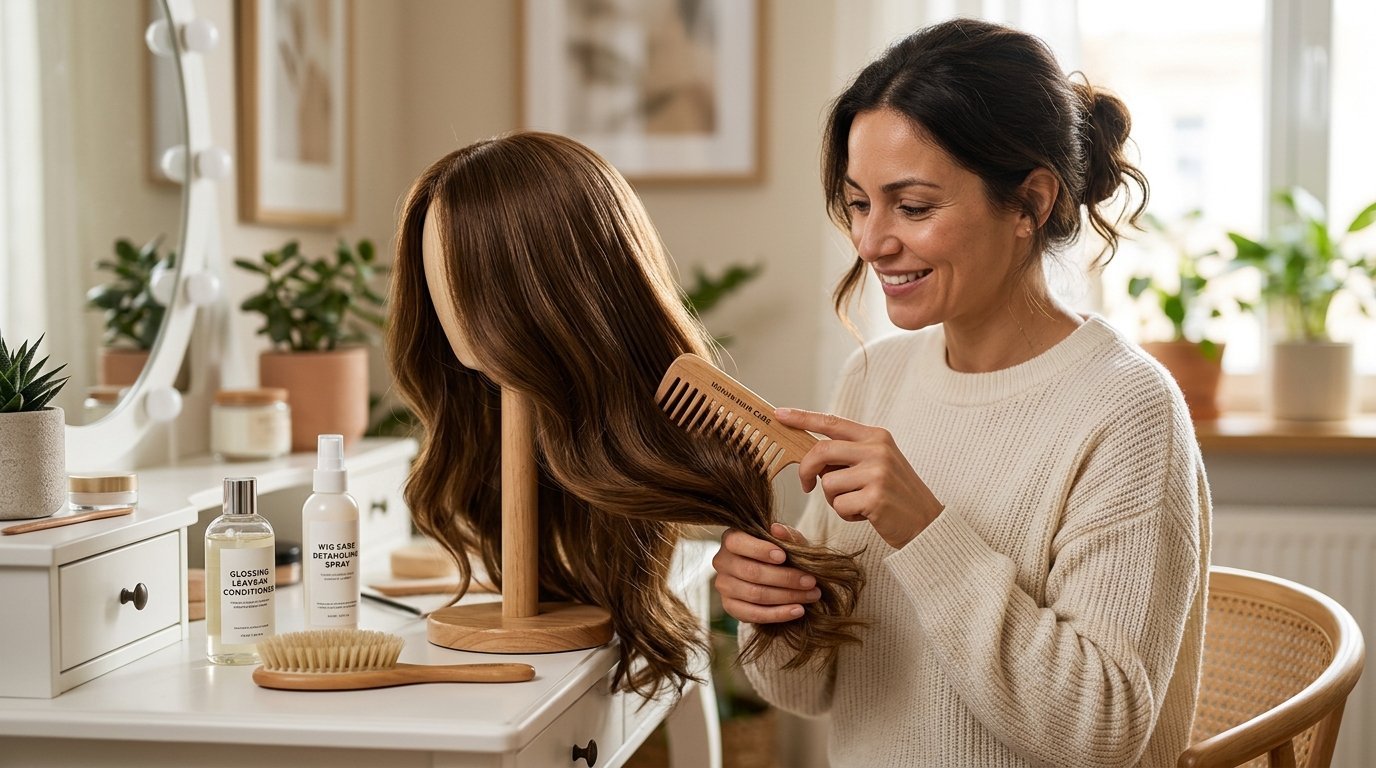
Taking care of a wig well is one of those skills that looks like it should be obvious -- it is hair, you care for it like hair -- but the practical details diverge from natural hair care in ways that matter. Some habits transfer perfectly. Others cause damage that would not happen on natural hair. And the differences between caring for a human hair wig versus a synthetic wig are significant enough that using the wrong routine on the wrong wig type produces real consequences in how the wig looks and how long it lasts.
This guide covers the full wig maintenance picture in one place: daily wear habits, washing, conditioning, drying, styling, storage, and the specific differences between human hair and synthetic wig care that determine which practices apply to which wig.
Understanding the Two Different Maintenance Needs
Human hair wigs and synthetic wigs need different care routines because the fiber types have fundamentally different properties. Human hair is biological -- it has a cuticle, it absorbs moisture, it responds to protein and conditioning treatments, it can be heat styled at normal temperatures, and it gradually dries out because it receives no natural oil from a scalp. Synthetic fiber is a polymer -- it has no cuticle, it does not absorb moisture in the same way, most standard conditioning ingredients do nothing useful on it, and standard heat tools damage it unless the fiber is specifically heat-resistant.
The maintenance practices that work well on human hair wigs often reflect natural hair care transplanted to a wig context. The maintenance practices that work for synthetic wigs require understanding what synthetic fiber actually needs -- which is different from and simpler than what natural hair needs.
How to Take Care of Human Hair Wigs: Daily Habits
Detangle before and after each wear. Human hair wigs tangle with wear, particularly at the nape and ends. Using a wide-tooth comb or a wig brush (boar bristle or mixed bristle) to work through the wig gently from ends to roots before wearing it and after taking it off prevents small tangles from compressing into the severe knots that damage the hair and require more aggressive intervention.
Apply a light leave-in conditioner before wearing. Because human hair wigs receive no natural scalp oil, the hair gradually dries out with each wear cycle. A lightweight leave-in conditioner spray applied to the damp or dry wig before wearing provides ongoing moisture support through the wear period. Apply sparingly -- too much weighs the hair down and makes it look oily.
Minimize unnecessary handling. Every time you run your fingers through a human hair wig or adjust it repeatedly during wear, you are generating friction that contributes to tangling and cuticle wear. The instinct to touch and adjust is natural but counterproductive for wig longevity. Style it when you put it on and leave it alone as much as possible during wear.
Protect it while sleeping -- or take it off. Sleeping in a human hair wig presses it against pillow fabric for six to eight hours, creating significant friction particularly at the nape and sides. If sleeping in the wig is necessary, a satin pillowcase dramatically reduces friction compared to cotton. If you can remove it before sleeping, placing it on a wig stand overnight is significantly better for its condition than wearing it through sleep.
How to Care for Human Hair Wigs: Washing and Conditioning
Human hair wigs need washing every two to three weeks with daily wear, or every four to six wears for less frequent use. The washing process is similar to washing natural hair:
Detangle before wetting -- wet human hair breaks more easily than dry hair when combed. Use lukewarm water (not hot, which weakens the weft thread over time). Apply a gentle, sulfate-free moisturizing shampoo and work through from roots to ends without circular rubbing that creates tangles. Rinse thoroughly. Apply a moisturizing conditioner from mid-lengths to ends -- avoid the cap area and weft tops where conditioner creates buildup that is difficult to fully remove. Leave for three to five minutes. Rinse completely.
Deep conditioning -- a more concentrated treatment left on for fifteen to thirty minutes -- every four to six washes maintains the hair's moisture balance over time. Human hair wigs that are not regularly deep conditioned gradually become drier, more brittle, and more prone to tangling and breakage. This is one of the biggest maintenance differences from natural hair care: natural hair gets continuous oil replenishment from the scalp; wig hair gets none, so proactive conditioning is more important.
How to Take Care of a Synthetic Wig: Daily Habits
Light daily detangling with a synthetic-appropriate comb. A wide-tooth comb with a light mist of synthetic detangling spray before and after each wear removes the day's tangles before they compress. Synthetic fiber tangles more readily than healthy human hair, making this daily habit more important for synthetic wigs than for human hair ones.
Apply refresh spray between washes. A wig refresh spray for synthetic hair -- a light anti-static, conditioning mist -- applied after each wear reduces static, maintains the fiber's appearance, and extends the time between full washes. Synthetic fiber does not need the moisture replenishment that human hair needs, but it does benefit from surface static reduction that refresh spray provides.
Avoid heat entirely (unless heat-resistant). The single most important daily habit for standard synthetic wig care is never using a heat styling tool on non-heat-resistant fiber. This includes hair dryers on high heat, flat irons, and curling irons. Heat damage to standard synthetic fiber is immediate and permanent. If your wig is labeled as heat-resistant, use the lowest tool temperature and test on an inconspicuous section before styling the full wig.
Washing and Conditioning a Synthetic Wig
Synthetic wigs need washing every two to three weeks with daily wear. Always use cool water -- warm water can distort synthetic fiber and the cap structure. Use a gentle synthetic wig shampoo or baby shampoo. Wash by gentle swirling in a basin (not by scrubbing or using running water directly on the wig). Rinse until completely clear.
For conditioning, a diluted fabric softener rinse (one tablespoon per basin of cool water, two minutes of gentle submersion, followed by a thorough rinse) provides the friction reduction and static control that synthetic fiber needs without the buildup risk of regular conditioner. A dedicated synthetic wig conditioner is the other appropriate choice.
Drying: The Rules for Both Wig Types
Both wig types share several drying rules:
- Never wring or twist a wet wig -- press gently between your hands and then between towel layers
- Air dry on a wig stand when possible -- the wig dries in the correct shape with fiber hanging freely
- Dry away from direct sunlight and heat sources
- Ensure complete drying before storing, wearing, or sleeping
Where they differ: human hair wigs can be carefully dried with a hair dryer on low-medium heat with a diffuser. Standard synthetic wigs cannot -- any heat source risks distorting the fiber. Heat-resistant synthetic wigs can use a diffuser on the lowest heat setting only.
Storage: The Final Piece of Wig Maintenance
Good wig maintenance includes how you store the wig between wears. A wig stand maintains the style and cap shape. A satin storage bag is the best alternative when a stand is not available. Both should be positioned away from direct sunlight and heat. Always detangle before storing so you are not creating more work before the next wear.
For human hair wigs in longer-term storage (weeks), a light application of leave-in conditioner before storing helps maintain the hair's moisture during the storage period. For synthetic wigs, a light anti-static spray before storing reduces the static charge that accumulates during storage.
Frequently Asked Questions
How often should I deep condition my human hair wig?
Every four to six washes is the standard recommendation -- roughly once a month for daily wearers who wash every two to three weeks. This is more frequent than most people deep condition their natural hair because wig hair has no scalp to replenish oil between treatments. Signs that a human hair wig needs deep conditioning more urgently regardless of schedule: the hair feels significantly drier or rougher than usual after washing, there is increased tangling at the ends despite correct detangling technique, or the hair appears dull or frizzy after washing and conditioning normally. For wigs made from processed or color-treated human hair -- which tends to be drier than virgin hair -- more frequent deep conditioning (every three to four washes) is often appropriate. A deep conditioning treatment can be left on for fifteen minutes to two hours depending on the product -- always follow the product's time guidance, and avoid leaving very concentrated treatments on indefinitely, which can over-condition and make the hair feel limp.
Can I use the same care products on both my human hair wig and my synthetic wig?
For most products, no -- the fiber types need different formulations and using the wrong one on either wig type produces suboptimal results or damage. Shampoo: a gentle moisturizing shampoo is appropriate for human hair wigs; a dedicated synthetic wig shampoo or baby shampoo is appropriate for synthetic wigs. Regular moisturizing shampoo on synthetic hair creates buildup over time. Conditioner: a moisturizing conditioner penetrates and benefits human hair; regular conditioner provides minimal benefit and creates buildup on synthetic fiber. Use fabric softener rinse or synthetic wig conditioner for synthetic, and moisturizing conditioner for human hair. Heat tools: appropriate for human hair wigs within normal styling temperatures; only appropriate for heat-resistant synthetic wigs within the stated temperature limit. Detangling spray: a wide-tooth comb and water-based leave-in work for human hair; a dedicated synthetic detangling spray or diluted fabric softener spray works for synthetic. The one product that applies helpfully to both types is a lightweight wide-tooth comb -- the detangling technique is the same (ends to roots, gentle), even if the spray you use differs.
If you are a wig retailer or beauty business looking to source human hair wigs and synthetic wigs alongside a full range of care products at wholesale pricing, contact our team. We supply complete wig inventory and maintenance accessories for businesses of all sizes.
WhatsApp: +86 17347350405
Email: hello@voretrade.com