Wig Caps: Every Type Explained, Which One You Actually Need, and Where to Find Them
July 6, 2026 · Marcus Vore
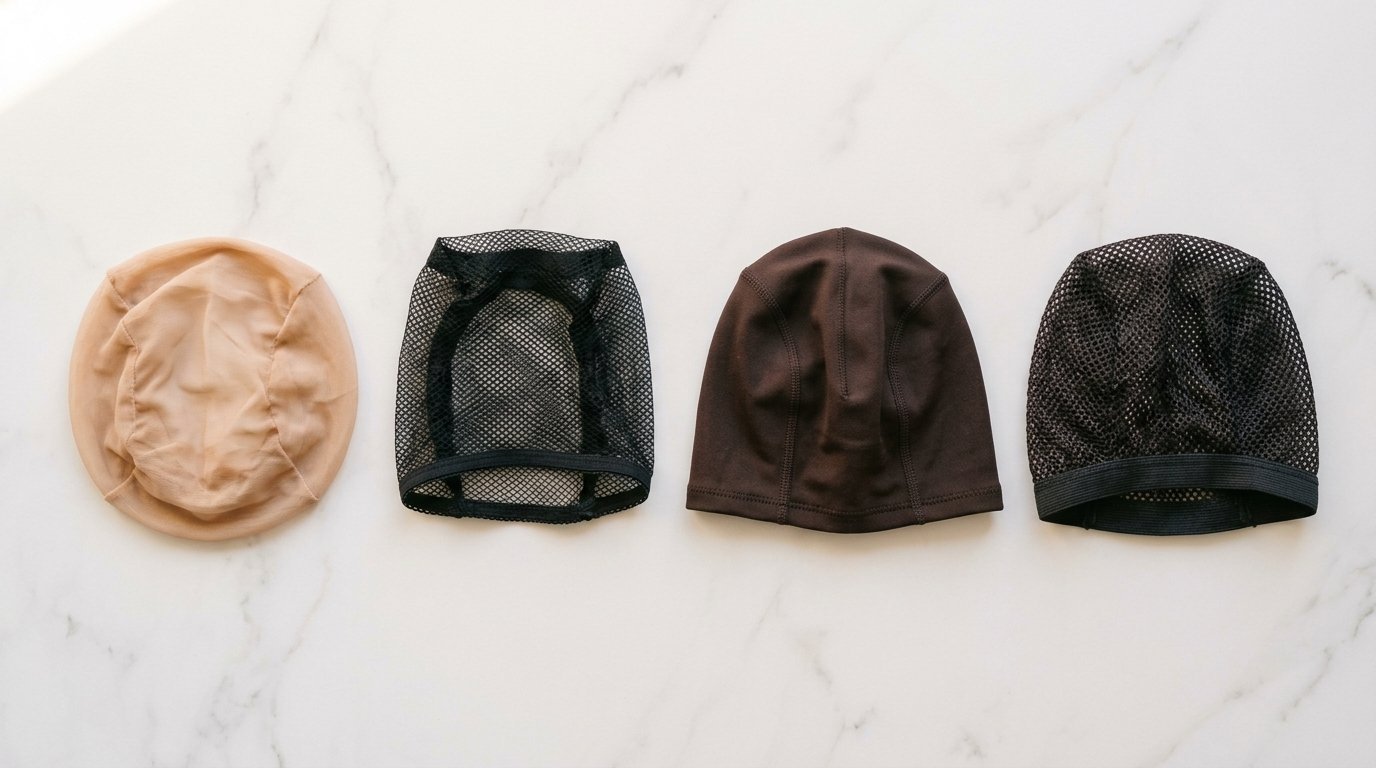
Wig caps are the least glamorous part of wig wearing and the part most people figure out by trial and error rather than by making an informed choice upfront. Most wig buyers grab whatever wig cap comes with their wig or whatever is in the checkout line at the beauty supply store, put it on, and deal with the results. Sometimes it works fine. Sometimes the cap shows at the hairline, or bunches under the wig, or slides around by midday, or leaves the head feeling damp after a few hours.
Choosing a wig cap that actually suits your hair and your wig makes every other part of the wig-wearing experience better. This guide covers what each type of wig cap actually does, which one to use for different hair situations, how wig caps for making wigs differ from wearing caps, and where to buy them.
The Basic Role of a Wig Cap
A wig cap does several things simultaneously, and understanding all of them clarifies why the choice matters:
It flattens natural hair so the wig sits smoothly on the head without creating visible bumps or uneven height. Without a cap, individual sections of hair create lumps that show through the wig, particularly at longer natural hair lengths.
It protects natural hair from friction with the wig cap lining, reducing tangling and mechanical damage from repeated wig wear and removal.
It absorbs moisture and oil that would otherwise transfer from the scalp to the inside of the wig, reducing how often the wig needs washing and extending its lifespan.
It creates a more secure base for the wig to grip, particularly important for lace front wigs where the front edge needs to stay flat against the forehead.
A cap that fails at any of these functions creates a specific, predictable problem. Understanding which function matters most for your situation tells you which type of cap to use.
Types of Wig Caps: What Each One Actually Does
Nylon Stocking Cap
The wig stocking cap is the most widely used wig cap type and the one most people think of when they think "wig cap" at all. It is a thin, stretchy nylon cap that pulls over the head like a stocking, flattening hair against the scalp and creating a smooth, uniform surface for the wig to sit on.
Stocking caps come in a range of shades -- flesh-tone, nude, beige, brown, black -- because the cap can be slightly visible at the hairline if not matched to skin tone. This is the most important color consideration for anyone wearing a lace front wig: if the cap shows through the lace at the part or the hairline, the wrong shade breaks the natural look immediately. Match the stocking cap to your skin tone, not to your hair color.
The black wig cap version of the stocking cap is specifically useful for people with very dark natural hair or darker skin tones where a lighter cap would be visible through a thin lace. A black wig cap also tends to show less at the nape and the perimeter for wearers with deeper complexions. If you are unsure whether to go with a neutral flesh-tone cap or a black wig cap for your skin tone, the rule of thumb is: darker complexion leans black, lighter complexion leans nude/beige, and medium complexion can go either way depending on the specific wig's lace shade.
Dome Cap
The dome cap is the primary wig cap type used for wig making rather than wig wearing. It is a dome-shaped, stretchy cap usually made of mesh or nylon that holds its shape and provides a surface for attaching wefts or tying individual hairs when constructing a wig from scratch. Wig caps for making wigs are almost always dome caps rather than stocking caps -- the dome shape allows the maker to work systematically around the cap, attaching hair in structured layers that create density and a natural-looking scalp.
If you are building your own wigs, dome caps are the foundation of your construction. They come in adjustable and fixed sizes; adjustable dome caps that accommodate a range of head sizes are useful for making wigs that will be fitted later, while fixed-size caps are better when you are making a wig for a specific person whose measurements you have.
Mesh Cap
Mesh wig caps are breathable open-weave caps that sit between the stocking cap and the dome cap in terms of function. They provide more breathability than a nylon stocking cap -- useful in warm weather or for anyone who finds a fully sealed stocking cap uncomfortably warm -- while still flattening hair and creating a surface for the wig. The tradeoff is that mesh caps show more readily through thin lace wigs than smooth stocking caps do, making them less ideal for HD or ultra-thin lace front applications where invisible cap wear is important.
For everyday synthetic wigs or wigs with thick lace where cap visibility is less of a concern, a mesh cap is often a more comfortable choice than a stocking cap for extended wear.
Silicone Wig Grip and Band Caps
Wig grip bands and silicone-lined cap bands are a hybrid accessory that combines some of the flattening function of a traditional wig cap with an anti-slip grip element. They wrap around the head at the hairline and hold both the natural hair down and the wig in place through silicone grip on the interior surface. These are particularly popular as a cap alternative for people who want wig security without adhesive and who do not need the full hair-flattening effect of a traditional stocking cap.
Silicone grip bands are not a substitute for a wig cap in every situation -- they do not flatten long hair effectively and they are not suitable as a base for wig making -- but for wearers with shorter natural hair or minimal hair who want adhesive-free security, they serve a specific and useful purpose.
Wig Caps for Long Hair: The Specific Challenge
A wig cap for long hair is a genuine problem that many wig guides underaddress. Longer natural hair creates more bulk to compress under a wig cap, which creates visible height and uneven surface texture that short-hair tutorials simply do not have to deal with.
The standard approach for wig caps for long hair is to cornrow or flat twist the hair first, pinning it as flat against the head as possible before applying the cap. This distributes the hair evenly around the head rather than concentrating it in a single mass at the back. The more precisely the hair is sectioned and braided before capping, the flatter and more even the result will be under the wig.
For very long hair -- past shoulder length -- even careful braiding often creates some residual height at the back. Compensating techniques include using a foam padding insert at the front of the wig to balance height front-to-back, choosing wigs with adjustable straps that can accommodate a slightly larger circumference at the back, and avoiding very flat or sleek wig silhouettes that show surface irregularity most clearly.
A wig cap for long hair in the sense of a cap specifically designed for this use case is a product that exists: extra-large stocking caps or long-hair wig caps with more generous sizing that accommodate larger volumes of natural hair without feeling tight or restrictive. These are worth seeking out if standard caps feel constricting with long natural hair tucked underneath.
Wig Caps for Making Wigs: What You Need to Know Before You Start
If your goal is to make rather than just wear a wig, the cap you start with determines much of what is possible. Wig caps for making wigs need to be sized correctly -- a cap that is too large will produce a wig with too much circumference and a cap that is too small will create tension that distorts the finished wig's shape when worn.
Standard dome cap sizes are typically available in small/medium, medium/large, and occasionally petite. Measuring head circumference before ordering caps for wig making is worth the sixty seconds it takes -- wrap a measuring tape around the head at the hairline and note the number. Most standard caps fit 21 to 22 inches comfortably; if your measurement or your client's measurement falls significantly outside this range, look specifically for adjustable or sized caps rather than assuming a standard cap will work.
The cap material also matters for wig making. Caps with a finer weave allow for more precise hair placement and tying. Caps with a coarser weave are faster to work with for wefted applications but produce a less natural-looking scalp on the finished wig. For a hand-tied wig with a natural-looking part, a fine-weave dome cap is the right starting point.
Where to Buy Wig Caps
Finding a wig cap nearby is straightforward in most areas. Beauty supply stores are the most accessible in-person source, stocking stocking caps and dome caps at low prices (typically $1 to $5 per cap for standard stocking caps, $5 to $15 for dome caps). Most stores that sell wigs carry wig caps as a standard accessory, so any wig shop in your area is likely to have at least the basic stocking cap options.
For specialty caps -- long-hair caps, silicone grip bands, or premium dome caps for wig making -- online ordering is usually more reliable than local retail. The specific sizing and construction options available online significantly exceed what most physical beauty supply stores carry. Wig supply and wig making communities online (particularly wig making Facebook groups and dedicated wig-making subreddits) regularly discuss which specific cap products work best for different applications, and these communities are an excellent source of current product recommendations.
When searching for where to buy wig caps for specific uses -- making wigs, extra-large sizes, or specific shade matching -- filtering by the specific use case in your search ("dome cap for wig making" rather than just "wig cap") returns significantly more relevant results than a general search.
Frequently Asked Questions
Do I need a wig cap to wear a wig?
You do not strictly need one, but most people find that wearing a wig cap makes a meaningful practical difference. Without a cap, natural hair tends to shift around under the wig during wear, creating bumps and instability that a cap prevents. The cap also absorbs scalp moisture and oil that would otherwise transfer to the wig lining, which extends the time between wig washes and preserves the wig's condition. The one situation where skipping the cap is most reasonable is if you have very short natural hair -- buzzed or very close-cropped -- where there is minimal hair to flatten and the wig sits relatively flat against the scalp anyway. For anyone with more than an inch or so of natural hair, the cap is worth using.
What color wig cap should I wear under a lace front wig?
The goal is for the cap not to be visible through the lace, so match the cap color to your skin tone rather than your hair color or the wig color. For light to medium skin tones, a nude, beige, or light brown stocking cap is usually the right choice. For medium-deep to deep skin tones, a darker brown or black wig cap is less likely to show through the lace as a visible lighter patch. The black wig cap is specifically designed to be invisible under wigs on deeper skin tones and should be the default choice if a lighter cap has ever been visible through your lace. HD lace wigs are more forgiving of cap color mismatch than standard lace because the ultra-thin lace blends more completely against the skin -- but getting the cap color right is still worth doing correctly even with HD lace, because at close range the difference remains visible.
If you are a beauty supply retailer or wig accessories supplier looking to source wig caps -- stocking caps, dome caps, and grip bands -- at wholesale pricing, contact our sourcing team. We work with wig businesses to supply accessories alongside wig inventory.
WhatsApp: +86 17347350405
Email: hello@voretrade.com