Wig Brush and Wig Comb Guide: How to Choose the Right Tool for Synthetic and Human Hair Wigs
August 10, 2026 · Marcus Vore
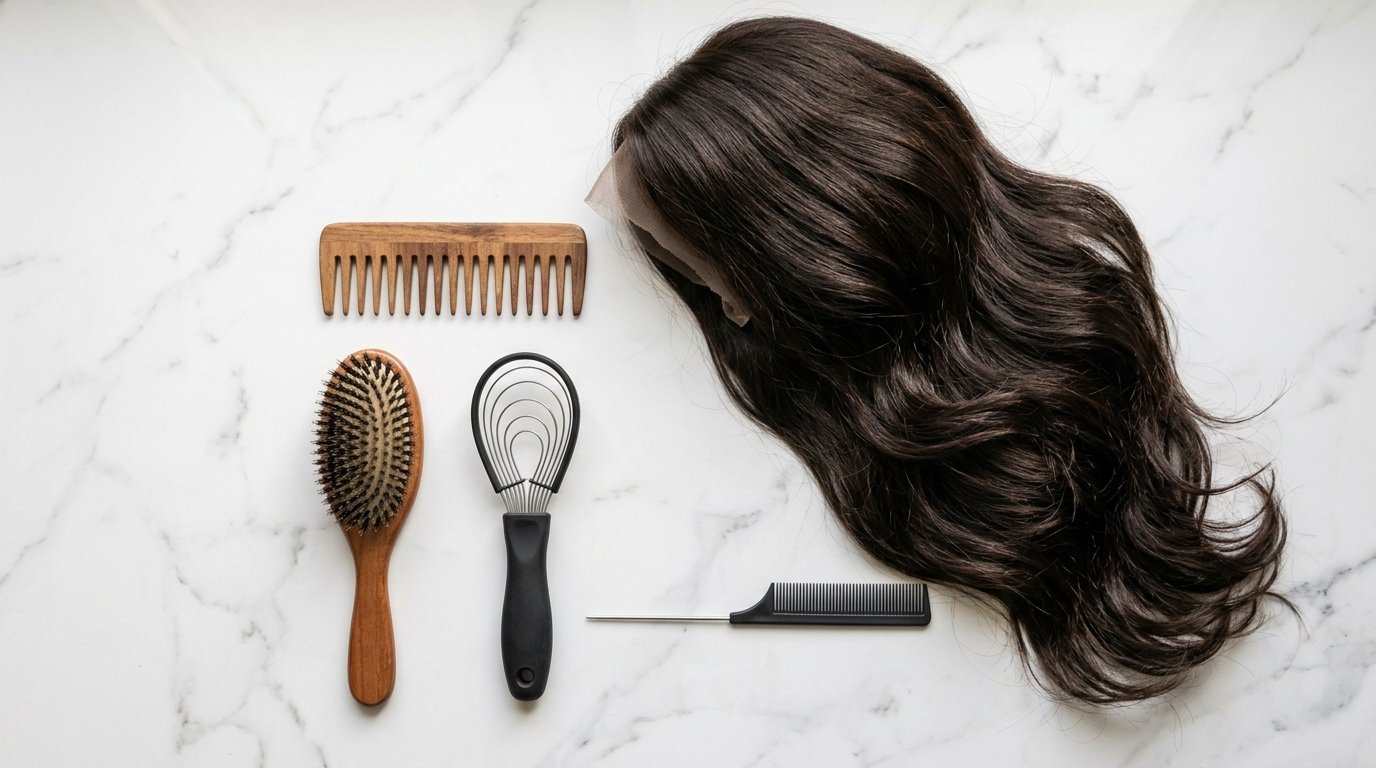
The single most common cause of avoidable wig damage is brushing. Not from brushing too often -- from brushing with the wrong tool, or with the right tool used incorrectly. A new wig owner who reaches for their regular hairbrush without thinking can introduce frizz and fiber damage to a synthetic wig in a matter of seconds that simply cannot be undone. Understanding which brushing tools work for which types of wigs, and how to use them correctly, extends the life of any wig significantly.
This guide covers the full range of wig combs and wig brushes available -- what each type is designed to do, which hair types they suit, and the correct technique for each.
Why Regular Brushes Damage Wigs
Before getting into what works, it is worth understanding why regular hairbrushes cause problems on wigs -- particularly synthetic wigs. A standard hairbrush, whether a paddle brush, a round brush, or a boar bristle brush, is designed for natural growing hair. Natural hair has a root attached to the scalp, which anchors the strand and allows significant brushing tension without pulling the hair out. Natural hair also has a cuticle structure that responds to brushing in specific ways -- boar bristles, for example, help distribute scalp oils along the shaft and lay the cuticle flat, producing shine.
A wig has none of these properties. The hair is not anchored in a scalp -- it is attached to a cap at specific weft or knotting points. Brushing with a regular brush applies tension in ways that can pull hair free from those attachment points, producing shedding. On synthetic wigs, the additional problem is static: standard brushes generate significant static electricity that causes synthetic fiber to stand up and frizz in ways that are very difficult to resolve once they occur. The combination of mechanical tension and static makes regular brushes genuinely damaging tools for synthetic wig fiber.
The Loop Brush: The Primary Synthetic Wig Brush
The loop brush (also called a wire brush or wig detangling brush) is the tool specifically designed for synthetic wig brushing. Instead of bristles, it has looped wire pins that pass through the hair fiber without catching or creating the static that bristles produce. The loops flex rather than snag, which means they detangle the hair gently without the mechanical stress that straight pins create.
A quality synthetic wig brush with loop construction is the single most important wig care tool a synthetic wig owner can have. It should be used whenever the wig needs detangling -- after wearing, before storage, and after washing while the hair air-dries on a wig head. The correct technique: hold the wig at the base near the cap edge (not at the ends), start at the tips of the hair and work upward in short strokes, progressively moving higher toward the root as the lower sections are detangled. Never start at the root and brush downward on a wig -- this drives tangles toward the ends and tightens them rather than releasing them.
Loop brushes are available across a wide price range. Inexpensive loop brushes ($5-$12) work adequately but tend to have less flexible wire loops that can still create some snagging. Better-quality loop brushes ($15-$30) have finer, more flexible wire construction that moves through the fiber more gently. For a synthetic wig that sees regular use, investing in a quality loop brush is worth the small additional cost.
In the UK market, the synthetic wig brush UK search returns several well-regarded options: the Annie Large Wig Brush, the Diane Wig Brush, and various loop brush options from specialist wig retailers such as Wig Fever and WigTypes UK carry purpose-made loop brushes suitable for British buyers who want next-day delivery options.
Wide-Tooth Combs: The Universal Wig Comb
A wide-tooth wig comb is the other essential tool in any wig owner's kit. Wide-tooth combs work on both synthetic and human hair wigs, making them the most versatile single tool available. The wide spacing between teeth allows the comb to pass through hair without catching on tangles -- the teeth find the path of least resistance through the hair rather than forcing through knots the way fine-tooth combs do.
Wide-tooth combs are particularly useful for:
- Initial detangling of a wig that has developed significant tangles -- starting with a comb before using a brush is gentler on the fiber
- Working conditioner through wig hair during washing, distributing the product evenly without disturbing the weft attachment points
- Separating and defining curl patterns in curly wigs, where a brush would disrupt curl formation
- Detangling wet human hair wigs -- a loop brush used on a wet human hair wig can cause breakage; a wide-tooth comb is gentler on wet hair
The Best Wig Brush for Human Hair Wigs
A wig brush for human hair can be a broader category than what works for synthetic wigs, because human hair wig fiber tolerates more brushing methods than synthetic fiber does. The best options:
Paddle Brush with Flexible Cushion Base
A flat, wide-surface brush with a flexible cushion base and widely-spaced pins. The cushion base gives slightly when it meets a tangle rather than dragging through it with full force, which reduces breakage. This is the closest to a conventional hairbrush that works well on human hair wigs -- it is familiar to use and produces a smooth, sleek finish on straight and wavy human hair styles.
Boar Bristle or Mixed Bristle Brush
On human hair wigs, a soft boar bristle or boar-nylon mixed bristle brush can be used to smooth and add shine after the wig is already detangled with a wide-tooth comb or paddle brush. The bristles help lay the cuticle flat, which is what produces the glossy, healthy appearance that well-maintained human hair wigs have. Do not use a boar bristle brush on tangled human hair wig -- use it as a finishing tool after the hair is already smooth.
Detangling Brush (Tangle Teezer-style)
Flexible, short pin brushes with a cushioned base that flex significantly under tension. These work well on human hair wigs and are gentler than traditional paddle brushes. They are not suitable for synthetic wigs (they still generate static and mechanical stress on synthetic fiber) but handle human hair wig detangling well for buyers who prefer a non-loop brush tool.
When to Use a Fine-Tooth Comb
Fine-tooth combs have a limited but specific role in wig care: sectioning and precision work. When you need to create a clean part, separate a specific section for styling, or work with the area immediately around a lace front hairline during installation, a fine-tooth tail comb (with the pointy tail end for sectioning) is the right tool. Fine-tooth combs should not be used for general detangling on either synthetic or human hair wigs -- the narrow spacing catches on tangles rather than releasing them, and the tension created can damage both the hair and the weft attachment points.
Correct Technique: Brush Wig Hair Without Damage
Regardless of which tool you use, the technique matters as much as the tool choice. The rules that apply universally when you brush wig hair:
- Always start at the ends, work upward. This releases tangles progressively rather than driving them toward the tips and tightening them.
- Hold the hair at the base near the cap while brushing the lower sections. This prevents the brushing force from transferring to the weft attachment points and pulling hair loose.
- Use short strokes, not long sweeping passes. Short strokes through a small section at a time are gentler and more effective than attempting to brush through the full length in a single pass.
- Never brush a wet synthetic wig with a loop brush. Wet synthetic fiber is more fragile than dry -- allow the wig to air dry on a wig head before brushing.
- For human hair wigs: detangle gently when wet with a wide-tooth comb, brush when dry. Human hair (like natural hair) is most fragile when wet and should be handled with minimum tension in that state.
Frequently Asked Questions
Can I use a regular hairbrush on a human hair wig?
It depends on the type of brush. A regular paddle brush with a flexible cushion base and widely-spaced pins can work on a human hair wig that is already largely detangled -- use it as a smoothing and finishing tool rather than a primary detangling tool. A boar bristle brush can be used as a finishing tool on a smooth human hair wig to add shine. What does not work well even on human hair wigs is a very dense-bristled brush with tight pin spacing, a round brush with high tension, or any brush used on significantly tangled hair without first working through the tangles with a wide-tooth comb. The human hair in a wig, while real hair, is not anchored in a scalp -- excessive brushing tension causes the hair to shed from the weft attachment points. This shedding is not like natural hair shedding (which regrows); shed wig hair does not grow back, meaning excessive brushing permanently reduces the wig's density over time. The practical rule: use a wide-tooth comb for detangling, then a flexible paddle or boar bristle brush for smoothing and finishing. Never use a regular brush as the primary detangling tool on a wig regardless of hair type.
How often should I brush my wig, and does over-brushing cause damage?
Yes, over-brushing causes real damage -- particularly on synthetic wigs and on the weft attachment points of any wig. The correct brushing frequency is before and after wearing (to detangle any knots that developed during wear and to smooth the wig before storage) and during washing (to work conditioner through the hair and to gently detangle before and after rinsing). Outside of these functional moments, brushing a wig that does not need detangling adds mechanical stress without any benefit. The "brush 100 strokes a day" advice that applies to natural hair does not translate to wigs -- natural hair distributes scalp oil through brushing, which benefits the hair. Wigs have no scalp oil to distribute, so repeated brushing serves only to create static, friction, and weft stress. The best wig brush routine is the minimum necessary routine: brush to detangle when the wig is tangled, and smooth gently before wearing. For short wigs that tangle minimally, this might mean only a quick comb-through before each wear. For long wigs that tangle more readily, it means careful detangling after each wear to prevent tangles from compounding into larger knots. The goal is to address tangles as they occur rather than allowing them to accumulate -- large tangled sections are harder to detangle without damage than small fresh ones.
If you are a wig retailer or beauty supply business looking to source wig care accessories -- loop brushes, wide-tooth combs, and complete wig care kits -- alongside your wig inventory at wholesale pricing, contact our sourcing team. We supply wig accessories and care products for retail businesses at competitive wholesale pricing.
WhatsApp: +86 17347350405
Email: hello@voretrade.com