Synthetic Wigs Buyer's Guide: Heat Friendly, High Quality, and What the Best Synthetic Hair Actually Feels Like
July 27, 2026 · Marcus Vore
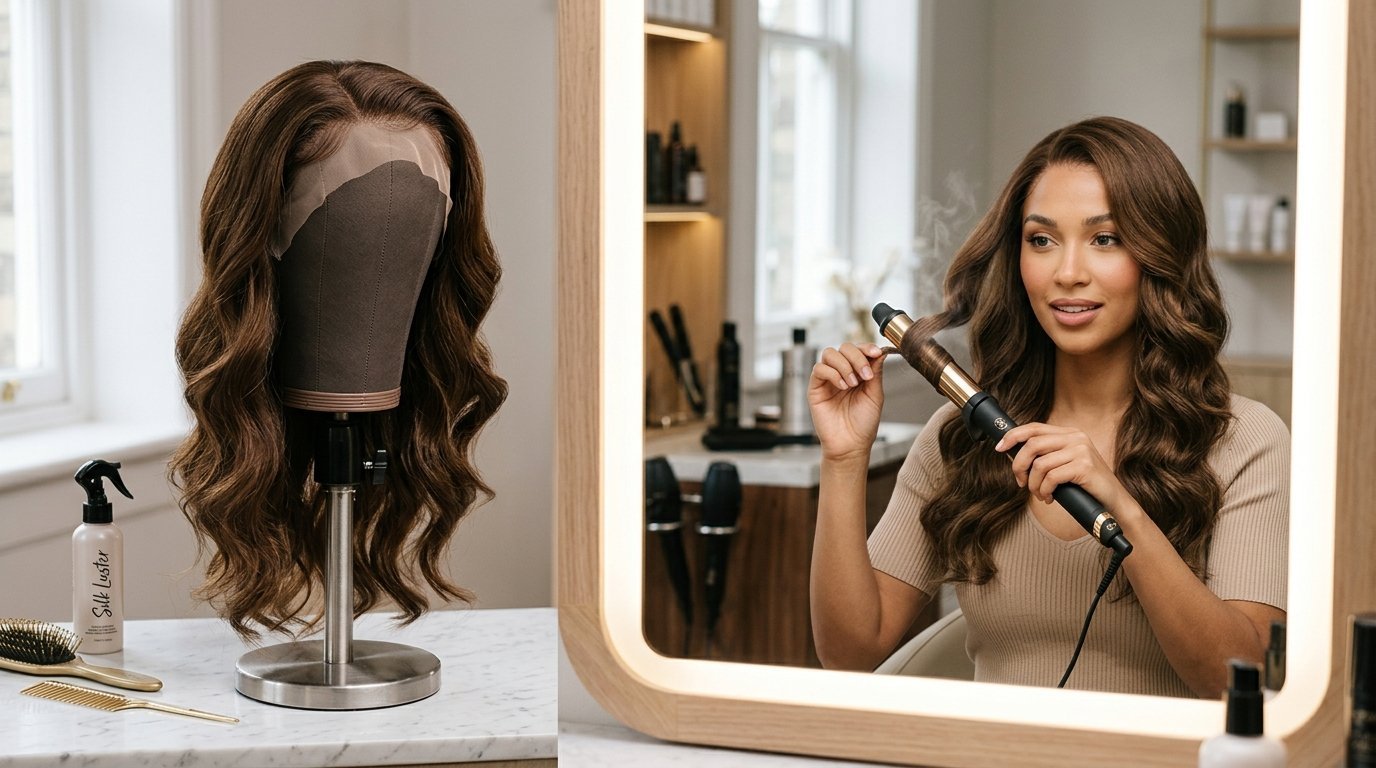
The synthetic wig market has changed more in the past decade than in the previous three combined. A decade ago, the gap between synthetic and human hair wigs was obvious to anyone who looked closely -- the sheen was different, the movement was different, and the inability to heat style meant that synthetic wigs stayed in whatever style they came in until they wore out. High quality synthetic hair that can be heat styled, that moves convincingly, and that holds up to daily wear is a relatively recent development, and it has made the category significantly more competitive with human hair at every price point.
This guide covers what actually separates high quality synthetic wigs from low quality ones, how heat friendly and heat resistant fiber works and what you can do with it, what makes a good synthetic lace front wig, and where to find the best synthetic wigs for sale online without being misled by generic quality claims that mean nothing.
What Makes High Quality Synthetic Hair Different
Not all synthetic fiber is the same, and the quality differences are real and visible. Understanding what separates good synthetic wigs from cheap ones helps you evaluate options before you buy.
Fiber texture and surface coating: High quality synthetic hair uses finer fiber with a surface treatment that mimics the light-reflective properties of natural hair rather than creating the uniform, slightly plastic sheen that cheaper synthetic fiber produces. The difference is most visible in natural light -- good synthetic hair has variation in how it reflects light across the length, similar to real hair. Cheap synthetic hair reflects light uniformly, which creates the artificial "wiggy" shine that is the most visible giveaway of low-quality synthetic.
Weight: Better synthetic wigs use fiber that is closer in weight to natural hair. Cheap synthetic fiber can be noticeably heavier or lighter than natural hair, which affects how the wig moves. Fiber that is too light creates an unnatural bounciness; fiber that is too heavy sits flat and moves sluggishly. The best synthetic wigs have fiber that moves with the wig in a way that is close to how real hair moves.
Color quality: High quality synthetic hair uses more sophisticated coloring that creates tonal variation within the fiber -- highlights and lowlights -- rather than a uniform single color. This variation is what gives natural hair its dimensional appearance, and high-end synthetic fiber attempts to replicate it. Cheap synthetic wigs in natural shades often look flat for this reason even when the specific color is correct.
Durability: Better synthetic fiber resists tangling longer and maintains its style through more washes and wear cycles than cheap fiber. A high quality synthetic wig washed and maintained carefully can last twelve to twenty-four months of regular wear. An inexpensive synthetic wig from a low-quality manufacturer may become unmanageably tangled within two to four months of daily wear.
Heat Friendly Synthetic Wigs: What This Label Actually Means
The terms "heat friendly" and "heat resistant" are used almost interchangeably in wig listings, but they refer to the same fundamental property: synthetic fiber that has been treated to withstand moderate heat from styling tools without melting, frizzing, or losing its structure.
Standard synthetic fiber -- the kind used in cheap costume wigs and many budget everyday wigs -- melts or permanently frizzes when exposed to heat above approximately 80°C (175°F). Because most heat styling tools operate well above this temperature, standard synthetic fiber cannot be safely heat styled at all.
Heat resistant synthetic wigs use fiber that can tolerate temperatures up to approximately 130-180°C (265-355°F), depending on the specific fiber formulation. This is enough to use a flat iron on a low-heat setting, a curling iron at medium heat, or a diffuser to encourage natural curl in a wavy style. It does not mean the fiber can handle the same temperatures as natural hair -- a curling iron at maximum heat will still damage heat resistant synthetic fiber. The heat tolerance is meaningful but has an upper limit that needs to be respected.
Heat friendly wigs are labeled with the maximum safe temperature for styling, though the label is not always specific enough. When possible, look for listings that specify the temperature rating in Celsius or Fahrenheit rather than the generic "heat friendly" label. If a temperature rating is not specified, start with the lowest heat setting on any tool and test on a small section at the nape (where damage is least visible) before styling the full wig.
What heat resistant synthetic wigs allow you to do that standard synthetic cannot: change the curl pattern temporarily (straight to wavy, wavy to straight), refresh a style that has relaxed with wear, and achieve styles that require heat for definition. What they still cannot do: be colored with standard hair dye, be permed, or be heat styled repeatedly at high temperatures without eventually showing wear.
Good Synthetic Wigs vs. Cheap Synthetic Wigs: The Quality Tiers
The synthetic wig market has distinct quality tiers, and knowing which tier you are buying in determines your expectations appropriately.
Budget / inexpensive synthetic wigs ($15–$60): Made from lower-grade fiber, often with minimal cap construction quality. Adequate for costume use, occasional wear, or testing a style before committing to better quality. Typically not heat resistant. Expected lifespan with daily wear: two to four months before significant tangling or style degradation.
Mid-range synthetic wigs ($60–$150): Better fiber quality with more natural movement and appearance. Many options in this range are heat friendly. Cap construction improves significantly at this tier, with better fit and more comfortable wear. This is where most daily synthetic wig wearers should start. Expected lifespan with regular care: six to twelve months.
High quality synthetic wigs ($150–$300+): The best synthetic hair available from established brands using premium fiber technology. These wigs have genuinely convincing movement and appearance that requires close examination to distinguish from human hair in some cases. Cap construction is sophisticated -- often with monofilament tops, lace fronts, or both. Heat resistant as standard. Expected lifespan with proper care: twelve to twenty-four months or more. The best synthetic wigs brand options in this tier include established names in the medical wig market (designed for alopecia and chemotherapy patients) who prioritize durability and natural appearance.
Best Synthetic Wigs Lace Front: What to Look For
A synthetic lace front wig adds a sheer lace panel at the front hairline that creates a more natural-looking hairline transition than a standard cap edge. The quality markers for best synthetic wigs lace front options are:
Lace material: Swiss lace (very thin, nearly invisible) and French lace (slightly thicker, more durable) are the two standard types. Swiss lace is more natural-looking but tears more easily; French lace is more durable for regular wear. HD lace (ultra-thin) exists in synthetic lace front wigs as well, though it is more common in human hair wigs.
Knot visibility: The knots where synthetic fiber is tied to the lace should be small and ideally bleached (lightened to be less visible against the skin). Visible dark knots at the hairline are the most common quality complaint in synthetic lace front wigs. Better quality high quality synthetic lace wigs use tighter, smaller knots and bleach them appropriately.
Lace color: Transparent or light brown lace is more versatile across skin tones than opaque or dark lace. For medium and deeper skin tones, a darker lace tone that matches the skin more closely is available from some manufacturers and looks significantly more natural than a pale lace on a darker complexion.
Pre-plucked hairline: Better synthetic lace front wigs have a pre-plucked hairline that removes some hair from the lace area to create the natural variation in hair density that a real hairline has, rather than the uniform density of an unplucked lace front.
Buying Synthetic Wigs Online: What to Watch For
Synthetic wigs online are available at every price point from every level of quality, which makes online buying both the best option for selection and the easiest place to get misled by misleading listings.
Watch for: listings that describe fiber as "human hair blend" without specifying what percentage is human hair (often essentially zero), generic "high quality" claims without specific fiber technology descriptions, product photos that are clearly heavily filtered or use professional photography to disguise mediocre fiber quality, and price points significantly below what genuine high quality synthetic wigs actually cost (a $30 wig claiming "best synthetic hair" quality is not delivering that quality).
Look for: specific fiber technology descriptions (Kanekalon fiber, Toray fiber, or named proprietary fiber types from established brands), temperature ratings for heat resistance, real buyer photos submitted with reviews rather than only professional listing photos, and brand names with established reputations that can be independently researched.
Frequently Asked Questions
Is heat friendly synthetic fiber the same as heat resistant synthetic fiber?
Yes, in practice. Both terms describe synthetic fiber that has been treated to tolerate heat from styling tools. "Heat friendly" is the more marketing-oriented term; "heat resistant" is slightly more technical. Both terms indicate the same property: the fiber can be styled with heat tools at appropriate temperatures without damage. The meaningful question is not whether the fiber is "heat friendly" or "heat resistant" but what specific temperature it can safely handle -- a good listing will specify this. At 130°C it is safe for a flat iron on low and gentle use of a curling iron. At 180°C it handles more styling versatility. At 230°C+ (which no current synthetic fiber handles safely), you would need human hair. The label alone tells you the fiber has some heat tolerance; the temperature rating tells you how much.
Can high quality synthetic wigs pass as real hair?
At a distance and in most social situations, yes -- a high quality synthetic wig in a natural color and style is not immediately identifiable as synthetic by most observers. Under close examination in good natural light, a very knowledgeable person can typically tell the difference: the movement is slightly different, the light reflection has a quality that is not quite the same as real hair, and the color -- even in high quality synthetic -- lacks the subtle micro-variation that natural hair has. The practical standard is not "could a wig specialist tell the difference at six inches in bright light" but "does this wig look natural in the settings where I'll actually wear it." By that standard, the best quality synthetic hair passes the test in most everyday and social professional contexts. The situations where synthetic is most likely to reveal itself: very close photography in bright natural light, very humid weather that causes synthetic fiber to behave differently from natural hair, and styling conditions (like swimming or heavy rain) where the fiber responds obviously differently from real hair.
If you are a wig retailer or beauty supply business looking to source high quality synthetic wigs -- heat friendly, lace front, monofilament, and everyday synthetic options at wholesale pricing -- contact our sourcing team. We supply synthetic wigs across all quality tiers alongside human hair inventory.
WhatsApp: +86 17347350405
Email: hello@voretrade.com