Synthetic Hair vs Human Hair: What Each Is Actually Made Of, and How That Changes Everything
July 28, 2026 · Marcus Vore
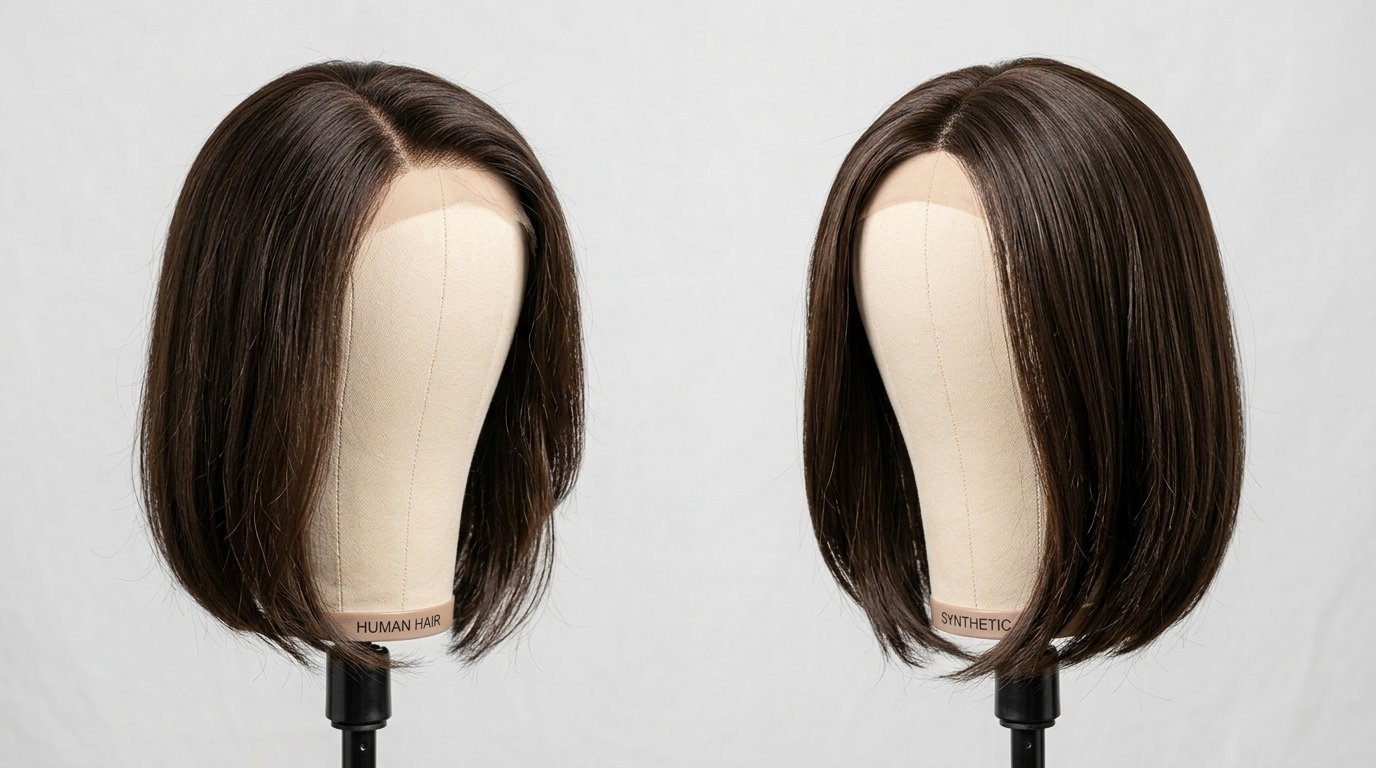
Most people buying a wig or hair extension for the first time encounter the synthetic versus human hair question immediately and find the available answers frustratingly incomplete. "Human hair is better" is repeated everywhere without much explanation of why, or under what circumstances the difference actually matters. "Synthetic is cheaper" is true but tells you nothing about what synthetic hair is or what that means for how it behaves.
The actual difference between synthetic and human hair goes deeper than price and quality labels. Understanding what each type of hair is physically made of explains why it behaves the way it does -- why synthetic cannot be heat styled beyond certain temperatures, why human hair feels different to the touch, why the same shade looks different in each, and why the right choice between them genuinely depends on what you are trying to do.
What Is Synthetic Hair Made Of?
Synthetic hair is made from manufactured polymer fibers -- primarily polyester, acrylic, and modacrylic (a modified form of acrylic that adds flame resistance). These are the same base materials used in synthetic fabrics like polyester clothing and acrylic knitwear, processed and manufactured at fiber diameters close to natural hair (typically 50 to 100 microns) and coated or treated to approximate the appearance and texture of real hair.
The coating applied to synthetic fiber is what gives it its visual characteristics. Different coatings create different sheens, textures, and behaviors. Higher-quality synthetic hair uses more sophisticated coatings that better replicate the light-scattering properties of natural hair, which is why the "artificial shine" of cheap synthetic fiber is less obvious in more expensive synthetic products.
Modacrylic fiber specifically has become the dominant material in quality synthetic wigs because of its combination of properties: it can be manufactured at fine diameters close to natural hair, it accepts dye in a wide color range, it has some heat resistance (though less than natural hair), and it is inherently flame-retardant, which matters for safety standards in wig manufacturing.
So: is synthetic hair real hair? No. Synthetic hair is manufactured plastic-based fiber, not biological hair from any source. It contains no keratin, no cuticle, no cortex -- none of the biological structures that make natural hair what it is. It is artificial hair designed to mimic the appearance of real hair, not a biological product in any form.
What Is Human Hair Made Of?
Human hair wigs are made from -- exactly as the name states -- real hair from human donors, primarily sourced from Asia (particularly India, China, and Southeast Asian countries) and processed into wefts, extensions, or wig caps. The hair is biological: it is composed of keratin protein, has a cuticle layer (the outermost protective scale structure), a cortex (the middle layer that gives hair its strength and color), and in some cases a medulla (the innermost layer).
The cuticle is what distinguishes high-quality from lower-quality human hair in the wig market. In Remy human hair -- the highest quality category -- all cuticles run in the same direction (root to tip), which mimics how hair grows naturally and prevents the tangling and matting that occurs when cuticles run in opposite directions and catch on each other. Non-Remy human hair has cuticles that have been stripped (using an acid bath) to prevent tangling, but stripped hair is more prone to dryness and breakage because the protective cuticle layer is gone.
Virgin human hair -- hair that has never been chemically processed -- is at the top of the quality hierarchy. It has all its natural cuticle intact, the color variation that comes from natural melanin distribution, and the full biological properties of hair that has not been treated with bleach, dye, or relaxers.
What Are Wigs Made Of? The Full Answer
A complete wig consists of two parts: the hair (synthetic fiber or human hair) and the cap (the base structure to which the hair is attached). Understanding what wigs are made of requires understanding both.
The cap is typically made from a combination of materials: an elastic band at the perimeter for fit, nylon or other synthetic fabric for the main cap body, monofilament mesh at the crown or top (in quality wigs), and lace (Swiss or French lace) at the front hairline in lace front wigs. The specific cap construction determines how natural the wig looks at the part and hairline, how comfortable it is against the scalp, and how long it holds up to regular wear.
The hair attached to the cap can be either machine-sewn in wefts (the most common construction method, where rows of hair are sewn onto the cap base) or hand-tied (individual hairs tied through the cap mesh by hand, which creates the most natural look and movement but is significantly more labor-intensive and expensive). Most wigs use a combination of both methods: hand-tied at the part and crown where natural hair movement is most visible, machine-wefted at the sides and back where it is less critical.
Synthetic Hair vs Human Hair: The Practical Differences
The materials difference between synthetic and human hair creates specific practical differences that determine which is appropriate for which use case.
Heat Styling
This is the most practically significant difference. Human hair can be heat styled with flat irons, curling irons, and blow dryers at normal styling temperatures because it is biological fiber that behaves like natural hair under heat. Standard synthetic fiber melts or frizzes permanently at temperatures above approximately 80°C (175°F) -- well below the operating temperature of most heat styling tools. Heat-resistant synthetic fiber extends this limit to approximately 130-180°C, but still cannot handle the highest heat settings that human hair tolerates without damage.
For wearers who regularly heat style their hair, human hair is the only practical option. For wearers who want to wear a wig in its manufactured style without changes, synthetic is adequate and more cost-effective.
Chemical Processing
Human hair can be dyed, bleached, permed, and relaxed just as natural hair can -- though the pre-processing history of the hair affects how it responds to additional chemical treatment. Synthetic hair cannot be chemically processed in any of these ways. The polymer fiber does not absorb hair dye, does not respond to perming chemicals, and is damaged rather than relaxed by relaxing agents. The color and texture of a synthetic wig are set at manufacture and cannot be changed.
Feel and Movement
Human hair feels like hair because it is hair. The texture is familiar, it responds to touch and movement the way natural hair does, and it has the weight and drape of real hair. High-quality synthetic hair comes close to replicating this feel, but close examination -- and particularly touch -- typically reveals the difference. Synthetic fiber has a slightly different surface texture from natural hair, and in warm or humid conditions it behaves differently (less responsive to humidity, holds its style more rigidly, or in some cases frays slightly at the surface).
Longevity
Human hair wigs, maintained correctly, last significantly longer than synthetic wigs -- typically twelve to thirty-six months of regular wear compared to six to twelve months for quality synthetic wigs and far less for budget synthetic options. Human hair's biological structure allows it to absorb conditioning treatments, which extends its life and maintains its appearance. Synthetic fiber degrades in a different pattern -- it does not respond to conditioning in the same way and eventually reaches a point where the fiber is matted or frizzy in a way that cannot be reversed.
Cost
The price difference between equivalent synthetic and human hair wigs is substantial. A comparable quality synthetic wig costs roughly one-quarter to one-eighth of an equivalent human hair wig. This gap reflects both the cost of sourcing and processing real hair (significantly more expensive than manufacturing synthetic fiber) and the longer lifespan of human hair (which partially offsets the higher upfront cost over time).
Synthetic vs Human Hair Wigs: Which Should You Choose?
The choice between synthetic or human hair wig depends on your specific priorities:
Choose human hair if: you heat style regularly, you want to change the color or texture, you prioritize the most natural feel and appearance, you are buying for long-term daily wear, or you are a permanent wig wearer for whom quality and longevity justify the investment.
Choose synthetic if: you wear wigs occasionally rather than daily, you want a specific fashion or fantasy color that would require expensive processing on human hair, you are on a tighter budget, you want the convenience of a pre-styled wig that holds its style without daily maintenance, or the wig is for a costume or short-term wear purpose.
Frequently Asked Questions
What is synthetic weave and how is it different from human hair weave?
Synthetic weave refers to hair extension wefts made from manufactured polymer fiber (modacrylic, polyester, or acrylic) rather than from real human hair. The weft format is the same as human hair weave -- rows of hair sewn for installation in braided track sew-ins or other extension methods -- but the fiber type creates the same practical differences as described above: synthetic weave cannot be heat styled at normal temperatures, cannot be colored, and has a shorter useful lifespan than human hair weave. Synthetic weave is significantly less expensive per bundle than human hair, which makes it appropriate for protective styles with planned short wear periods, color experimentation, and cost-sensitive installs. Human hair weave is preferred for long-term installs, heat styling flexibility, and situations where the most natural feel and appearance is required.
How can I tell if a wig is synthetic or human hair?
The most reliable test is the burn test: pull out a few strands from an inconspicuous area of the wig and hold them over a flame. Human hair burns slowly, produces a smell of burning protein (similar to burning fingernails), and leaves a crushable grey ash. Synthetic fiber burns faster, produces a chemical plastic smell, melts and drips, and leaves a hard, non-crushable bead of residue. In practical purchasing situations where burning the product is not an option, human hair wigs feel more like natural hair to the touch -- slightly rougher than cheap synthetic, with more natural weight and drape. High-quality synthetic fiber can feel convincingly natural, but when you run your fingers through it, the slight surface friction difference from synthetic fiber is usually detectable to someone who handles both materials regularly. The sheen is also different: natural hair has variation in how it reflects light (different strands catch light differently). Synthetic fiber often has a more uniform sheen, though quality synthetic fiber has improved significantly in this regard. Price is an imperfect but meaningful indicator: a wig at $30 to $80 is almost certainly synthetic; a wig at $200+ is more likely to be human hair, though not always.
If you are a wig retailer or beauty supplier sourcing both human hair and synthetic hair wigs, extensions, and accessories at wholesale pricing, contact our team. We supply both categories and can help you build inventory appropriate for your customer base.
WhatsApp: +86 17347350405
Email: hello@voretrade.com