Synthetic Hair Weave and Bundles: What to Know Before You Buy, Where to Find It, and When It Makes More Sense Than Human Hair
July 28, 2026 · Marcus Vore
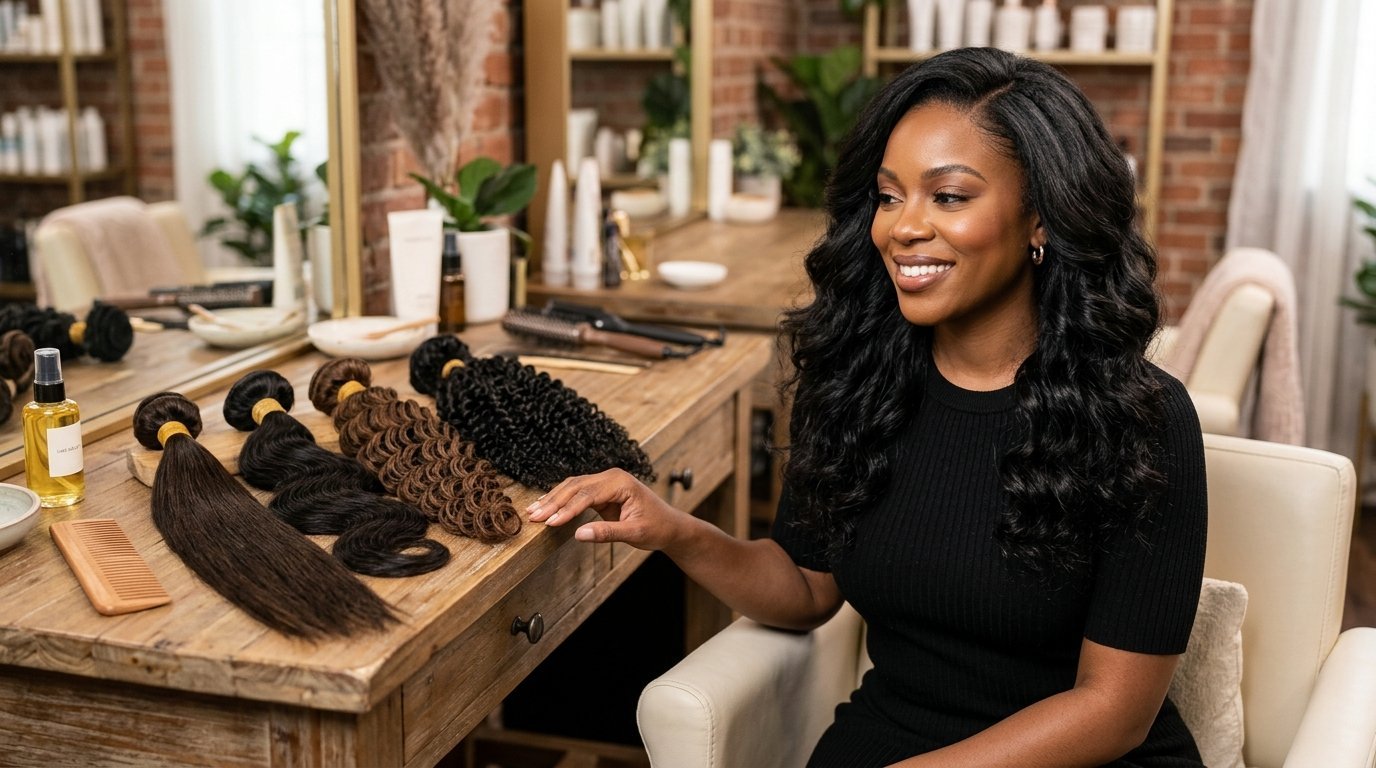
The default assumption in the hair extension market is that human hair is always better and synthetic hair is always the compromise you make when you cannot afford the real thing. That assumption is oversimplified. There are real situations where synthetic hair weave makes more practical sense than human hair bundles -- and within the synthetic category itself, the difference between quality products and low-grade material is significant enough to determine whether your install looks convincing or obviously fake.
This guide covers what synthetic weave bundles actually are, how they differ from human hair weave in ways that matter, when synthetic track hair is the right choice, how to evaluate quality before you buy, and where to find bulk synthetic hair that is worth purchasing rather than the cheapest available option at your local beauty supply.
What Synthetic Hair Weave Is and How It Is Made
Synthetic hair is manufactured fiber -- typically polyester, acrylic, or modacrylic (a flame-resistant acrylic variant) -- that has been processed to mimic the appearance and texture of natural human hair. Synthetic weave bundles are this fiber organized in wefts (sewn rows of hair), just as human hair bundles are -- the difference is the fiber type, not the product format.
Synthetic track hair (hair organized in continuous wefts for sew-in installs) and synthetic weave bundles (shorter weft sections typically sold by weight) serve the same functions as their human hair equivalents in the installation process. A stylist installs synthetic tracks in the same way as human hair tracks -- the installation technique does not change based on fiber type.
What changes is how the installed hair behaves after it is in place, how it responds to styling, how it holds up over time, and how convincingly it passes as natural hair under different conditions.
When Synthetic Weave Is the Right Choice
The cases where synthetic hair weave makes genuine sense rather than being a compromise:
Protective styles with a planned lifespan. If you are installing a weave as a protective style that you plan to wear for six to eight weeks and then remove -- giving your natural hair a rest underneath -- the lifespan advantage of human hair becomes less significant. A quality synthetic weave bundle installed correctly and maintained appropriately lasts six to ten weeks without significant degradation. If that matches your planned wear period, the additional cost of human hair does not buy you additional practical value.
Color experimentation. Synthetic hair comes in an enormous range of colors that would require extensive chemical processing to achieve on human hair -- fantasy colors, ombre gradients, unusual tones. If you want to try a burgundy or deep ocean blue weave before committing to that color on your natural hair or on expensive human hair, a synthetic weave bundle in the target color lets you see and wear the look at minimal cost.
Cost-sensitive installs. A full sew-in install requires multiple bundles, and the cost difference between synthetic and human hair multiplies across those bundles. For a six-bundle install, the difference between synthetic at $8-15 per bundle and human hair at $60-150 per bundle is $300 to $800 in total hair cost. For a wearer whose budget does not support human hair multiples, quality synthetic bundles provide a real installed look at a fraction of the total cost.
Temporary or event-specific installs. For a specific event, a vacation, a photoshoot, or any situation where you want a specific look for a defined period rather than as an ongoing everyday style, synthetic weave bundles serve the purpose well. The durability and longevity that justify the price of human hair weave are irrelevant if you are only wearing the style for two weeks.
The Quality Spectrum Within Synthetic Hair
Not all synthetic hair is the same, and the quality variation within the synthetic category is significant. The difference between the cheapest bulk synthetic hair and high-quality synthetic weave bundles is visible in the finished install and in how the hair holds up through the wear period.
Low-grade synthetic fiber has a visible sheen that reads as artificial under any close observation. The fiber is often heavier than natural hair of the same apparent volume, which makes the installed style feel weighted differently. It tangles readily with minimal wear and is typically not heat resistant. This is the material in very cheap synthetic hair packs sold at the lowest price points.
Mid-grade synthetic weave bundles use fiber that has a more natural appearance and movement profile. The sheen is less obviously artificial, the weight is closer to natural hair, and the fiber holds its texture through the wear period reasonably well. Heat-resistant options within this tier allow some styling flexibility. This is the appropriate starting point for anyone using synthetic bundles in a visible install.
High-grade synthetic hair -- sometimes marketed as "premium synthetic" or using specific fiber technology names -- produces results that can pass as natural hair in most everyday social conditions. The fiber movement, color depth, and texture match natural hair closely enough that most observers cannot tell the difference at normal distances. These products cost more than budget synthetic but significantly less than equivalent human hair bundles. For cost-conscious buyers who want a convincing result, this tier is where the best value sits.
Synthetic Track Hair: Format and Application
Synthetic track hair refers to wefted synthetic hair sold in continuous track form for sew-in installs. The track format is the same as what you would use with human hair bundles in a traditional sew-in -- the hair is sewn along braided cornrow tracks laid flat to the head.
When working with synthetic track hair in a sew-in context, there are specific considerations that differ from human hair installs:
Synthetic fiber cannot be safely bleached or dyed, so the color you buy is the color you wear. Color selection before purchase is non-negotiable -- there is no correction option after installation.
Standard synthetic hair (non-heat-resistant) should not be heat styled, including with curling irons or flat irons. This means the texture you choose -- straight, wavy, curly -- stays the same throughout the install. Heat-resistant synthetic track hair has some styling flexibility but still has an upper temperature limit that should be confirmed before applying tools.
Synthetic fiber tends to tangle at the tips with friction and movement more readily than human hair. Applying a small amount of hair oil or anti-frizz serum to the ends of a synthetic weave install regularly extends the tip quality through the wear period significantly.
Bulk Synthetic Hair: What It Is and When to Buy It
Bulk synthetic hair refers to unpackaged hair sold by weight or length without the weft structure of track hair or bundles. This format is used primarily for braiding, crochet installs, and specific creative styles where the loose hair is incorporated differently than in a traditional sew-in.
For braiding specifically, bulk synthetic hair is the standard material -- the amount of hair needed for a braided style is large, and the cost of doing it in human hair would be prohibitive for most buyers. Bulk synthetic hair for braiding is a well-established product category with widely understood quality markers: the fiber should be lightweight, tangle-resistant, and have a texture appropriate for the braid style being created.
Where Can I Buy Synthetic Hair?
For buyers asking where they can buy synthetic hair locally, beauty supply stores are the most accessible option. Most mid-size and large beauty supply stores carry an extensive range of synthetic hair weave, synthetic bundles, and bulk synthetic hair -- typically more options in synthetic than in human hair because the lower price point means higher volume and broader selection.
Online purchasing offers a wider selection, more price competition, and access to quality tiers that local beauty supply stores may not stock. The challenge with buying fake weave or synthetic weave bundles online is evaluating quality from a listing -- the same quality issues that make the difference between good and bad synthetic hair (sheen, weight, texture) are difficult to assess from product photographs. Buying from sellers with substantial verified buyer reviews, with real buyer photos of installed styles, and with clear return policies reduces the risk of online synthetic hair purchases.
Wholesale synthetic hair suppliers offer the best pricing for buyers purchasing in volume -- for stylists who install weaves regularly, braiders who go through significant bulk hair, or retailers stocking synthetic hair for resale, wholesale pricing makes the per-bundle or per-ounce cost significantly lower than retail beauty supply purchasing.
Frequently Asked Questions
How long does synthetic weave last compared to human hair weave?
A quality synthetic weave install maintained correctly typically lasts six to ten weeks before the fiber shows noticeable degradation -- tangling at the tips, loss of texture definition, or the fiber beginning to look artificial in a way it did not at installation. Human hair weave in the same install, maintained with the same care, typically lasts three to six months before comparable degradation. The lifespan difference is real and significant for wearers planning long-term installs. For wearers rotating protective styles on a six to eight week schedule, the synthetic lifespan is adequate, making the durability advantage of human hair less relevant to their specific use case. The comparison should always be made in the context of your planned wear duration rather than as an abstract quality assessment.
Can I use a curling iron or flat iron on synthetic weave bundles?
Only if the synthetic hair is specifically labeled as heat resistant or heat friendly, and only within the stated temperature limit. Standard synthetic fiber -- the kind without a heat-resistant treatment -- melts or permanently frizzes when exposed to flat iron or curling iron temperatures, causing irreversible damage to the install. If your synthetic weave bundles do not specify heat resistance, assume they cannot be heat styled. If they are heat resistant, test on a small section at an inconspicuous area with the styling tool at its lowest heat setting before applying heat to the full install. The temperature limit for heat-resistant synthetic fiber is typically in the 130-160°C (265-320°F) range -- below the default operating temperature of most styling tools, which means using the lowest heat setting is essential rather than optional.
If you are a beauty supply retailer, hair salon, or wholesale buyer looking to source synthetic hair weave, synthetic bundles, bulk braiding hair, and synthetic track hair at wholesale pricing, contact our sourcing team. We supply synthetic hair alongside human hair inventory for businesses at all volume levels.
WhatsApp: +86 17347350405
Email: hello@voretrade.com