Synthetic Curly Hair: Everything You Need to Know Before You Buy
August 11, 2026 · Marcus Vore
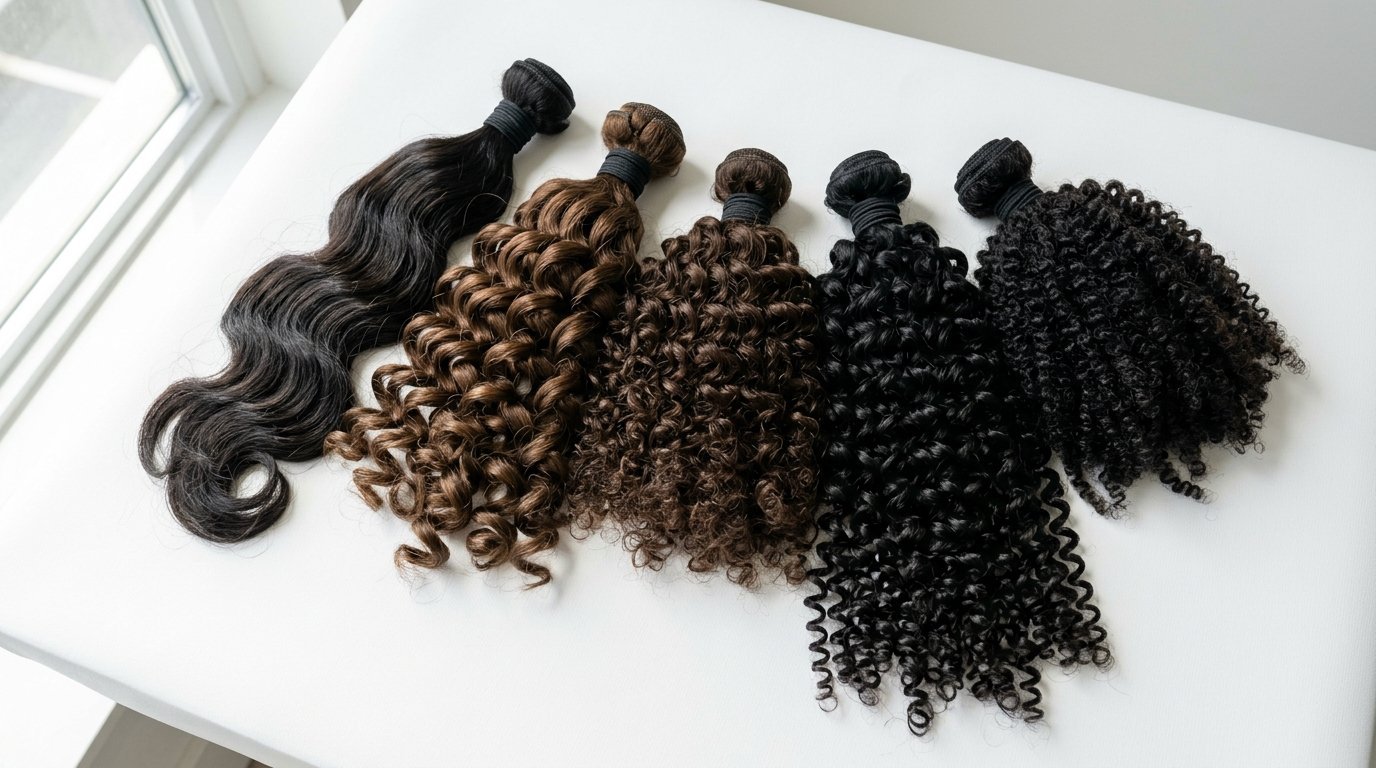
There is a version of synthetic curly hair that looks incredible for months and a version that looks terrible after two wears. The difference between those outcomes is not usually about spending more money, though quality certainly matters. It is mostly about understanding what you are actually buying, what the fiber can and cannot do, and how to treat it correctly from the moment you open the package.
This guide covers synthetic curly hair in all its forms -- from braiding fiber to crochet extensions to hairpieces -- and gives you the practical knowledge to choose the right product and make it last.
What Synthetic Curly Hair Actually Is
Curly synthetic fiber is a plastic-based polymer thread engineered to mimic the appearance and texture of natural curly hair. The curl pattern is heat-set into the fiber during manufacturing: the straight fiber is wound around a rod, heated until the polymer softens, cooled while still wound, and the resulting curl becomes a permanent part of the fiber's structure. This manufacturing method means the curl is extremely consistent and stable -- every strand of a given synthetic curly hair product has the same defined pattern -- but it also means the curl can be disrupted and is difficult to restore once damaged.
Synthetic curly hair is sold in several formats:
- Loose bulk fiber: Unattached fiber sold by the bundle, used primarily for braiding (box braids, crochet installs, and similar protective styles). The curl or wave pattern is set into the fiber but not pre-arranged into any specific style.
- Crochet hair: Pre-looped synthetic fiber designed for installation through existing braids using a crochet hook. Crochet curly hair comes in many patterns -- Marley, Senegalese twist variations, faux locs, and spring twist -- and the curl quality varies significantly across brands.
- Weft extensions: Curly synthetic fiber sewn onto a horizontal weft track, designed to be sewn, glued, or clipped into natural hair to add length and volume.
- Clip-in pieces: Small wefts with clip attachments for temporary, non-committal addition of curly volume to specific sections of natural hair.
- Full synthetic wigs: Complete curly wig constructions covered in a separate guide -- this guide focuses on the fiber and extension categories.
The Synthetic Curly Hair Fiber Quality Spectrum
Not all synthetic curly hair is made from the same fiber, and the fiber quality difference is the single largest determinant of how the product looks and how long it lasts. The market broadly divides into:
Standard Synthetic Fiber (Kanekalon Basic / Generic)
The most widely produced and least expensive synthetic hair fiber. Standard fiber has been the backbone of the African American protective styling market for decades -- Kanekalon is the best-known brand name, though many generic alternatives use similar fiber. At its best, quality standard synthetic fiber has good color consistency, acceptable texture, and reasonable longevity for short-term installs (2-6 weeks). At its worst, generic standard fiber has an obvious plastic sheen, tangles quickly, and begins to look dull and matted within weeks of installation.
For curly patterns specifically, the quality difference in standard fiber is particularly visible: lower-quality standard fiber loses curl definition through friction and movement much faster than higher-quality fiber. The same curl pattern can look vibrant and defined for a month on one brand and limp within two weeks on another.
Premium Synthetic Fiber (Toyokalon, Marley Hair, High-Temp Blends)
Premium synthetic fibers are engineered for more specific performance properties. Toyokalon fiber, developed in Japan, has a finer strand diameter and softer hand feel than standard Kanekalon and produces a more natural-looking texture -- particularly in loose wave and curly patterns where the finer fiber creates better-defined, less clumped curl structure. Marley fiber has a deliberately matte, rough texture that mimics the look of natural afro-textured hair and is specifically designed for loc styles, Marley twists, and similar applications. Premium high-temperature synthetic blends use a polymer formulation that tolerates higher heat -- these are the fibers in "heat-resistant" products that can be styled with a blow dryer or curling iron at low settings.
Human Hair-Like Synthetic (X-Pression Ultra Braid and Similar)
The upper tier of the synthetic fiber market -- fibers engineered to have a texture, movement, and appearance significantly closer to human hair than standard synthetic. These fibers typically have a finer strand diameter, more varied reflectivity (rather than the uniform plastic sheen of cheaper fibers), and greater texture complexity. They are more expensive than standard synthetic fiber, but the price difference is often justified for installs where realism at close range is important.
Reading Curl Pattern Descriptions Accurately
Synthetic curly hair is sold with curl pattern descriptions that are not always consistent across brands. The same pattern term -- "deep wave," "water wave," "kinky curly" -- can mean something slightly different from one manufacturer to the next. The most reliable approach:
- Always look at customer photos, not product photos. Product photography is shot under controlled conditions and often lightly processed to make the curl pattern look more defined and the color more vivid than the actual product. Customer-uploaded photos in real-world lighting give you the most accurate representation of what the fiber actually looks like installed.
- Look at curl diameter, not the name. The actual diameter of the curl (measured visually from photos) tells you more than the name does. A curl the diameter of a pencil is a specific, tighter pattern; a curl the diameter of a finger is a specific, looser pattern. These differences matter for how the style looks overall.
- Check whether the curl is defined or undefined. Some curly synthetic hair has sharply defined, consistent spirals; other products have a more organic, less uniform wave that looks less like a styled curl and more like natural texture variation. Both are valid aesthetics but suit different desired looks.
Color Consistency Matters More Than You Think
In curly synthetic hair specifically, color inconsistency between bundles is a significant problem that appears less frequently in straight hair. Because curly hair creates depth through the shadows in the curl pattern, any tonal variation between bundles -- one slightly lighter, one slightly cooler -- becomes amplified by that depth effect. A color mismatch that might be almost invisible in straight hair can read clearly as two different hair colors in curly installation.
When buying multiple bundles of curly synthetic hair for a single install, buy all bundles from the same batch (same dye lot) if at all possible, or from a brand with a strong reputation for color consistency across batches. In person, open and compare bundles before purchasing when the option exists.
Caring for Curly Synthetic Hair in an Install
Once installed, curly synthetic hair benefits from a consistent, simple maintenance routine:
- Moisturize the scalp, not the synthetic hair. Synthetic fiber does not need moisturizing the way natural hair does. Apply leave-in or oil to the scalp and natural hair at the roots, not to the synthetic fiber itself. Oils on synthetic fiber can make it look greasy and attract lint.
- Sleep protected. A satin or silk bonnet or satin pillowcase at night dramatically reduces the friction that causes synthetic curl frizz. Cotton pillowcases are the most damaging surface for installed synthetic curly hair during sleep.
- Refresh with water misting. A light mist of plain water (or water with a small amount of diluted leave-in conditioner) on installed curly synthetic hair helps it rebound slightly from compression or mild frizz. Scrunch upward after misting to encourage curl reformation.
- Avoid excessive manipulation. Curly synthetic hair is not designed to be restyled repeatedly. The more you handle and restyle the fiber, the faster it frizzes. Define your style once and maintain it rather than regularly reformatting.
Frequently Asked Questions
How long does curly synthetic hair typically last in an install?
The lifespan of synthetic curly hair in an installed style depends significantly on the fiber quality, the curl pattern, how the hair is cared for, and how much daily manipulation the style receives. As a practical guide: a crochet or braid-out install with quality synthetic curly fiber, protected nightly with a satin bonnet and maintained with minimal manipulation and regular scalp moisturizing, typically looks good for 4-8 weeks. Tighter curl patterns (like kinky coily fiber) tend to frizz faster than looser patterns (like body wave) because the tighter coils have more surface area to collect friction-generated frizz. Lower-quality fiber on any pattern shortens the lifespan significantly -- some low-quality curly synthetic fiber starts showing noticeable frizz within 2-3 weeks regardless of care. Investing in a recognized quality brand (rather than the cheapest generic option) is the most impactful single choice for maximizing install longevity.
Can I use regular hair products on curly synthetic hair?
With significant caveats. Most products formulated for natural curly hair -- curl creams, gels, mousses, leave-ins -- are designed to work with the protein structure of human hair and may not behave the same way on synthetic fiber. Some products that work beautifully for defining and holding natural curls will simply sit on top of synthetic fiber, creating buildup without improving curl definition, or will make the fiber look greasy rather than hydrated. The products that do work on curly synthetic hair: diluted fabric softener (either as a soaking treatment or diluted spray) helps synthetic curls feel softer and reduces frizz by coating the fiber surface; water-based leave-in conditioner misted lightly can help curls rebound from compression; lightweight mousse applied to wet fiber and allowed to air dry can extend curl definition. Products to avoid: heavy oils (build up and attract lint), alcohol-containing sprays (dry out the fiber and increase frizz), and protein treatments (designed for the structure of natural hair, they have no mechanism to work on synthetic fiber and can leave residue). The simplest effective synthetic curl maintenance product is a diluted spray of water and a small amount of regular hair conditioner -- inexpensive, widely available, and effective for refreshing synthetic curls between washes.
If you are a hair supply retailer, beauty distributor, or braiding hair business looking to source synthetic curly hair -- in bulk braiding fiber, crochet installation styles, and weft extensions -- at wholesale pricing, contact our sourcing team. We supply synthetic curly hair and extension products for retail businesses at competitive wholesale pricing.
WhatsApp: +86 17347350405
Email: hello@voretrade.com