Mesh Wig Caps and Netted Wig Caps: When Breathability Matters More Than Invisibility
July 14, 2026 · Marcus Vore
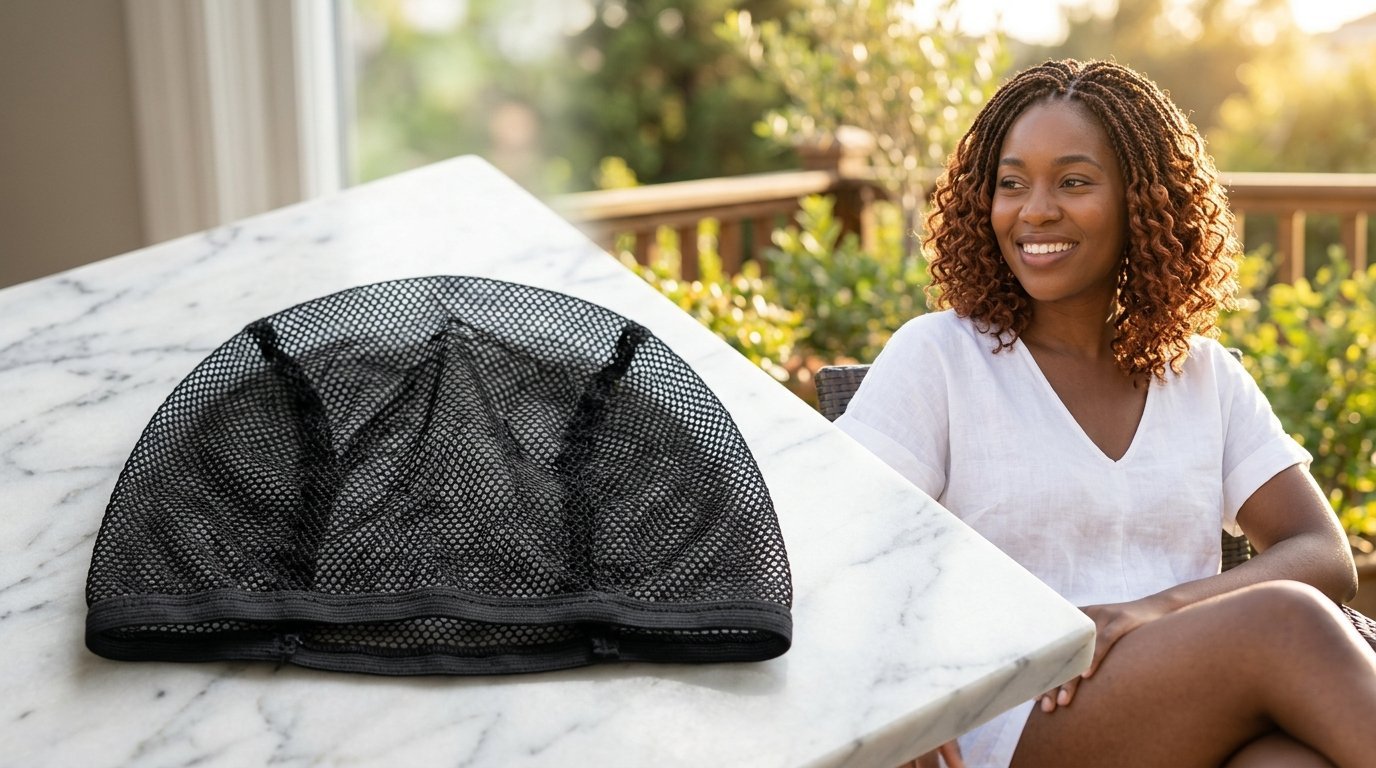
Walk into any beauty supply store and the wig cap section will have two or three options at most, usually a standard nylon stocking cap and something labeled "mesh" or "net." Most buyers grab whichever is cheaper or whatever they have used before without thinking too hard about the difference. In most situations, that works out fine. But there are specific circumstances where the mesh wig cap does something the nylon cap cannot, and knowing what those are makes the choice more than a matter of habit.
This guide covers what mesh and netted wig caps actually are, how they function differently from solid nylon caps, who benefits most from the open-weave construction, and the situations where the breathability advantage of a mesh cap for hair outweighs its limitations.
What a Mesh Wig Cap Is and How It Differs from Nylon
A mesh wig cap uses an open-weave construction rather than the knitted or woven solid fabric of a standard nylon stocking cap. The open weave creates small gaps throughout the cap's surface -- the defining feature that gives mesh caps their breathability advantage and their primary limitation.
In construction terms, mesh wig caps range from very fine mesh (small openings, more compression, slightly less breathable but more effective at holding hair flat) to coarser mesh (larger openings, better airflow, less effective compression for thick hair). The specific mesh size used in a cap determines how it performs across the relevant criteria: hair compression, airflow, visibility under wigs, and comfort against the scalp.
A standard nylon stocking cap, by contrast, is made from a continuous knitted fabric with no intentional openings. It compresses hair more effectively because there is no gap for hair to push through, and it is less visible under thin lace because it presents a uniform color surface rather than a textured grid. What it cannot do is allow airflow, and in warm conditions or for extended wear, this is where the nylon cap's sealed construction becomes a noticeable disadvantage.
The Breathability Advantage: When It Actually Matters
The primary reason to choose a mesh wig cap over a nylon one is the breathability the open weave provides. Air can move through the mesh, which means:
The scalp stays cooler during wear. A sealed nylon cap traps heat against the scalp, which becomes increasingly uncomfortable in warm weather or during physical activity. A mesh wig cap allows heat to dissipate, which reduces the temperature buildup that makes extended wig wear uncomfortable in hot conditions. For anyone wearing a wig through a warm summer day, the difference between a nylon cap and a mesh cap in terms of scalp comfort can be significant.
Moisture evaporates more effectively. Scalp perspiration under a sealed nylon cap stays trapped against the skin, creating a damp, uncomfortable environment that can also affect scalp health with repeated daily wear. A netted wig cap allows some of that moisture to escape through the weave, which keeps the scalp drier and reduces the buildup that nylon caps accumulate more quickly.
Hair underneath stays healthier with regular wear. The combination of better airflow and reduced moisture retention creates a more favorable environment for natural hair under the cap. For wig wearers who wear a wig daily and are concerned about the condition of their natural hair underneath, the mesh cap's more breathable environment is a genuinely meaningful benefit.
Where a Mesh Cap for Hair Falls Short
The breathability advantage comes with real tradeoffs, and being honest about them matters for making the right choice.
Less Effective Hair Compression
A mesh wig cap compresses natural hair less effectively than a solid nylon cap, particularly for longer or thicker hair. The openings in the mesh allow hair to push slightly through the weave under the weight and friction of the wig sitting on top, which can create slight irregularities in the surface beneath the wig. For wearers with very short natural hair, this is irrelevant -- there is not enough hair to create meaningful surface irregularity regardless of cap type. For wearers with long or thick natural hair, the nylon cap's better compression may produce a flatter, more even surface for the wig to sit on.
More Visible Under Thin Lace
A mesh wig cap has a texture that is more visible through thin or HD lace than a smooth nylon cap. The grid pattern of the mesh can read through ultra-thin lace at close range as a slight texture where a smooth nylon cap would not. For standard lace wigs where the lace itself creates enough visual coverage, this is typically not an issue. For HD lace and ultra-thin lace front wigs where the goal is maximum invisibility at the hairline and part, a smooth transparent or nylon cap will produce a cleaner result than a mesh cap.
Slightly Less Grip Surface
Some wigs rely partly on friction between the cap's surface and the interior of the wig for secondary security. A mesh cap's textured surface creates slightly different friction than a smooth nylon cap, which can affect how the wig sits for wearers who are not using any additional adhesive or grip element. This is a minor factor for most wearers but worth knowing if wig security without adhesive is a priority.
Who Should Use a Mesh Wig Cap
Understanding who benefits most from a mesh wig cap makes the choice clearer:
Wearers in warm climates or during summer months. The breathability advantage is most valuable when ambient temperature is high. Someone wearing a wig in Phoenix in July experiences the scalp heat buildup of a nylon cap significantly more than someone wearing in Seattle in October. If your wig wearing is concentrated in warm weather or warm environments, the mesh cap's thermal advantage is worth the tradeoffs.
Active wig wearers. Anyone who exercises, works outdoors, or engages in activities that elevate scalp temperature and perspiration will find the mesh cap more comfortable for those use cases than a nylon cap. The reduced moisture retention against the scalp during activity is a practical comfort improvement.
Daily wearers focused on scalp health. Regular wig wearers who are attentive to the condition of their natural hair and scalp often prefer the mesh cap's more breathable environment for daily wear, supplemented by a nylon cap for situations where maximum compression or HD lace invisibility is needed.
Wearers with short natural hair. The compression advantage of a nylon cap matters less when there is less hair to compress. For wearers with very short or buzzed natural hair, the mesh cap performs comparably to nylon in terms of creating a flat surface under the wig, while offering the breathability benefit the nylon cap does not provide.
Using a Mesh Cap for Hair Correctly
A few practical notes on getting the most from a mesh wig cap:
If your natural hair is longer, braid or cornrow it before applying the mesh cap -- the same preparation you would use with a nylon cap, but even more important with mesh because the open weave is less forgiving of loose hair that can push through. The mesh cap works best when the hair underneath is as flat and contained as possible before the cap goes on.
If you are wearing the mesh cap under an HD or thin lace wig, position the front edge of the mesh cap slightly behind your natural hairline rather than at it -- this reduces the chance of the mesh texture showing through the lace at the front hairline area where visibility is highest.
A netted wig cap can be used effectively as part of a layered cap system -- a mesh cap for hair underneath for breathability, topped with a thin stocking cap or wig grip band at the hairline for additional compression and security at the perimeter. This combination addresses both the breathability need and the compression need without fully sacrificing either.
Wig Making vs. Everyday Wear: Different Mesh Caps for Different Purposes
It is worth distinguishing between mesh caps used as a wig-wearing accessory (discussed above) and mesh or net caps used as a wig making base. In wig making, a dome-shaped mesh cap is the foundation onto which wefts or individual hairs are attached during construction. These wig making mesh caps are heavier, more structured, and hold their dome shape -- they are not the lightweight flat mesh wearing caps described in this guide. If you are searching for a mesh cap for wig making purposes, look specifically for "dome cap" or "wig making cap" rather than the wearing-cap versions, as the two products are designed for entirely different applications.
Frequently Asked Questions
Is a mesh wig cap better than a nylon cap for everyday wear?
Better depends entirely on your priorities and conditions. If everyday comfort and scalp breathability are your primary concerns -- particularly if you wear your wig for eight or more hours in warm environments -- a mesh wig cap is genuinely more comfortable for most people than a sealed nylon cap. If maximum hair compression, invisibility under thin lace, or the smoothest possible surface under the wig are your priorities, the nylon cap is the better choice. Many everyday wig wearers end up using both: a mesh cap on warm days or during active periods, and a nylon cap for situations where appearance precision matters more than comfort. Neither is universally superior -- they optimize for different things, and knowing which thing matters more in a given situation tells you which cap to reach for.
Can I use a mesh wig cap under a lace front wig?
Yes, and many people do. The practical question is whether your specific lace is thin enough that the mesh texture shows through in ways that bother you. Under standard lace -- not HD or ultra-thin -- a mesh cap typically does not create a visible texture issue at normal wearing distances. Under HD lace, a coarse mesh may create a slight visible grid at the part or hairline under close scrutiny. The simplest test: put on your mesh cap, put on the wig, and look at your hairline and part in natural daylight at arm's length in a mirror. If you cannot see any texture variation, the mesh cap is fine for your specific lace. If you can see a faint grid, a smoother cap -- a fine nylon or transparent cap -- will produce a cleaner result under that specific lace.
If you are a beauty supply retailer or wig accessories supplier looking to source mesh wig caps, netted wig caps, and related accessories at wholesale pricing, contact our team. We supply a full range of wig accessories alongside wig inventory.
WhatsApp: +86 17347350405
Email: hello@voretrade.com