Long White Hair Wigs and Men's White Wigs: Styles, Uses, and How to Choose the Right One
August 10, 2026 · Marcus Vore
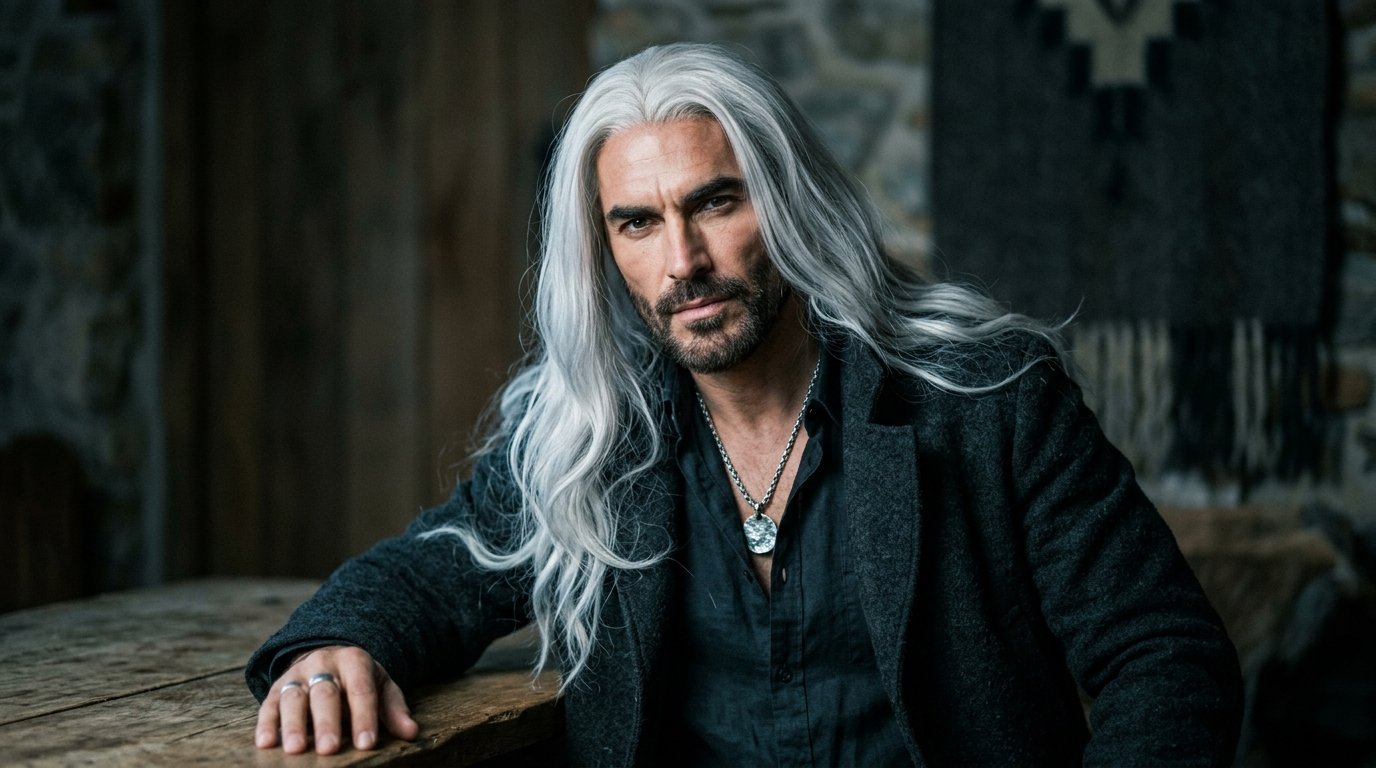
White hair carries more cultural weight than almost any other hair color. In real life, it signals age and wisdom. In fiction -- from fantasy epics to anime to video games -- white-haired characters are almost systematically depicted as powerful, mysterious, or fundamentally different from everyone else around them. The visual shorthand has become so established that a long white hair wig on a man immediately suggests something significant: an elder, a magic user, an antihero, a figure operating by different rules.
That combination of cultural resonance and visual impact has made white wigs one of the most searched wig categories for men. Whether the goal is cosplay, performance, creative expression, or theatrical costume, a white wig delivers one of the strongest visual statements available. The challenge is making sure the wig actually delivers that impact rather than looking like a Halloween prop.
The Different Shades of White: What "White" Actually Means in Wigs
White is not a single shade in the wig market. Understanding where on the white spectrum your target falls significantly affects the search and evaluation process:
Pure White (Bright White)
True bright white -- no yellow, no gray undertone, just clean white. This shade is almost exclusively synthetic in the wig market because achieving and maintaining true white in human hair requires the most extreme bleaching process possible. Pure white wigs read as the most dramatic and obviously fashion-forward choice. They are used heavily in cosplay for characters with iconic white hair designs (where the white must be clean and vivid rather than muted) and in theatrical and performance contexts where maximum visual impact at distance is the goal.
Silver-White (Cool Silver)
A white with distinct gray undertones that reads more as bright silver than pure white. Silver-white is the most versatile shade in the white family for a mens white wig -- it looks more natural than pure white (because naturally aging hair goes silver rather than pure white in most cases), photographs beautifully, and suits a wider range of skin tones. Silver-white is available in both quality synthetic and human hair constructions.
Warm White (Off-White, Ivory)
A white with subtle yellow or cream undertones. Warm white can look beautiful on men with warm skin tones, where the slight warmth in the hair harmonizes with the skin rather than contrasting starkly. It is less common as a pre-made wig color and more commonly appears as a toning variation in human hair wigs where the bleaching process has not been neutralized to a cool or neutral white.
Salt-and-Pepper (Mixed Gray-White)
Not truly white but often searched alongside white wigs: a blend of white and dark strands that creates the realistic appearance of naturally transitioning hair. Salt-and-pepper wigs for men are the most natural-looking option in the white/gray family and are particularly popular for theatrical roles, older character cosplay, and hair loss coverage for men whose natural hair was already going gray before they experienced hair loss.
Uses for Men's White Wigs: Matching the Product to the Purpose
Cosplay and Character Portrayal
The largest driver of demand for mens long white wigs is cosplay. The number of beloved white-haired male characters across anime, gaming, and fantasy fiction is substantial -- iconic protagonists and antagonists from major anime series, legendary characters from role-playing games, and classic fantasy archetypes all wear long white or silver hair as a defining visual trait. For cosplay, the priorities are:
- Shade accuracy: Different characters have distinctly different white shades -- some have cool silver-white, some have warm ivory-white, some have pure bright white. Use character reference art rather than generic color names to evaluate shade accuracy.
- Style accuracy: Many white-haired characters have highly distinctive hair shapes -- specific lengths, layering, bangs configuration, or volume distribution. Pre-styled wigs designed for specific characters are almost always more accurate than generic long white wigs that require heavy restyling.
- Convention durability: A long white wig worn for a full convention day experiences significant tangling, compression, and environmental exposure. Higher-quality synthetic fiber with good tangle resistance is worth the additional cost for convention use.
Theatrical and Performance Use
White wigs are a staple of theatrical costuming for characters of advanced age, supernatural origin, or particular authority. For stage performance, the priorities shift slightly from cosplay: the wig needs to read clearly and consistently from the audience (which may require more vivid, higher-contrast white than looks good at close range in photos), must stay in place during active movement, and must hold up through multiple performances with professional care between them. Human hair wigs are generally preferred for professional theatrical use because they can be styled and restyled by costume departments far more extensively than synthetic wigs can.
Fashion and Creative Expression
White hair on a man is a genuine fashion statement that goes beyond cosplay and theatrical contexts. Men in creative fields, in music, in fashion, and in visual art sometimes wear white wigs as a deliberate part of a signature aesthetic -- a complete visual identity rather than a character reference. For this use case, a male white wig in human hair at medium to long length, worn with quality lace front construction for a natural hairline, produces the most convincing and wearable result.
Aging Character Costumes
Halloween, costume parties, theatrical events, and film productions frequently require men to portray significantly older characters. A white or silver wig (often combined with aging makeup) is the most immediate visual signal of advanced age. For this use case, quality requirements are lower than for convention cosplay or professional theatre, which is where the broad range of lower-cost synthetic white wigs serves adequately.
What Makes a Long White Wig Look Real vs. Cheap
White hair is particularly unforgiving of cheap construction because the color shows every flaw in the fiber texture:
- Fiber sheen: Cheap synthetic white wigs have a bright, plastic-like reflectivity that reads obviously as synthetic in any lighting. Quality synthetic white wigs use fibers with a more matte, diffused light reflection that mimics the way real silver or white hair catches light. The difference is immediately visible in side-by-side comparison.
- Shade consistency: Cheap white wigs often have inconsistent dyeing that produces subtle yellow or blue patches that are more visible against white than they would be against a darker color. Look for consistent, even color throughout in customer photos.
- Fiber movement: White hair should move with a certain lightness. Cheap fibers in white wigs often clump or move as a single mass rather than with the individual strand separation that makes white hair look like real hair.
- Lace quality at the hairline: For a mens long white wig worn in fashion or performance contexts, the hairline is closely scrutinized. Poor lace quality or an improperly pre-plucked hairline is especially visible against white hair, where the contrast between light hair and dark lace backing is high.
Caring for a White Wig
White wigs require some additional care considerations compared to darker-colored wigs:
- Avoid yellowing: White synthetic fiber is susceptible to yellowing from UV exposure, certain styling products, and storage near heat sources. Store white wigs in a cool, dark space away from direct sunlight, and avoid oil-based styling products that can leave yellow residue on white fiber.
- Use purple-toning products for human hair white wigs: Human hair white wigs can develop warm (yellow) undertones from oxidation and environmental exposure. A diluted purple or violet shampoo applied occasionally neutralizes these warm undertones and refreshes the cool, clean white appearance.
- Handle with clean hands: Natural skin oils and product residue transfer more visibly onto white hair than onto dark hair. Handling a white wig with clean, dry hands reduces the risk of transferring oils that create dull patches on white fiber.
Frequently Asked Questions
What is the difference between a white wig and a silver wig for men, and which looks more natural?
The practical distinction is in the undertone and brightness of the color. A white wig is a pure or near-pure white -- no gray dilution, maximum brightness. A silver wig has gray undertones mixed into the white base, which creates a cooler, slightly more muted appearance. In terms of which looks more natural on a man, silver almost always wins. Natural aging in human hair produces silver hair, not bright white -- the silvering process adds gray tones to the hair as pigment production decreases, which is why silver-haired men look natural and distinctive rather than dramatically striking the way pure white would. A mens white wig in silver-white reads as a very distinguished, silver-haired man at a glance, while a pure bright white wig reads as clearly artificial or theatrical at the same glance, even at a distance. For any use case where natural appearance is the priority -- fashion wear, hair loss coverage, theatrical roles portraying a realistically aging character -- silver-white is the more convincing choice. For cosplay and performance where the white is referencing a character or serving a theatrical purpose where realism is not the primary goal, pure white or near-white produces the stronger visual impact that those contexts require.
Can a long white men's wig be styled or cut to match a specific character's hair?
Human hair long white wigs can be cut and heat-styled by a skilled stylist to match almost any character reference, subject to the base length being sufficient to achieve the desired cut. If the wig is long enough, a stylist can cut layers, shape bangs, create specific volume distribution, and use heat tools to add waves or specific texture -- producing a result much closer to character accuracy than a pre-styled wig that only approximately matches the reference. The limitation is length: you can remove length but not add it, so starting with a wig longer than the character's hair and cutting down is the right approach. For synthetic long white wigs, cutting is also possible but styling options are more limited (no heat unless the fiber is specifically heat-resistant) and cutting synthetic fiber produces a blunt, slightly stiff cut at the ends that can look less natural than cut human hair. For cosplayers who need precise character accuracy and are willing to invest in the process, a longer human hair white wig that is then professionally cut and styled to match the character reference produces better results than any pre-styled synthetic option. For buyers who want accuracy without that investment, purpose-built character cosplay white wigs that have been pre-styled to match specific designs are the more practical choice.
If you are a wig retailer, theatrical supply house, or cosplay merchandise distributor looking to source long white hair wigs and men's white wigs in both synthetic and human hair at wholesale pricing, contact our sourcing team. We supply white wigs and fashion color options for retail businesses at competitive wholesale pricing.
WhatsApp: +86 17347350405
Email: hello@voretrade.com