Lace Front Wig Styles and Hairstyles: The Best Looks for Straight, Frontal, and Lace Wig Styling
August 1, 2026 · Marcus Vore
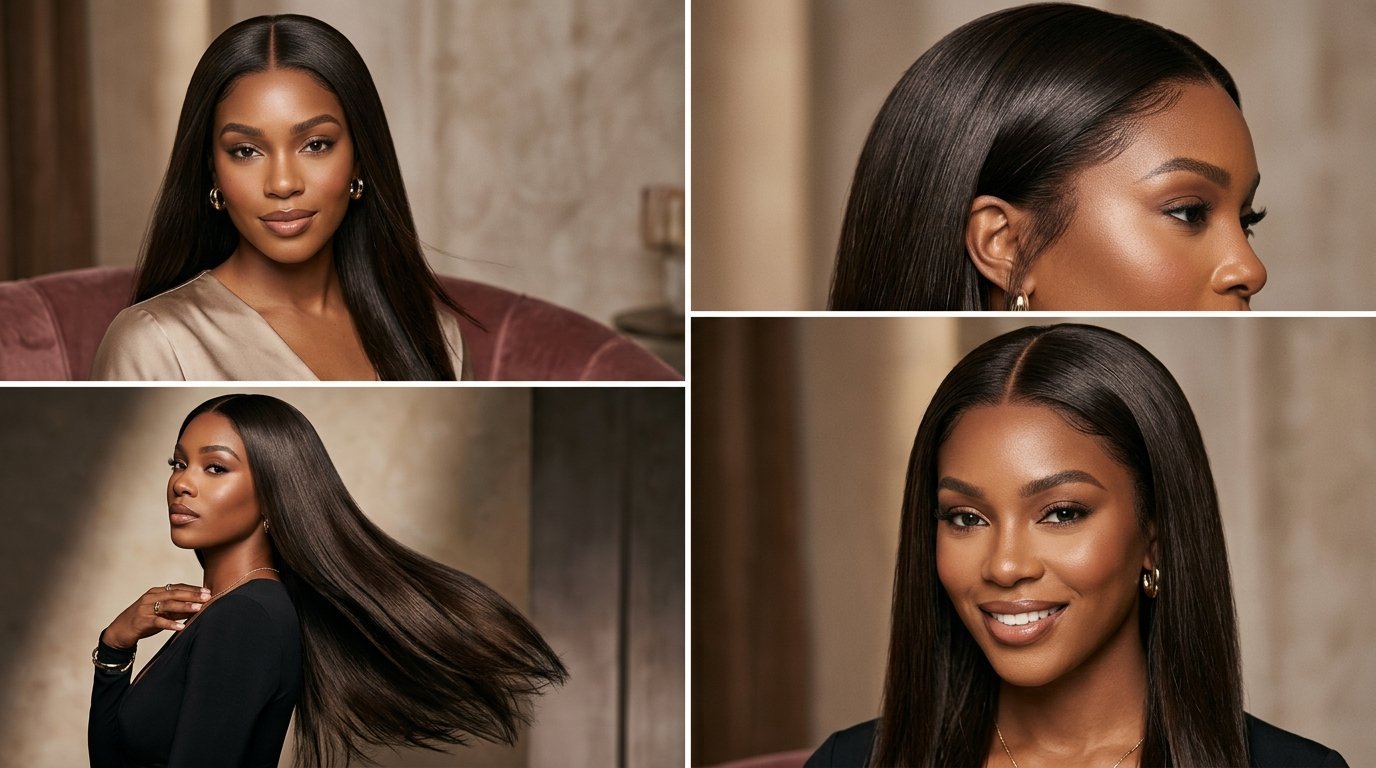
The lace front wig you buy is only the starting point. How you style it determines whether it looks like a genuinely natural part of you or like a wig you are wearing. Part placement, edge styling, the way you handle the hairline, and the specific hairstyle you create all contribute to the final result in ways that the wig itself cannot fully control. This guide covers the most flattering and popular lace front wig hairstyles, explains what makes each one work, and gives you the practical information to achieve them.
The Foundation of Every Great Lace Wig Style: The Hairline
Before getting into specific lace front wig hairstyles, it is worth spending a moment on the element that makes or breaks any lace wig look -- the hairline. No matter how beautiful the style, a poorly blended or oddly positioned hairline reveals the wig immediately. The hairline work is always the first step:
- Melt the lace: Press the lace flat against your forehead using a warm towel, a hair dryer on low heat from a distance, or your fingers for two to three minutes. This creates the initial flat seal that makes subsequent styling work.
- Lay the edges: Apply a small amount of edge control gel to the baby hairs along the hairline and lay them flat with a soft toothbrush or edge brush. Natural-looking baby hair styling adds significant realism to any lace front hairstyle.
- Blend the lace: Apply concealer or foundation in your skin tone over the lace to neutralize the lace's color and make it invisible against the skin. This is the step that makes the hairline look like a natural part of the scalp rather than a wig edge.
With the hairline properly established, every lace front hairstyle you create on top of it will look dramatically more natural than the same style on an unblended hairline.
Straight Frontal Wig Styles: The Signature Lace Look
Straight lace front wig hairstyles are the most popular and most photographed lace wig look category. The sleek, glossy straight hair combined with a natural-looking lace hairline is the aesthetic that made lace front wigs ubiquitous in contemporary beauty culture. Key straight frontal styles:
Middle Part Sleek Straight
The classic. A center part on a straight lace front wig creates a symmetrical, clean silhouette that works across virtually all face shapes and occasions. The key to making this style look natural rather than obviously flat-ironed: use a rat-tail comb to part precisely at the center, apply a light serum to the parted area to keep strands flat, and let the hair fall naturally on both sides rather than forcing it to lie completely flat. Some natural movement makes the middle-part straight look more realistic than a perfectly flat presentation.
Side Part Straight
A deep side part on a straight lace front wig creates a dramatically different silhouette from the center part -- more asymmetrical, often more glamorous, and particularly flattering on round and oval face shapes where the asymmetry creates visual elongation. Side parts on lace front wigs require some care: the part should fall within the lace panel area where hand-tied hairs create the appearance of a natural scalp, rather than in the wefted section behind the lace where the tracks would be visible in a deeply parted style.
Straight with Curtain Bangs
Soft curtain bangs framing the face on a straight lace frontal wig are among the most flattering lace wig hairstyles for women who want face-framing without a blunt bang. The curtain bang style (parted in the middle with the bangs sweeping to both sides) works particularly well on lace front wigs because the lace front hairline allows the bangs to begin at a natural-looking point rather than the obvious wig edge that would reveal itself without lace. On a human hair wig, curtain bangs can be cut and styled precisely to your face shape by a skilled stylist.
Sleek Ponytail on a Lace Front
A sleek high or low ponytail is one of the most striking straight lace front wig hairstyles -- and one that requires some technique to execute well. The key: the ponytail should start from the wefted portion of the wig cap, not from the lace panel area. The lace at the hairline remains down and blended. Pulling the wig's hair into a ponytail while keeping the front hairline in natural position creates a clean, elegant look. For standard lace front wigs (not full lace), the ponytail position should be low enough that the cap edge at the nape is not exposed -- high ponytails on standard lace fronts can reveal the cap unless you have a full lace wig construction.
Cute Lace Front Hairstyles: Beyond Straight
Loose Waves on a Lace Frontal
Loose waves are among the most universally flattering lace wig hairstyles -- they add movement and softness that straight styles do not have, they are forgiving of minor imperfections in wig fit or installation, and they suit virtually all face shapes. On a human hair lace front, loose waves can be created with a large-barrel curling iron (1.5-2 inch barrel) by wrapping sections away from the face and allowing to cool completely before releasing for the fullest wave. On a heat-friendly synthetic lace front, the same technique works at lower heat settings.
Half-Up Half-Down
The half-up half-down style is one of the most practical cute lace front hairstyles for daily wear -- it keeps hair off the face during work or activity while maintaining the visual impact of a full lace front style. The technique for a half-up on a lace front: section the hair from the top of the head to the temples, tie or clip the upper half, and let the lower half fall. The lace front hairline remains visible and natural-looking because the face-framing front sections remain down. This is a style that works on straight, wavy, and body wave lace front wigs equally well.
Space Buns
Space buns -- two buns positioned high on each side of the head -- are a playful, youthful lace front wig hairstyle that photographs beautifully. On a standard lace front wig (not full lace), the bun position works best when placed on or below the lace panel area; very high buns on a standard lace front can expose the cap edge. This style works particularly well on medium-density lace front wigs in longer lengths (18 inches+) that have enough volume to create full buns without appearing sparse.
Slicked Back Styles for Lace Frontals
Slicking the hair completely back -- away from the face and either into a low ponytail, a bun, or simply laying flat -- is a style that makes the lace frontal hairline the centerpiece of the look. This is one of the most dramatic lace front hairstyles because it removes all hair from around the face and forces the hairline to carry the entire visual weight of the style. A perfectly blended, well-pre-plucked lace front looks spectacular in a slicked-back style; an imperfectly blended hairline is immediately exposed. This style rewards the best hairline work.
Styles for Lace Frontals: Working With the Frontal Panel
Frontal lace wigs (13x4 or 13x6 frontals) offer more part flexibility than standard lace front wigs because the lace extends farther back and covers more of the front section of the head. This means:
- Deep side parts can be placed further back without exposing wefted sections
- Freestyle parts can be created anywhere within the larger frontal area
- The hair can be swept in multiple directions with the hairline looking natural throughout the style
Frontal lace wig hairstyles take the same straight, wavy, and styled looks described above and apply them with the advantage of wider part placement flexibility. If you want maximum freedom in where you part your hair and the ability to change part positions regularly, a frontal lace wig is the right construction to support that variety.
Frontal Wig Styling Tips That Apply to Every Style
- Use a silk or satin scarf overnight. Wrapping your lace front wig in a silk scarf before sleeping preserves the style significantly, prevents friction-induced frizz, and extends the time between restyling sessions.
- Apply light product to the parting. A small amount of edge control or shine serum applied to the parted area keeps it looking clean and prevents the part from spreading or looking rough.
- Do not over-brush straight styles. Over-brushing a straight human hair wig creates frizz and disrupts the smoothness. Use a paddle brush for detangling and a soft boar bristle brush for finishing -- and brush as few times as needed rather than continuously.
- Work with the hair's natural direction. Every wig has a natural direction based on how the wefts are laid. Styling with this direction rather than against it produces smoother, more natural results with less effort.
Frequently Asked Questions
What are the most flattering lace front wig styles for round face shapes?
Round face shapes are best balanced by styles that add length and reduce width visually. The most flattering lace front hairstyles for round faces: deep side parts create asymmetry that elongates the face; long straight styles that fall past the chin and shoulders draw the eye downward, creating an elongating effect; high ponytails add vertical length that balances the horizontal width of a round face; and styles with volume at the crown paired with sleeker sides create the illusion of a more oval face shape. Styles that are less flattering on round faces: blunt bobs that hit at the widest point of the face (cheeks), very wide styles that add horizontal volume without length, and center parts on round faces that divide the face symmetrically and emphasize its circular shape. That said, these are guidelines rather than rules -- personal confidence in a style is worth more than adherence to face shape theory, and many women with round faces wear center-part styles beautifully because they own them with confidence.
Can you curl a straight lace front wig, and will it go back to straight?
The answer depends on whether the wig is human hair or synthetic. A straight human hair lace front wig can absolutely be curled using heat tools -- the same flat irons, curling irons, and wand curlers you would use on natural hair, at similar temperatures (typically 300-380°F for healthy human hair wig styling). After curling, a straight human hair wig does not automatically revert to straight -- the curled style remains until you flat iron it back or wash it. This is the styling freedom that makes human hair wigs so versatile. A standard synthetic straight lace front wig cannot be safely heat-styled -- the fiber will melt or permanently distort at heat levels required for curling. Some synthetic wigs are labeled "heat-friendly" and can tolerate moderate heat (up to 300-350°F), though the heat-resistant fiber does not respond to heat tools as naturally as human hair does and may have a slightly different texture after heat styling. If you want a wig you can style between straight and curled regularly, human hair is the right choice from the start.
If you are a wig retailer looking to source straight human hair lace front wigs and frontal wigs -- in a range of lengths, densities, and lace types for retail inventory -- at wholesale pricing, contact our sourcing team. We supply lace front wigs for retail businesses at competitive wholesale pricing.
WhatsApp: +86 17347350405
Email: hello@voretrade.com