How to Wash a Wig: A Complete Cleaning Guide for Synthetic and Human Hair Wigs
July 30, 2026 · Marcus Vore
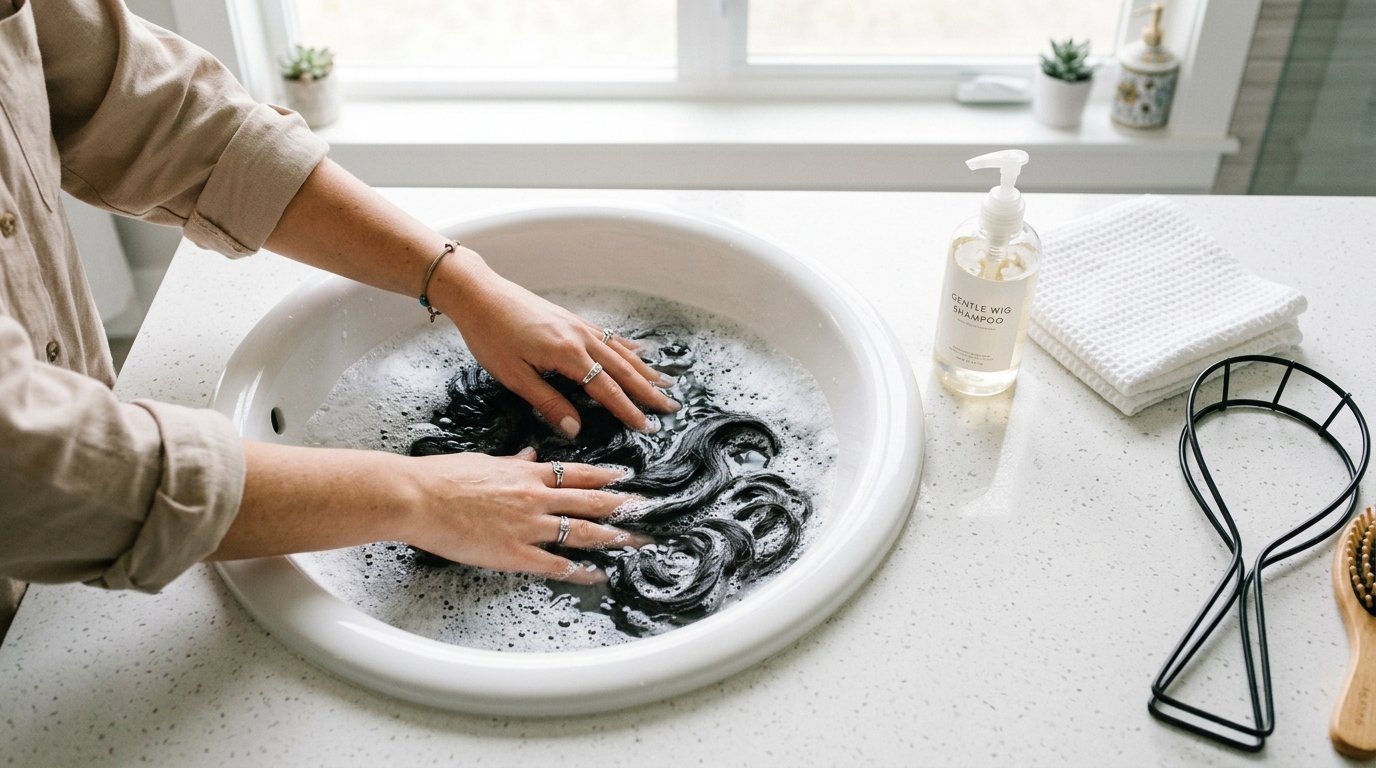
Washing a wig is one of those things that looks simple from the outside but has enough specific details that getting it wrong is easy -- and the consequences range from a wig that comes out looking dull and frizzy to a wig that is permanently damaged in a single wash. The good news is that once you know the correct process, it genuinely is straightforward, takes about ten minutes, and makes a visible difference in how long your wig keeps looking good.
The process differs meaningfully between synthetic and human hair wigs, so this guide covers both separately -- the product choices, water temperature, handling technique, and drying method that apply to each. Start with whichever wig type you have.
Before You Start: What You Need
For washing any wig, you need: a basin or clean sink (not a shower with running water, which is too turbulent), a shampoo appropriate for your wig type, a wide-tooth comb, a clean dry towel, and a wig stand. Optionally: a conditioner appropriate for your wig type, and a detangling spray.
The basin is important. Running water from a faucet or showerhead applies force to the fiber in a way that creates tangling. A basin of still water that you submerge the wig into and swirl gently is much gentler and more effective for wig washing.
How to Wash a Synthetic Wig
Synthetic fiber has specific requirements that differ from natural hair. The most important: always use cool water. Warm or hot water partially softens synthetic polymer fiber and can distort the wig's style or cap structure. Cool water cleans just as effectively without the heat risk.
Step 1: Detangle Before Wetting
Wet synthetic fiber is significantly harder to comb without damage than dry fiber. Before any water contact, use a wide-tooth comb with a small amount of detangling spray to work through the wig from ends to roots, removing any tangles. Five minutes here prevents fifteen minutes of difficult combing later -- and reduces the mechanical damage to the fiber that aggressive wet detangling causes.
Step 2: Prepare the Wash Basin
Fill a clean basin with cool water. Add a small amount of synthetic wig shampoo -- start with less than you think you need, roughly a teaspoon to a tablespoon depending on the wig's density. Swirl the water to dissolve and distribute the shampoo evenly before adding the wig. If you add shampoo directly to the wig, it concentrates in one spot and is harder to rinse out completely.
Step 3: Wash Gently
Submerge the wig in the soapy water. Use your hands to gently swirl and move the wig through the water for one to two minutes. The water and mild agitation do the cleaning -- you do not need to scrub, rub, or squeeze the fiber forcefully. The goal is moving soapy water through the fiber to loosen and carry away residue, not mechanical scrubbing.
Pay attention to the cap area, particularly at the front hairline and nape, where product and oil from skin contact concentrate. A gentle press and release with your fingers in these areas moves clean water through the cap material without pulling or stressing the fiber attachments.
Step 4: Rinse Thoroughly
Drain the soapy water and refill the basin with fresh cool water. Submerge and swirl the wig to rinse. Repeat once or twice -- the wig is fully rinsed when the water runs clear without any suds. Incomplete rinsing leaves shampoo residue that makes the fiber feel stiff and look dull after drying.
Step 5: Condition (Optional but Recommended)
A conditioning rinse after shampooing reduces static and inter-fiber friction in synthetic wigs, which makes the wig easier to comb after washing and helps it maintain a smoother appearance. Add one tablespoon of fabric softener to a basin of cool water, submerge the wig, and swirl for two minutes. Rinse with cool water until the water runs clear. Alternatively, use a dedicated synthetic wig conditioner following its product instructions.
Step 6: Dry Without Wringing
Lift the wig from the basin and gently press it between your hands to remove most of the water -- do not squeeze, twist, or wring it, which stresses the fiber and distorts the cap. Lay the wig on a clean dry towel and press lightly from above to absorb more water without rubbing or wringing. Place the wig on a wig stand and allow to air dry completely in a well-ventilated area away from direct sunlight and any heat source. Do not use a hair dryer on standard synthetic fiber. Allow a minimum of four to six hours for complete drying -- overnight is safer for dense wigs.
How to Clean Human Hair Wigs
Human hair wigs respond to washing much like natural hair -- because they are natural hair. The process is similar to washing natural hair but adjusted for the fact that the wig receives no natural oil from a scalp and needs careful handling to protect the wefts and cap construction.
Step 1: Detangle Before Washing
Just as with synthetic wigs, detangle before wetting. Human hair wigs tangle more when wet, and starting the wash with a detangled wig protects the hair from the breakage that forced wet detangling causes. Use a wide-tooth comb from ends to roots, working gently through any knots.
Step 2: Water Temperature
Unlike synthetic wigs, human hair wigs can handle lukewarm water -- not hot, but not strictly cold either. Lukewarm water helps the shampoo work effectively and is comfortable for handling. Avoid very hot water, which can weaken the adhesive or thread at the wefts over repeated washing.
Step 3: Shampoo Application
Fill the basin with lukewarm water and add a small amount of wig-appropriate shampoo -- a gentle, sulfate-free moisturizing shampoo works well for most human hair wigs. Submerge the wig and work the shampoo through from roots to ends with your fingers, moving in a downward direction along the hair length. Do not use circular rubbing motions, which tangle the hair. Focus extra attention on the cap and weft areas where product and oil accumulate.
Step 4: Rinse and Condition
Rinse thoroughly with lukewarm water until all shampoo is removed. Apply a moisturizing conditioner from mid-lengths to ends -- avoid the cap and the top of the wefts where conditioner creates buildup. Leave for three to five minutes, then rinse thoroughly. For additional moisture maintenance, apply a lightweight leave-in conditioner to damp hair before placing on the wig stand to dry.
Step 5: Dry Carefully
Gently press excess water from the wig (do not wring) and place on a wig stand. Human hair wigs can air dry or be dried with a hair dryer on low heat with a diffuser -- move the dryer continuously and keep it at a distance to avoid heat concentration at any point. Full air drying is always the gentlest option and is preferred for maintaining the hair's condition over time.
How Often Should You Wash Your Wig?
For both synthetic and human hair wigs worn daily: every two to three weeks. For occasional wear: after every six to eight wears, or when the wig visibly needs it -- when it looks dull, feels product-coated, or has absorbed odors. Over-washing removes natural moisture from human hair fiber and degrades the surface coating of synthetic fiber. Washing on a fixed schedule whether the wig needs it or not is not necessary and shortens wig life. Between washes, a wig refresh spray keeps the wig looking fresh without the wear of a full wash.
What Never to Do When Washing a Wig
- Never put a wig in the washing machine. Machine washing creates severe, irreversible tangling in synthetic fiber and damages human hair wefts.
- Never use hot water on a synthetic wig. Heat distorts polymer fiber permanently.
- Never wring or twist a wet wig. This stresses both the fiber and the cap structure.
- Never rub a wig dry with a towel. Press gently instead -- rubbing creates friction that causes frizz.
- Never use a hair dryer on high heat on any wig. Even human hair wigs benefit from lower heat settings during drying to extend their lifespan.
- Never leave a wig to dry in direct sunlight. UV exposure fades color and degrades both synthetic and human hair fiber.
Frequently Asked Questions
Can I wash my wig in the sink under running water?
You can rinse a wig under running water, but washing under a running faucet is not ideal for either synthetic or human hair wigs. The force of running water creates turbulence in the fiber that causes tangling -- particularly in synthetic fiber, which tangles more readily than human hair under mechanical agitation. If you use a sink, fill it with still water for the wash and rinse steps rather than using the running faucet directly on the wig. A showerhead set to a very gentle flow can be used to rinse (not to wash) a human hair wig held flat rather than submerged, but it is not recommended for synthetic wigs. The basin method -- submerge, swirl gently, drain, refill, repeat -- gives you the most control over the process and the gentlest result for both wig types. It takes no longer than a sink rinse and produces noticeably better results in terms of how the wig looks after washing.
How do I get a wig to dry faster without damaging it?
The fastest safe drying method varies by wig type. For synthetic wigs, air drying on a wig stand in a well-ventilated room is the only safe option for standard fiber -- any heat, including a hair dryer on low, risks distorting standard synthetic fiber. If you need to speed up synthetic wig drying, placing the stand near an open window (not in sunlight) or a fan significantly reduces drying time without heat exposure. For heat-resistant synthetic wigs, a hair dryer on the lowest heat setting held at a distance with continuous movement is safe. For human hair wigs, a hair dryer on low or medium heat with a diffuser attachment accelerates drying safely -- avoid high heat and keep the dryer moving rather than focused on one area. A microfiber towel for the initial water removal absorbs more moisture than a regular towel and significantly reduces the total drying time for both wig types. The one thing to avoid regardless of wig type: any technique that applies concentrated heat or friction to accelerate drying -- both damage the fiber faster than the time savings justify.
If you are a wig retailer or beauty business sourcing wigs and wig care supplies -- including wig shampoos, conditioners, wig stands, and accessories -- at wholesale pricing, contact our team. We supply complete wig inventory and care product ranges for businesses of all sizes.
WhatsApp: +86 17347350405
Email: hello@voretrade.com