How to Style a Synthetic Wig: What Actually Works, What Damages Fiber, and Techniques for Waves, Curls, and Volume
July 30, 2026 · Marcus Vore
The question "can you style a synthetic wig?" gets a simple yes-or-no answer in most places online, when the real answer is "yes, but the how matters a lot depending on what you are trying to do." Styling synthetic hair is not the same as styling natural hair. Some of the techniques that work beautifully on human hair will cause permanent, irreversible damage to synthetic fiber in minutes. Others translate perfectly. And there are styling methods that work specifically on synthetic fiber -- the hot water set, for example -- that most people with natural hair have never encountered.
This guide covers the full toolkit for synthetic wig styling: what you can do without any heat, what you can do with heat on heat-resistant fiber, and the techniques that work on synthetic weave installed in a sew-in or braided style. By the end, you will have a clear picture of the practical options and which situations each applies to.
First: Understanding Why Synthetic Hair Styles Differently
Synthetic fiber holds its style through a different mechanism than natural hair. Natural hair is styled by breaking hydrogen bonds in the hair's protein structure with heat or moisture, then allowing them to reform in the new position as the hair cools or dries. This is why water sets a natural hair style and heat can reset it.
Synthetic fiber does not have protein structure or hydrogen bonds. Instead, it holds shape through the physical memory of the polymer fiber itself -- and the only way to permanently reset this physical memory is through heat, either from styling tools or from hot water. Without heat, synthetic fiber will return to its factory-set shape over time, particularly when it gets wet. This is why a synthetic wig that looks beautifully styled when dry may relax back toward its original style after exposure to rain, humidity, or washing -- the fiber's memory reasserts itself when moisture and time allow it.
This fiber memory property is both a limitation and an advantage. It is a limitation because significant style changes require heat. It is an advantage because a synthetic wig's factory style is self-restoring -- wash it and it returns to its original appearance, which means the maintenance burden of keeping a synthetic wig looking like its original style is lower than maintaining a styled human hair wig.
How to Style Synthetic Hair Without Heat
No-heat styling works on all synthetic wigs regardless of heat resistance, which makes these methods the safest options and the ones to start with for any styling goal.
Finger Styling and Reshaping
The simplest and most underrated styling technique for synthetic wigs is finger styling -- using your hands to separate, arrange, and shape the fiber rather than tools. Synthetic fiber responds well to being physically arranged when it is slightly damp (a light mist of water softens the fiber slightly), and it holds gentle reshaping reasonably well once dry.
Finger styling works best for: fluffing volume that has been compressed by wear or storage, separating curls in a curly wig that have clumped together, arranging the position of waves in a wavy wig, and creating a more casual or textured look from a factory-styled wig that is too uniform.
Flexi Rods and Rollers
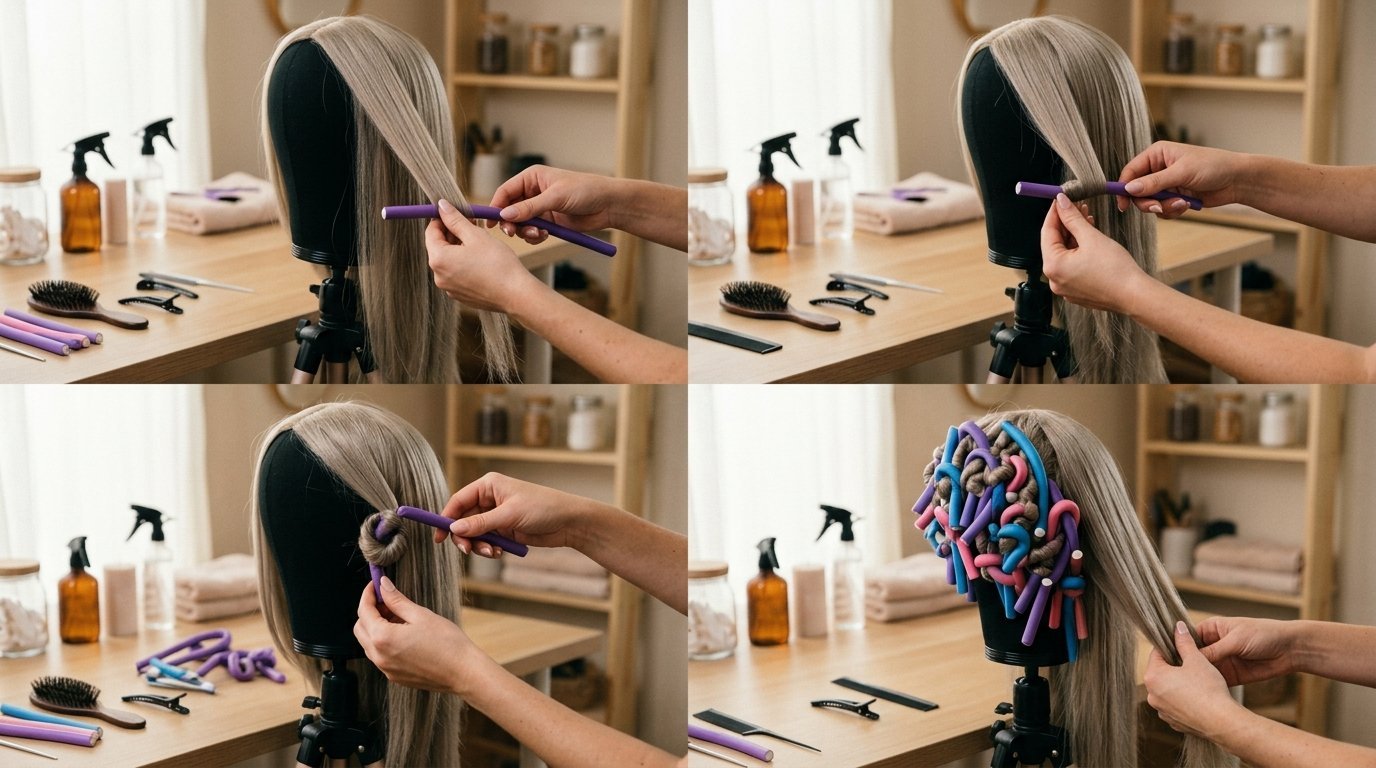
Flexi rods and foam rollers can create curl and wave patterns in synthetic hair through a simple no-heat method: dampen the wig slightly, wrap sections around the rods or rollers, and allow to dry completely before removing. The fiber dries in the new shape and holds it reasonably well, though the set is temporary -- it will relax with wear and completely reset after washing.
This method produces soft, natural-looking waves and curls that are more diffuse and romantic than the tighter sets achievable with heat. It is the primary styling technique for synthetic wigs where heat is not an option, and it genuinely works -- a freshly set flexi rod wave on a straight synthetic wig looks convincingly styled rather than like a workaround.
The key to getting good results with rollers on synthetic hair: use a small amount of diluted leave-in synthetic conditioner or detangling spray on each section before wrapping. This helps the fiber conform to the roller shape and reduces frizz at the surface as it dries.
The Hot Water Set (For Curls and Waves Without Heat Tools)
The hot water set is the technique that most dramatically changes synthetic wig styling possibilities -- and it is largely unknown outside of the wig enthusiast community. It uses the same principle as heat styling (the fiber's physical memory is reset by heat), but instead of using a styling tool directly on the fiber, you use hot water.
The method: roll or wrap sections of the wig around rods or your fingers while the hair is dry, securing the curls in place. Pour very hot (near-boiling) water over the wrapped wig from above, ensuring the hot water contacts every section. Then pour cold water over immediately to set the fiber in its new shape. Allow to dry completely on the rods or curlers before removing.
The result is a set that is significantly more permanent than the cold-water roller method -- because the fiber's physical memory has actually been reset by the heat of the water rather than simply shaped while damp. A hot water set on a straight synthetic wig produces waves or curls that last through multiple wears and survive normal humidity exposure, relaxing gradually over weeks rather than resetting after a single damp day.
Important: the hot water method only works on synthetic fiber, not on human hair wigs. And it does require somewhat high water temperature to work -- lukewarm water does not have enough thermal energy to reset the fiber's memory. Use water that is as hot as possible from a kettle or tap.
How to Style a Synthetic Wig With Heat
If your wig is labeled as heat resistant, you have additional styling options using conventional heat tools. The principles from the previous heat-resistant wigs guide apply here -- test first, use lower temperatures than you would on natural hair, move the tool continuously, and allow to cool before touching.
Flat Iron on Heat-Resistant Synthetic Wigs
A flat iron can be used to straighten wavy or curly heat-resistant synthetic hair, smooth frizzy sections, or add a slight bend or wave by passing through at an angle rather than straight. Set the iron to 150°C or lower, work in small sections, and keep the iron moving. The result on quality heat-resistant synthetic fiber is a smooth, natural-looking straight style that holds better than any cold-method alternative.
Curling Iron on Heat-Resistant Synthetic Wigs
A curling iron on heat-resistant fiber can add curls to a straight synthetic wig or reshape an existing curl pattern. Use a lower temperature (140 to 160°C), wrap the section around the barrel for three to five seconds only (not the fifteen to twenty seconds typical for human hair), release and hold in a pinched position while it cools, then release. The shorter contact time required for synthetic fiber is one of the practical differences in heat styling technique -- the fiber responds faster than biological hair to the same temperature.
How to Style Synthetic Weave
Styling synthetic weave installed in a sew-in follows the same principles as styling a synthetic wig, with one additional constraint: the heat and water from any styling method must not reach the braided cornrow base or cause the style to shift at the roots. Working section by section and keeping heat away from the root area protects both the installed weave and the natural hair underneath.
For synthetic weave in a sew-in, the hot water method is often not practical once installed -- pouring hot water over an installed sew-in affects the entire install including areas you may not want restyled. Heat styling section by section with a heat-resistant weave is more controlled for installed styles.
Refreshing a Synthetic Wig That Has Lost Its Style
With wear and storage, synthetic wigs gradually drift from their factory style -- curls loosen, waves relax, volume flattens. Washing the wig with a gentle synthetic shampoo and allowing it to air dry on a wig stand restores the factory style more completely than any styling application, because the hot water in a warm (not cold) rinse allows the fiber's physical memory to partially reassert itself as it dries.
For a more complete style reset, the hot water set method described above can be used on a washed wig while the fiber is still warm from the wash water, with good results for establishing a new style rather than restoring the old one.
Frequently Asked Questions
Can I cut a synthetic wig to style it?
Yes -- cutting a synthetic wig is one of the most effective ways to customize its style, and it works on all synthetic fiber regardless of heat resistance. The key differences from cutting human hair: synthetic fiber does not split at the cut end the way biological hair sometimes does, but it also does not blend or taper as naturally as human hair when cut with standard thinning shears because the polymer surface does not have the micro-texture variations that create natural-looking layered ends. Sharp scissors are essential -- dull scissors will crush and slightly fray the cut end of synthetic fiber. For face-framing cuts, layering, and trimming the length, cutting works very well on synthetic wigs. For creating very detailed, graduated hairstyles that require the fine thinning and blending possible on human hair, the result will be slightly less refined -- though still a significant style improvement over the factory cut in many cases.
Why does my synthetic wig go frizzy after I try to style it?
Frizz after styling attempts on synthetic wigs is almost always caused by one of two things: friction applied during styling, or heat applied above the fiber's tolerance. When you brush, tease, or rub synthetic fiber aggressively -- as you might with natural hair to add volume or texture -- the polymer surface gets roughened at a microscopic level, and the damaged surface creates the frizzy, flyaway appearance that is hard to reverse. Aggressive use of any brush or comb, particularly on dry synthetic fiber, is the most common cause of styling-related frizz on synthetic wigs. The fix: always detangle with a wide-tooth comb starting from the ends upward, never from the root downward. Apply a light mist of detangling spray before combing. Never tease or backcomb synthetic fiber -- it causes surface damage that does not self-correct. If heat is involved in the frizz, and the wig is not labeled as heat resistant, the damage is permanent. If the wig is heat resistant but the tool was too hot, the frizz is also permanent. For non-heat, friction-caused frizz, washing with a gentle synthetic shampoo and conditioning rinse resets the fiber surface and reduces the frizz significantly -- it will not restore the fiber to completely undamaged condition, but it is the most effective recovery method available.
If you are sourcing synthetic wigs and extensions -- in a range of styles and textures ready for your customers to wear and restyle -- contact our team. We supply synthetic wigs and hair across every style category at wholesale pricing.
WhatsApp: +86 17347350405
Email: hello@voretrade.com