How to Detangle a Synthetic Wig: The Right Technique, Best Sprays, and How to Rescue a Badly Tangled Wig
July 30, 2026 · Marcus Vore
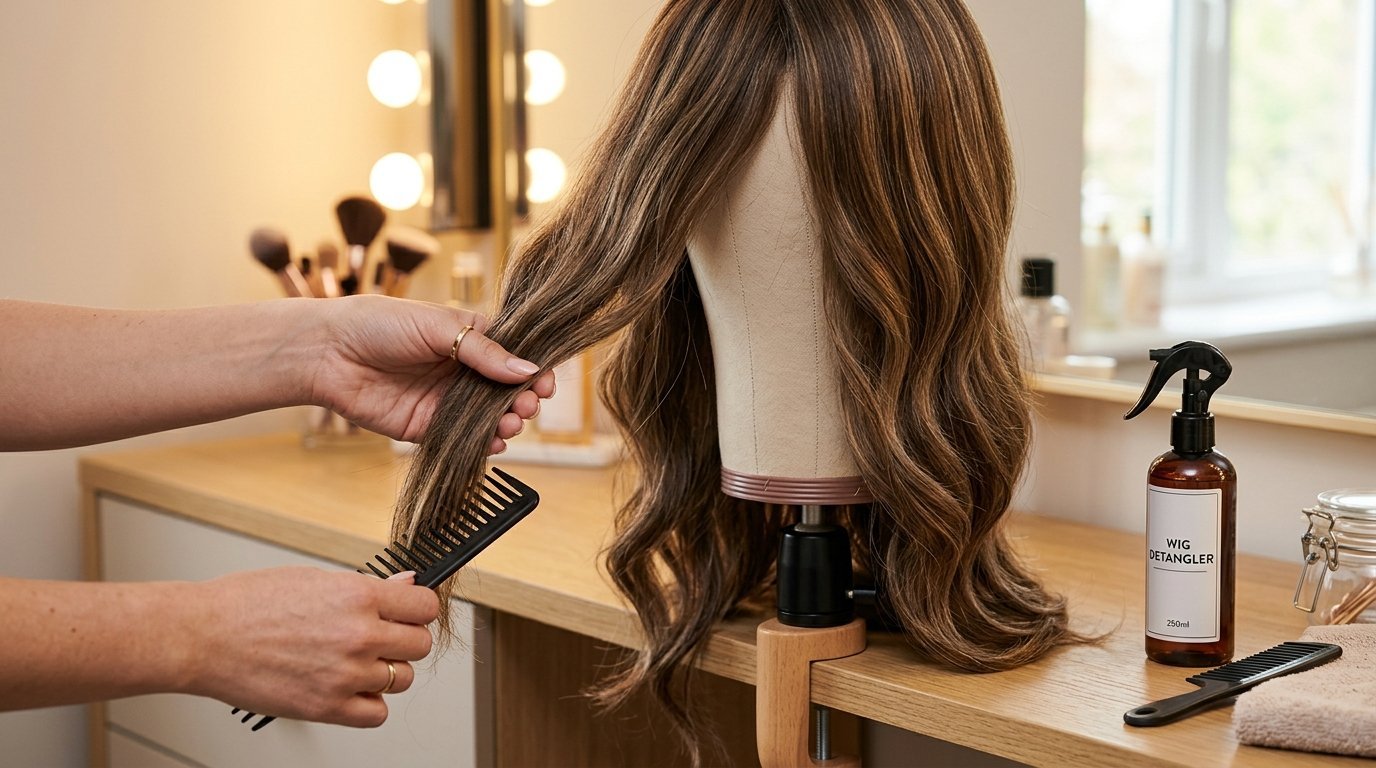
Tangling is the most common problem with synthetic wigs, and it is also the one most people make worse by approaching it wrong. The instinct when encountering a tangled wig is to pull a brush through it from root to tip -- which is exactly what causes the tight knots at the end of the hair to compress further, the fiber to frizz from friction, and sections that could have been saved to break. The correct technique is almost the opposite of what feels natural, and once you know it, detangling a synthetic wig becomes a straightforward process rather than a battle.
This guide covers how to properly detangle synthetic hair -- from light daily detangling to rescuing severely matted wigs -- the detangling sprays that genuinely help, and how to prevent the tangling from getting severe in the first place.
Why Synthetic Hair Tangles Differently from Natural Hair
Understanding why synthetic fiber tangles helps you detangle it more effectively. Natural hair has a cuticle -- a layered scale structure on the outside of the hair shaft that, when healthy and well-conditioned, lies flat and allows strands to slide past each other smoothly. Synthetic fiber does not have a cuticle; instead, it has a polymer surface that generates more friction between strands than healthy natural hair does.
This higher inter-fiber friction means synthetic hair tangles more readily from ordinary movement and wear than natural hair in comparable condition. It also means the tangles are harder to pull apart once formed -- the friction that created the tangle resists the movement needed to release it. Any detangling technique that relies on force to pull strands apart (brushing from roots, pulling through knots) adds more friction to the problem rather than solving it.
The solution to high inter-fiber friction is reducing that friction before attempting to separate the strands -- which is exactly what detangling spray for synthetic wigs does.
The Role of Wig Detangler Spray
A detangling spray for synthetic wigs coats the surface of the fiber with a light lubricating film that reduces inter-fiber friction enough that strands can slide past each other without force. Applied before combing, it does not eliminate the need for a comb -- it reduces the force required to move the comb through the hair to the point where you are separating rather than pulling.
The best detangling spray for synthetic wigs contains:
- Light silicones or plant-based lubricating agents that reduce friction without heavy buildup
- Anti-static agents (static is a significant cause of fiber separation and frizz in synthetic hair)
- No heavy proteins or oils designed for human hair cuticles, which create sticky buildup on synthetic fiber
A dedicated synthetic hair detangling spray from a wig care brand is the ideal choice. If one is not available, a diluted leave-in conditioner spray (a small amount of a lightweight leave-in conditioner diluted significantly in water and applied from a spray bottle) provides similar friction reduction, though with a slightly higher buildup risk over repeated use compared to a properly formulated synthetic detangler.
How to Detangle Synthetic Hair: The Correct Technique
The fundamental rule: always work from the ends upward toward the roots, never from the roots down. This is the principle that most people violate and that causes the most damage.
Step 1: Place the Wig on a Wig Stand
Detangling a wig that is being held in one hand or lying on a flat surface is harder than detangling one that is secured on a wig stand. The stand holds the wig in place so both your hands are free -- one to hold a section while the other combs. This stability reduces the pulling force on the hair and cap during detangling.
Step 2: Apply Detangling Spray
Mist the synthetic hair detangling spray lightly and evenly over the section you are about to work on. You do not need to saturate the hair -- a light, even mist is sufficient and easier to rinse away later. Work in sections rather than spraying the whole wig at once, particularly for severely tangled hair where each section will take more time.
Step 3: Start at the Ends
Take a small section of hair (about one inch wide) and hold it firmly near the bottom -- just above where the visible tangle begins at the tips. Use a wide-tooth comb to work through just the bottom inch or two of hair, working out the small tangles at the very ends first. Hold the hair above your comb position with your other hand -- this hand absorbs the pulling tension and prevents it from transmitting up to the root and cap, which protects both the fiber attachments and your natural hair underneath if the wig is on your head.
Step 4: Work Progressively Upward
Once the bottom section is free, move your holding hand up slightly and work the comb through the next section, now combing from that mid-point down through the already-freed ends. Continue moving your holding hand up and your comb starting point up in small increments until you can comb freely from the root all the way to the tip in that section without resistance. Then move to the next section.
This progressive bottom-up technique prevents tangles from compressing. When you pull a comb from the root through a tangle, the tangle has nowhere to go but tighter. When you approach from below, you are removing tangles at the end of the knot where there is room for the strands to separate and move away freely.
Step 5: Re-apply Spray as Needed
If a section dries out during detangling and becomes resistant again, apply another light mist of synthetic hair detangling spray before continuing. Do not force a dry, resistant section -- re-wetting reduces the friction again and makes the process possible without damage.
How to Detangle a Synthetic Wig Fast: The Shortcut for Mild Tangles
For a wig that has mild day-to-day tangling rather than severe matting, a faster approach works well: mist the entire wig lightly with detangling spray while it is on a wig stand, then use your fingers rather than a comb to gently separate the main tangle clusters, working from ends to roots. Follow with a wide-tooth comb once the major tangles are finger-separated. This finger-first approach is gentler than going straight to a comb and is significantly faster for mild tangling that has not yet compressed into knots.
How to Detangle a Cheap Synthetic Wig That Is Severely Matted
Budget synthetic wigs use lower-grade fiber with higher surface friction, and they tangle and mat significantly faster than quality synthetic hair. A severely matted cheap synthetic wig is more challenging but often recoverable with the right approach.
For severe matting: soak the wig in a basin of cool water with a small amount of fabric softener (one tablespoon per basin) for five to ten minutes. The fabric softener reduces inter-fiber friction, and the submersion separates some of the tangled sections through gentle water movement. Remove the wig from the basin without wringing, and while it is still wet, begin the ends-upward detangling process with a wide-tooth comb. Wet synthetic fiber with added fabric softener lubrication is significantly easier to work through than dry tangled fiber. Work patiently through each section. Allow to dry completely on a wig stand once detangled.
If sections are so severely matted that even this approach cannot separate them without breakage -- tight, fused balls of fiber at the tip that will not release -- these sections may need to be carefully cut away rather than forced. Cutting is a better outcome than the fiber breakage that results from forcing impossible tangles, which creates a worse, frizzy result in the same area.
How to Detangle Synthetic Hair Extensions
Synthetic hair extensions -- clip-ins, tape-ins, or sew-in tracks -- follow the same detangling principles as wigs. The additional consideration for installed extensions is that the attachment point (clip, tape, or weft edge) is the most vulnerable part during detangling. Hold the extension at the root area when detangling to prevent tension from pulling on the attachment. For sew-in synthetic weave, detangle each track separately rather than pulling a comb through multiple tracks simultaneously.
Preventing Tangles: Daily Habits That Make the Biggest Difference
- Detangle before and after every wear. A two-minute detangle when you take the wig off prevents the small daily tangles from compressing into the severe knots that take twenty minutes to resolve.
- Store on a wig stand. Storage in a bag or box compresses the hair and creates friction that generates tangles during storage. A wig stand maintains the style and prevents storage-related tangling.
- Avoid sleeping in the wig. Pillow friction is one of the most severe tangling conditions a synthetic wig experiences -- hours of friction concentrated at the sides and nape.
- Apply a light anti-frizz spray after each wear. This maintains the surface coating that reduces inter-fiber friction during the next wear session.
Frequently Asked Questions
Can I use a regular brush on a synthetic wig to detangle it?
A regular paddle brush or boar bristle brush is not ideal for synthetic wig detangling -- the bristles are often too close together, which creates more friction against synthetic fiber rather than less, and the typical brushing motion (roots to ends) is the opposite of the correct technique. If you are going to use a brush on a synthetic wig, use a wig brush specifically designed for synthetic hair -- these have wider-spaced, flexible bristles that create less friction than standard brushes. Even with a wig brush, the ends-upward technique still applies. For the initial work on any significant tangle, a wide-tooth comb is always better than a brush because it gives you more control over exactly how much pressure you are applying to each section. Brushes are better suited to a final smoothing pass once the main tangles have already been removed with a comb.
Is there a homemade detangling spray I can make for synthetic wigs?
Yes, and it works reasonably well as a substitute for a commercial product. The simplest effective recipe: combine one cup of water with one teaspoon of lightweight liquid fabric softener in a spray bottle. Shake to combine before each use. The fabric softener provides the friction-reducing, anti-static properties that make commercial detangling sprays effective on synthetic fiber. The dilution prevents the heavy buildup that undiluted fabric softener would create. A few drops of a lightweight silicone hair oil (like argan oil or a lightweight leave-in conditioner) can be added for additional slip, though this is optional and slightly increases the risk of buildup over repeated applications without washing. This homemade spray works well for everyday light detangling maintenance. For severe tangles, a plain fabric softener soak (as described in the severe matting section above) is more effective than any spray applied to the surface of already-compressed tangles.
If you are a wig retailer or beauty supplier sourcing synthetic wigs and wig accessories -- including detangling sprays, wide-tooth combs, wig stands, and full care kits -- at wholesale pricing, contact our team. We supply everything your customers need alongside the wigs themselves.
WhatsApp: +86 17347350405
Email: hello@voretrade.com