Heat Resistant Wigs: What the Labels Actually Mean, How to Style Safely, and Which Options Are Worth Buying
July 30, 2026 · Marcus Vore
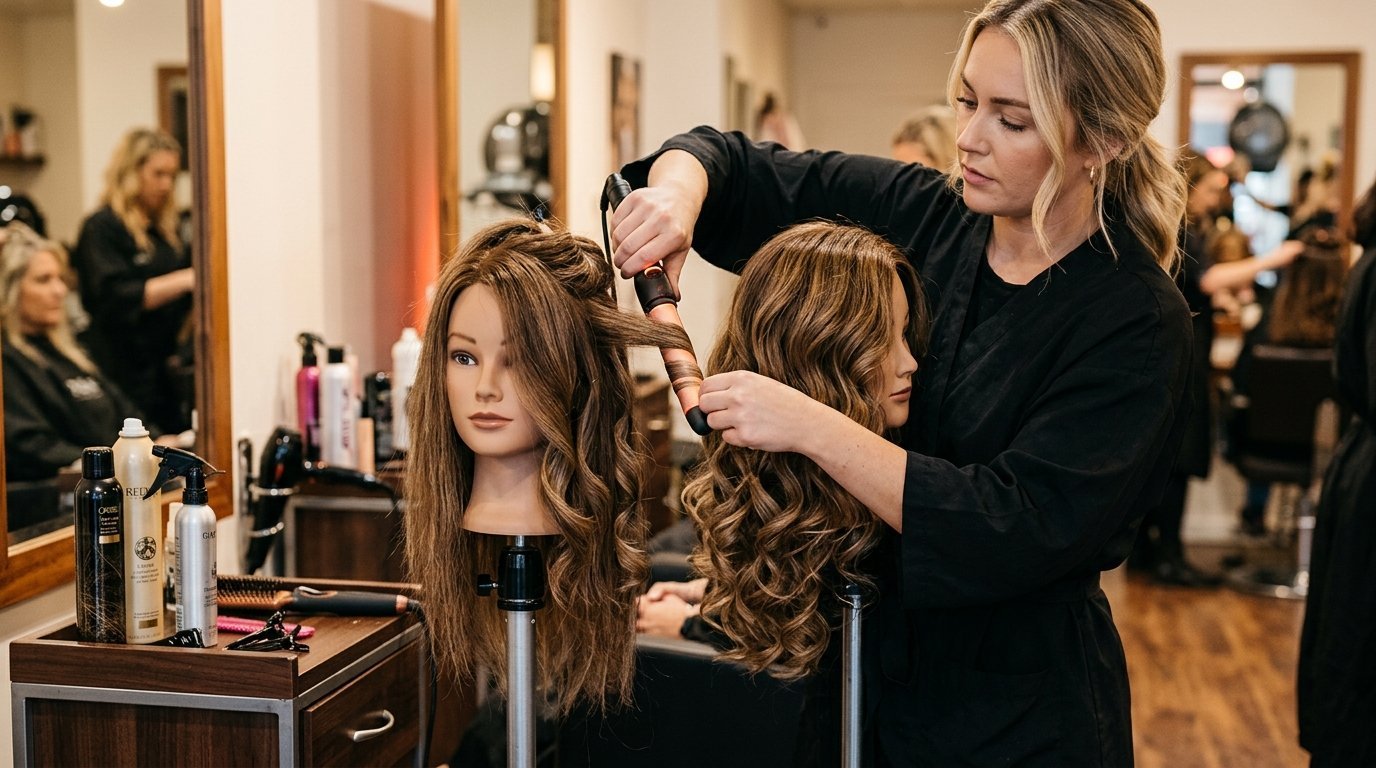
The introduction of heat resistant synthetic fiber was a genuine turning point in the synthetic wig market. Before it existed, you bought a synthetic wig and it stayed exactly as it came out of the box -- whatever style was factory-set was the style you wore until the wig wore out. If you wanted to change the curl pattern, add waves to a straight wig, or refresh a style that had lost its shape, you were out of options. Heat resistant wigs changed that, but they introduced a new set of questions that were not relevant before: how much heat can this wig actually handle, what can go wrong if you exceed it, and what does safe heat styling of synthetic fiber actually look like in practice?
This guide covers all of it -- the technology behind heat resistant synthetic hair, what the temperature ratings mean and how to verify them, how to style heat resistant wigs without causing damage, and what distinguishes good heat resistant wigs from cheap ones that claim heat resistance they do not actually deliver.
What Makes Synthetic Hair Heat Resistant?
Standard synthetic fiber -- acrylic and basic polyester -- has a relatively low melting point, typically in the range of 70 to 90°C (160 to 195°F). This is well below the operating temperature of most styling tools, which is why standard synthetic fiber cannot be heat styled: the fiber literally melts or deforms permanently at temperatures any flat iron or curling iron would reach.
Heat resistant synthetic hair uses a different fiber formulation -- most commonly a modacrylic (modified acrylic) blend or a specifically engineered polyester variant -- with a higher thermal deformation point. Through a combination of different polymer chemistry and sometimes additional thermal stabilizers applied during or after fiber manufacture, the deformation threshold is raised to approximately 130 to 200°C (265 to 390°F) depending on the specific product.
This range is meaningful for styling because it overlaps with the lower temperature settings on consumer heat styling tools. A flat iron set to its lowest heat position typically operates at 140 to 160°C; a curling iron at low to medium heat is in a similar range. Heat resistant synthetic hair in this temperature zone can accept these tools and be reshaped -- from straight to wavy or curly, from a loose wave to a tighter curl -- in a way that standard fiber cannot.
What it cannot do is handle the same temperatures as human hair. The highest settings on most styling tools (220 to 230°C / 430 to 445°F) exceed the safe range for even the best heat resistant synthetic fiber. Human hair can be styled at these temperatures because biological hair's protein structure behaves differently under heat than polymer fiber. Any heat resistant synthetic wig, regardless of how it is labeled, has an upper temperature limit that should be respected -- exceeding it causes melting, frizzing, or permanent texture distortion that cannot be reversed.
Understanding Heat Resistance Labels and Temperature Ratings
The labeling of heat resistant wigs is unfortunately inconsistent across the market. "Heat resistant," "heat friendly," "heat defiant," "high temperature fiber," and "hot wigs" are all used for products with varying actual heat tolerances, and a product labeled "heat resistant" at $25 has not necessarily been held to the same standard as one at $150.
The most useful information in a wig listing is a specific temperature rating -- a number in Celsius or Fahrenheit that states the maximum safe styling temperature for that specific fiber. Not all listings provide this, but when they do, it is the most reliable guide for choosing your tool settings. As general guidance:
- 130-150°C (265-300°F): Entry-level heat resistance. Safe for very light styling tool use on the lowest settings only. This range provides some protection from incidental heat exposure but limited actual styling flexibility.
- 150-180°C (300-355°F): Standard heat resistant range for quality synthetic wigs. Suitable for flat irons and curling irons on low to medium settings. This is where most good heat resistant wigs sit, and it provides enough styling range to meaningfully change the wig's style.
- 180-200°C (355-390°F): Higher-end heat resistance. Provides more styling flexibility and a greater safety margin for accidental temperature spikes. Found in better quality heat resistant synthetic wigs and some specialty fibers.
If a listing does not specify a temperature rating, the safest approach is to treat the wig as having entry-level heat resistance and start with the lowest possible tool setting, testing on a small section at the nape before styling the full wig.
How to Style Heat Resistant Wigs Without Damaging Them
Knowing that a wig can handle heat is not the same as knowing how to heat style it correctly. The technique matters as much as the temperature.
Step 1: Test First, Always
Take a small section of hair from an inconspicuous area -- typically at the nape where any issues will not be visible in wear -- and apply heat at the lowest tool setting you plan to use. If the fiber smooths, takes the curl, and behaves like it should without any sign of melting (shiny or crispy texture, change in fiber diameter, unusual smell), the temperature is safe to use on the rest of the wig. If there is any sign of heat damage, lower the temperature or do not proceed.
Step 2: Use Lower Temperatures Than You Think You Need
Heat resistant synthetic fiber responds to heat more readily than human hair. A flat iron that requires 220°C to smooth very coarse natural hair will do the same job on heat resistant synthetic fiber at 150 to 160°C -- the fiber is more responsive to heat at lower temperatures than biological hair is. Starting low and increasing if needed is always safer than starting high and discovering the limit through damage.
Step 3: Move the Tool Continuously
Never hold a styling tool stationary on synthetic fiber for more than one to two seconds. Continuous movement prevents heat concentration at a single point, which is how most styling-related damage to heat resistant wigs occurs -- not from the temperature itself but from prolonged contact at one location.
Step 4: Allow to Cool Before Touching
Unlike human hair, which has some flexibility when warm, styled synthetic fiber sets permanently as it cools. Touching, brushing, or disturbing a curl or wave before it has fully cooled disrupts the newly set shape. Release the section from the styling tool, hold it in position for two to three seconds, then allow it to cool completely before combing or handling.
Step 5: Do Not Over-Style
Every heat application stresses synthetic fiber, even within the safe temperature range. Repeated styling of the same section over time progressively degrades the fiber's appearance and eventually reduces its responsiveness to heat. Minimizing the number of times each section is heat styled -- and styling the full wig less frequently rather than restyling individual sections daily -- extends the wig's lifespan significantly.
Heat Resistant Synthetic Hair Weave: Extensions and Sew-Ins
Heat resistant synthetic hair weave extends heat resistance to the extension market -- sew-in tracks, clip-in extensions, and other weft-based hair additions made from heat-tolerant synthetic fiber. The same principles apply: temperature ratings, testing before full styling, and the understanding that even heat resistant synthetic fiber has a ceiling.
For sew-in installs specifically, heat resistant synthetic weave bundles allow the installed style to be refreshed with a flat iron or curling iron between wash cycles -- something impossible with standard synthetic tracks. A blonde synthetic lace front wig high temperature configuration -- combining a lace front cap with heat resistant fiber in a light color -- gives the most styling versatility while maintaining the natural hairline that lace provides.
How to Tell If a Wig Is Genuinely Heat Resistant
With inconsistent labeling in the market, buyers sometimes receive wigs labeled "heat resistant" that are not -- or that have much lower heat tolerance than expected. The burn test from the previous article applies here too: a strand of truly heat resistant synthetic fiber held over a flame burns slower than standard acrylic and may self-extinguish due to the modacrylic's flame-retardant properties, while standard fiber burns readily and melts.
For a non-destructive test, apply a low-heat styling tool (set to its absolute minimum) to a single strand in an inconspicuous area for two seconds. Genuine heat resistant fiber will warm and potentially take a slight set without visible damage. Standard synthetic fiber will show immediate visible deformation or a slight glazed texture change even at this minimal temperature exposure.
Frequently Asked Questions
What temperature should I set my flat iron for a heat resistant wig?
Start at the lowest temperature your flat iron allows -- typically 120 to 140°C on most consumer tools -- and test on a small inconspicuous section first. If the fiber responds correctly (smooths or takes the set without any signs of damage), this temperature is safe to work with across the full wig. Move up to 150 to 160°C only if the lower setting is not producing the result you need, and retest at each temperature step before proceeding. The maximum you should use on any heat resistant synthetic wig, regardless of the listing's claims, is 180°C -- treating anything above that as human-hair-only territory. Most heat resistant synthetic wigs respond perfectly well to flat iron styling at 150 to 160°C, and the common mistake is setting the iron to a human-hair temperature out of habit without adjusting for the different fiber requirements.
Can heat resistant wigs be straightened and then curled, or do you have to choose one style?
Yes, heat resistant synthetic fiber can be restyled multiple times -- straightened, then curled, then straightened again -- within its temperature limit. Each heat application does put some cumulative stress on the fiber, so restyling should be done mindfully rather than as a daily habit, but changing the style is entirely possible. The practical consideration is that synthetic fiber holds its set very firmly once cooled, which means you may need to work in slightly smaller sections and use a small amount of water or a light heat protectant spray specifically formulated for synthetic fiber to ease the transition between styles. Starting with a light steam (from a clothing steamer, not a hair steamer that may exceed the temperature limit) or a damp cloth before re-styling helps relax the existing set slightly and makes the re-styling process easier on the fiber.
If you are a wig retailer, cosplay supplier, or beauty business looking to source heat resistant wigs and heat resistant synthetic hair weave -- in a range of styles, colors, and heat-tolerance specifications -- contact our sourcing team. We supply heat resistant synthetic fiber wigs alongside our full wig and extension inventory.
WhatsApp: +86 17347350405
Email: hello@voretrade.com