Heat Protectant for Wigs: What Actually Works for Synthetic Hair and Human Hair Wigs
August 12, 2026 · Marcus Vore
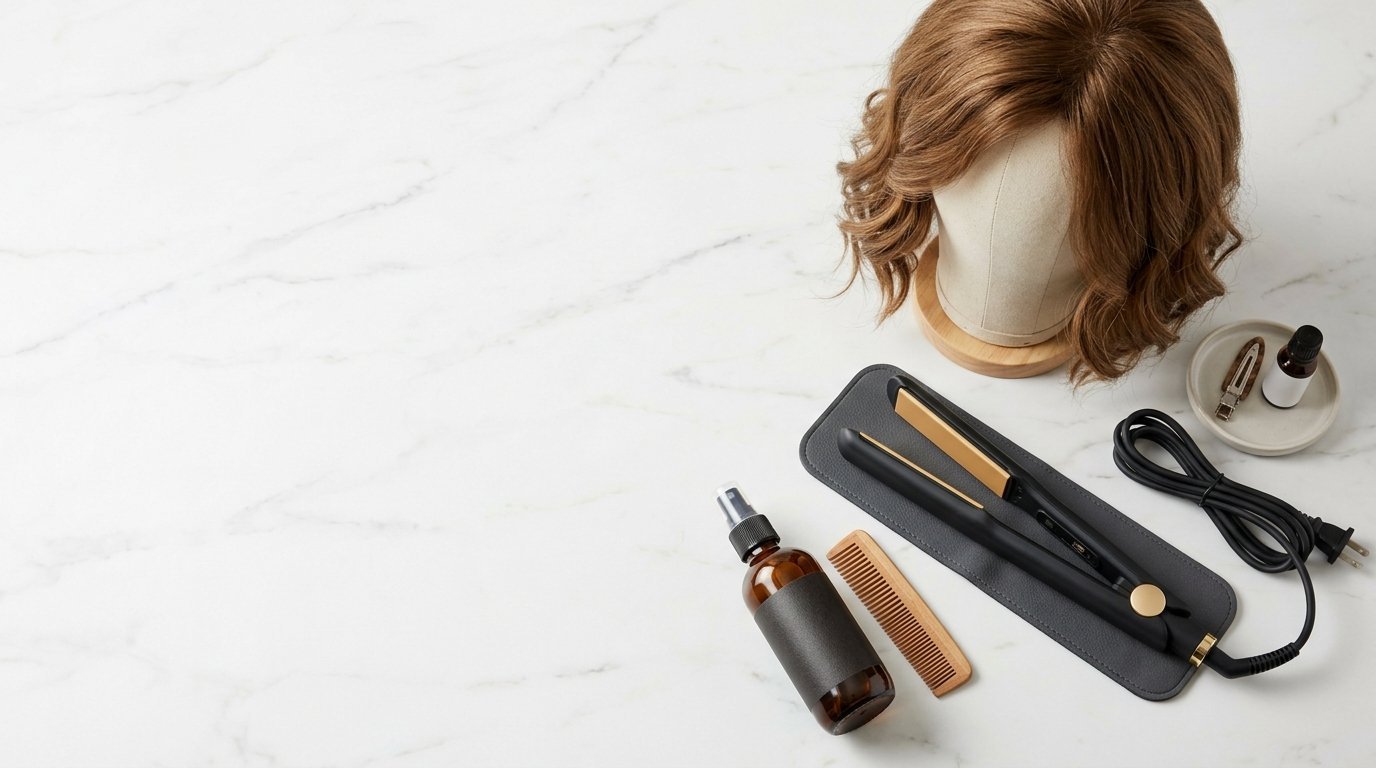
The question of heat protectant for wigs splits almost immediately into two completely different conversations, because synthetic fiber and human hair respond to heat in fundamentally different ways -- and they need protection for fundamentally different reasons. A product that works well as a heat protectant for human hair wig styling may do very little for a synthetic wig, and some products marketed as heat protectant for synthetic wigs provide far less protection than their labels suggest.
If you have ever had a synthetic wig section fuse or become stiff after using a heat tool -- even with protectant spray applied -- or noticed that your human hair wig dries out faster than your natural hair despite using the same products, this guide explains why and what actually works.
How Heat Damages Human Hair Wigs vs. Synthetic Wigs
Understanding the damage mechanism is the foundation for choosing the right protection:
Human Hair Wig Heat Damage
Human hair -- whether growing from your scalp or wefted into a wig -- consists of a protein structure (keratin) with an outer cuticle layer. Heat damage in human hair occurs when the water within the hair shaft vaporizes too rapidly under excessive heat, when the keratin proteins denature (irreversibly change structure) at very high temperatures, and when the cuticle layer is disrupted by heat combined with friction from styling tools.
A key difference between a human hair wig and natural growing hair: the wig cannot receive natural oils from the scalp, which in growing hair provide a baseline level of thermal protection and moisture retention. A human hair wig is inherently drier than well-conditioned natural hair, which makes it slightly more susceptible to heat damage at the same temperatures. This is why heat protectant for human hair wigs is genuinely important -- not just for the heat itself, but for compensating for the moisture deficit that wig construction creates.
Synthetic Wig Heat Damage
Synthetic fiber is a plastic polymer. Its heat "damage" is not the same biological process as human hair damage -- it is a material phase change. When synthetic fiber is heated above its glass transition temperature (the point where the polymer softens), the fiber loses its set shape, can fuse with adjacent strands, and in severe cases melts. Once the polymer solidifies again as it cools, it retains whatever shape it cooled in -- which may be flat, fused, or deformed.
Standard (non-heat-resistant) synthetic fiber begins to soften at around 175-200°F (80-93°C) -- temperatures well below what most hair tools produce. Heat-resistant synthetic fiber has a higher glass transition temperature, typically rated for use up to 300-350°F (150-175°C). No amount of heat protectant for synthetic hair makes standard synthetic fiber heat-safe for use with styling irons. If a product is labeled standard synthetic and not heat-resistant, do not use heat tools on it regardless of what protectant you apply.
Heat Protectant for Human Hair Wigs: What to Look For
For human hair wigs, a heat protectant for human hair wig needs to do three things:
- Slow water vapor loss from the hair shaft during heat styling -- typically through film-forming polymers that coat the hair surface and reduce rapid moisture evaporation
- Reduce friction between the hair and the styling tool plates -- silicone-based ingredients create a slip layer that reduces the mechanical disruption caused by tool movement through the hair
- Provide moisture to compensate for the wig's lack of scalp-derived oil -- ingredients like glycerin, panthenol, and hydrolyzed proteins that attract and retain moisture in the hair
Products that work well as heat protectants for human hair wigs are largely the same products that work well for natural hair, with one addition: look for products that also have significant conditioning ingredients (not just heat protection film-formers) to address the dryness that wig fiber develops without scalp oil supply. Recommended formulation features:
- Silicone (dimethicone, cyclomethicone, or amodimethicone) for thermal barrier and slip
- Hydrolyzed proteins (keratin, wheat protein, silk amino acids) to temporarily strengthen and protect the cuticle
- Humectants (glycerin, panthenol, aloe) for moisture retention
- No or minimal alcohol content (alcohol accelerates moisture loss in heat styling)
Well-regarded products in this category include Kenra Platinum Silkening Mist, HSI Professional Argan Oil Heat Protector, and CHI 44 Iron Guard -- all of which work on human hair wigs with the same effectiveness as on natural hair. Brand matters less than formulation; reading the ingredient list is more reliable than relying on marketing claims.
Heat Protectant Spray for Synthetic Wigs: What Is Actually Happening
A heat protectant spray for synthetic wigs works differently from a human hair protectant because synthetic fiber has different physics. The protective mechanism in synthetic wig heat protectants is primarily:
- Thermal barrier coating: Film-forming ingredients that coat the fiber surface and slow heat transfer from the tool to the fiber core -- buying a small amount of additional time before the fiber reaches its glass transition temperature
- Friction reduction: Silicone-based lubricants that reduce the friction between fiber strands and between fiber and tool, which can generate additional heat through mechanical action
- Static reduction: Anti-static ingredients that reduce the electrical charge buildup in synthetic fiber during heat styling
What a synthetic wig heat protectant cannot do: raise the glass transition temperature of the fiber. If the fiber is rated to 300°F and you use a 450°F flat iron, the protectant spray does not make the tool safe -- it might buy you a fraction of a second before damage begins. The most important protection for heat protectant for synthetic wigs is using your tools at or below the fiber's rated maximum temperature, not relying on spray products to compensate for excess heat.
Specific products formulated for synthetic fiber include the CHI Synthetic Wig & Hair Care Styling Spray and similar products from wig-specific care brands. Alternatively, a light silicone serum (pure dimethicone applied sparingly) provides much of the friction reduction and slight thermal barrier benefit at a fraction of the cost of specialty sprays.
How to Apply Heat Protectant to a Wig Correctly
Application method affects how well any heat protectant performs on a wig:
- Apply before heat, not during: Spray the protectant onto the section of wig you are about to style, allow it to absorb for 30-60 seconds, then apply the heat tool. Applying protectant to already-heated hair provides minimal additional protection.
- Apply in sections, not all at once: Apply to one section, style that section, then move to the next. Applying protectant to the entire wig and then styling section by section means the first sections are well-protected but the later sections' protectant has already partially evaporated.
- Use the right amount: More is not more protective with heat spray -- oversaturation with protectant can make fiber sticky (for synthetic) or greasy (for human hair) without providing additional thermal protection. A light, even mist over each section is correct application.
- Start at a lower temperature than you think you need: On wigs, start at the lowest effective heat setting and increase only if needed. The temperature you use on your natural hair is often more than necessary on wig fiber, which styles at lower temperatures than hair that has been accumulating product and natural oil over time.
Frequently Asked Questions
Can I use a regular hair heat protectant (designed for natural hair) on my human hair wig?
Yes, with minor caveats. Products designed for natural hair work on human hair wigs because the hair is the same material -- the protectant mechanism works on the keratin structure regardless of whether the hair is attached to a scalp or a wig cap. The one practical difference: regular heat protectants sometimes include ingredients specifically targeted at scalp concerns (salicylic acid for dandruff, certain botanical extracts designed to penetrate to the follicle) that have no purpose on a wig and just add cost without benefit. Beyond that, any heat protectant formulated for chemically processed or color-treated natural hair (which tends to be formulated for drier, more fragile hair similar to the condition of wig hair) is an appropriate choice for heat protectant for human hair wig use. Products formulated for virgin, healthy natural hair are fine too. The main thing to avoid: very heavy, leave-in oil treatments that are designed for extremely dry natural hair but will make wig fiber feel greasy and attract lint when used in the concentrations designed for very porous natural hair.
My synthetic wig is labeled heat-resistant -- do I still need to use a heat protectant spray?
It is worth using, though the protection works somewhat differently than on human hair. A heat protectant for synthetic hair on a heat-resistant fiber provides two practical benefits even when the fiber is already rated for your styling tool's temperature: it reduces the friction between fiber strands during styling (which reduces tangling and static buildup, both common with synthetic fiber heat styling), and it provides a buffer against accidental brief temperature overages -- if your iron momentarily reaches slightly above the set temperature, the protective coating slows heat transfer to the fiber enough to reduce the risk of spot damage. It also improves the glide of your tool through the fiber, which produces smoother results with less required heat. The correct approach is: use a heat-resistant synthetic wig protectant spray, set your tool at 30-50°F below the maximum rated temperature for the fiber (not at the maximum, which provides no safety margin), and work in small sections without dwelling on any single area too long. The combination of appropriate temperature management and protectant spray produces significantly better results -- and much longer wig lifespan -- than either approach alone.
If you are a wig retailer or beauty supply business looking to source wigs alongside the care products that help customers get the most from them, contact our sourcing team. We supply synthetic and human hair wigs at wholesale pricing for retail businesses.
WhatsApp: +86 17347350405
Email: hello@voretrade.com