Hair Falls and Fall Wigs: What They Are, Who Uses Them, and How to Choose the Right One
June 16, 2026 · Marcus Vore
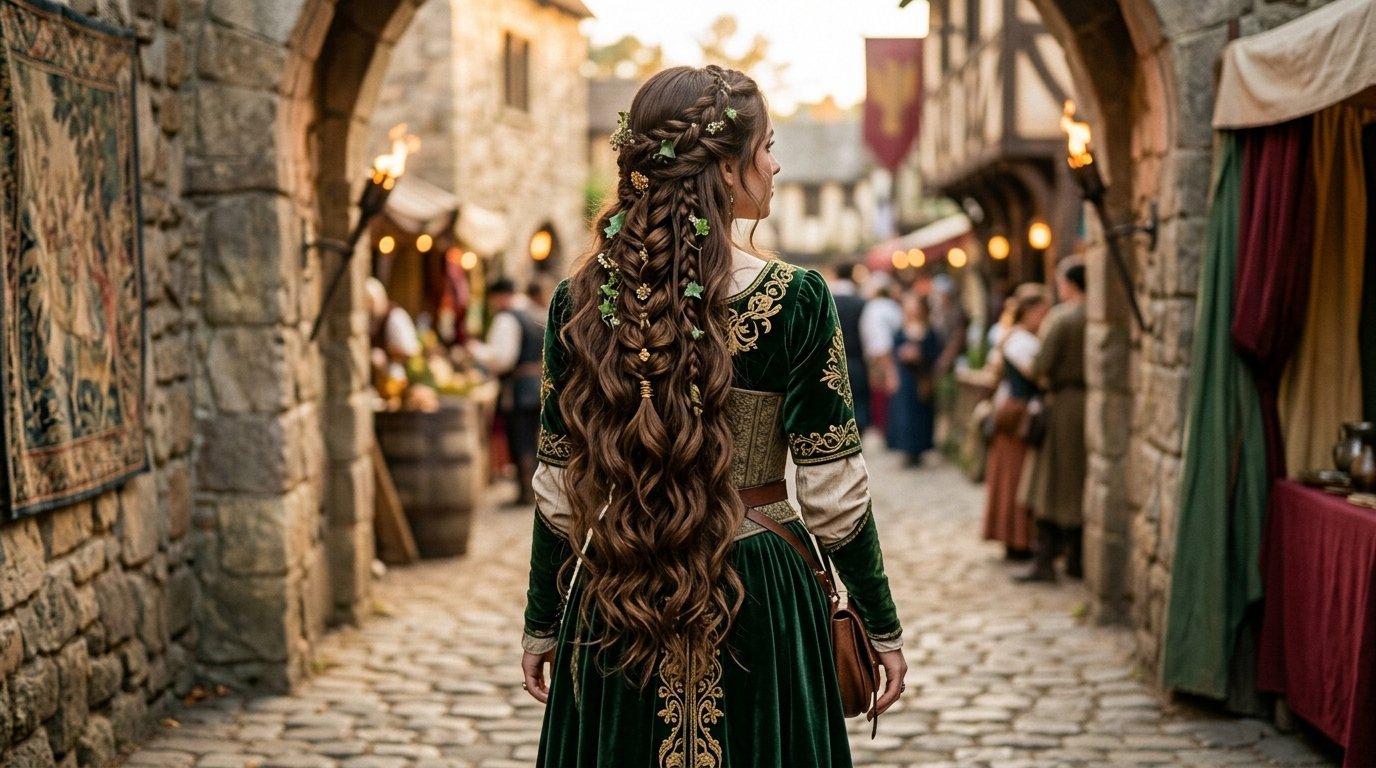
Hair falls are one of those products that most people have seen without knowing what they were looking at. That woman at the Renaissance faire with the impossibly long, thick braid that starts halfway down her head. The theater performer whose hair seems to change length between scenes. The cosplayer whose character has floor-length locks that move as one coherent unit. In many of these cases, what you are looking at is a hair fall — and once you understand what they are, you start seeing them everywhere.
The problem is that hair falls sit in an odd corner of the hairpiece market. They are not quite wigs, not quite extensions, and not quite clip-ins. Most general wig retailers carry limited selection. Search results mix up "hair fall" (meaning hair loss) with "hair falls" (the hairpiece), which makes finding actual product information genuinely difficult. This guide clears all of that up.
What Are Hair Falls, Exactly?
A hair fall is a hairpiece — typically a long, gathered cluster of hair — that attaches to the existing hair at a specific point on the head, usually the crown, nape, or mid-back, and then hangs or "falls" downward from that attachment point. Unlike a full wig, which covers the entire head, a hair fall is partial: it adds length, volume, and drama below the attachment point while your own hair — or the visible portion of it above the attachment — remains on display.
The attachment is usually a comb, drawstring loop, or clip integrated into the base of the fall. You gather your own hair into a ponytail, bun, or half-up style, then secure the fall around or over that anchor point. When worn correctly, the transition between your bio hair and the fall is hidden inside the gathered style, and the result looks like one continuous head of very full, very long hair.
Wigs and falls are related but different products. A wig replaces all visible hair. A fall supplements what is there. Both exist in human hair and synthetic versions, and both serve genuine style needs — but falls are the right tool when you want to keep some of your own hair visible, when you want a dramatic addition without the commitment of a full wig cap, or when the look you are building specifically requires hanging, cascading hair from a particular point on the head.
Who Actually Uses Hair Falls — and Why
The honest answer is a wider range of people than most expect. Hair falls show up across several distinct communities and use cases:
Historical and Fantasy Costuming
Renaissance faire participants, historical reenactors, and fantasy costume builders have used falls for hair for decades. The reason is practical: achieving the kind of length and volume appropriate for a medieval or fantasy character look with real bio hair requires either years of growing or a significant synthetic hair investment. A quality hair fall achieves the effect in seconds, attaches securely enough for a full day of outdoor event activity, and can be removed and repacked for the next event without damage.
For this community, human hair falls are less common than high-quality synthetic, because the synthetic options are more resistant to outdoor conditions, easier to maintain between events, and available in fantasy colors that human hair cannot achieve without dyeing. But for historical costuming where accuracy matters — where the texture and movement of real hair is part of the authenticity — human hair fall wigs and falls are the preferred choice.
Theater and Performance
Stage productions use fall hair pieces as a quick-change solution that full wigs cannot match as efficiently. A performer who needs long hair in Act One and a gathered updo in Act Two can wear a fall secured into a pinned updo, then release and re-pin the fall for the down style between scenes. The speed of that transition matters in live performance in ways it does not in film, where hair and makeup breaks are built into the schedule.
Theater productions that require multiple performers in identical period hair — a Greek tragedy chorus, a Victorian ensemble scene — often use matching falls because they produce more visual consistency across cast members of different natural hair types and lengths than trying to style each person's actual hair to the same result.
Cosplay and Convention Events
A significant portion of the cosplay community uses hair fall wigs and fall hairpieces for characters where specific volumes and lengths are required but where a full wig feels like overkill. Characters with elaborate braids, enormous ponytails, or dramatic single sweeping hair masses are natural candidates for fall construction. Attaching a fall to a styled base wig gives more control over how the hair hangs and moves than trying to build the same effect entirely into a wig construction.
Fashion and Special Occasion Use
Outside of costuming, falls for hair have a genuine place in fashion and event styling. A bride who wants significantly longer, fuller hair for her wedding day without the permanent commitment of extensions. A performer or musician building a signature stage look. A person with thinning hair who wants the visual impact of very long, full hair for a special event. In each case, a well-matched human hair fall worn over or blended with existing hair delivers the result without surgery, extensions, or a full wig.
Human Hair Falls vs. Synthetic Falls: The Key Differences
The choice between human hair falls and synthetic fall hair pieces follows the same logic as any other human-hair-versus-synthetic wig decision, with a few specifics worth noting.
When Human Hair Falls Are Worth It
Human hair falls look and move like real hair because they are real hair. For any application where the fall will be seen up close — fashion photography, weddings, theatrical productions with small venue audiences — human hair falls deliver a level of realism that no synthetic product currently matches. They can be heat-styled, which matters if you need to curl or straighten the fall to match a look. They can be colored to match your bio hair with precision. And they last significantly longer: a quality human hair fall with good care lasts several years of regular use.
Partial human hair wigs — which function similarly to falls but with a more integrated cap base that covers more of the upper head — also exist in human hair and serve situations where you need the realism of human fiber across a larger surface area.
When Synthetic Falls Make More Sense
Synthetic falls for hair are less expensive, more durable in outdoor or active conditions, require less maintenance between uses, and are available in a much wider range of colors — including vivid, non-natural shades. For anything involving outdoor events, active cosplay, fantasy or unnatural colors, or situations where the fall will be stored between uses without careful maintenance, synthetic is the practical choice.
The limitation of synthetic is visual: under close inspection or direct photography, the difference in texture and sheen between synthetic fiber and human hair is detectable. If the fall will be seen primarily at a distance — from a convention floor, from an audience seat — this matters less. If it will be photographed close-up or seen in intimate settings, the visual gap between synthetic and human hair falls becomes more significant.
How to Attach a Hair Fall Correctly
The most common mistake with falls for hair is poor attachment that results in the fall slipping, shifting, or creating a visible gap between the bio hair anchor and the fall itself. Here is how to do it correctly:
Create a solid anchor first. A hair fall needs something to grip. The anchor is usually a ponytail or bun made from your own bio hair — or, if your hair is short, a base bun form or a pinned hairpiece. The anchor needs to be tight and secure; a loose ponytail will shift during wear and take the fall with it.
Position the fall over, not beside, the anchor. The fall's attachment mechanism — whether a comb, loop, or clip — should wrap around or sit directly on top of the bio hair anchor. The gathered hair from the anchor should merge naturally with the fall's hair at the join point. This is where most people rush and create a visible seam.
Secure the join with bobby pins or a hair tie that matches your hair color. Once the fall is attached, take a small section of the top hair from the fall and wrap it around the visible join point, then pin it. This creates a seamless transition between your bio hair above the attachment and the fall's hair below.
Dress the fall, do not just let it hang. After attaching the fall, spend a minute separating and smoothing the hair at the top of the fall where it joins your bio hair. Running your fingers through the join point and letting both hair masses flow together creates a natural look. A fall that is attached and immediately left alone often shows a visible density change at the join.
What to Look For When Buying Hair Falls
The hair fall market is smaller and more specialized than the general wig market, which means fewer listings, less standardization, and more variation in quality. Here is what to evaluate:
Fiber density at the top of the fall. This is where the fall joins your bio hair, so it is the most visible section. A fall that is sparse at the top looks thin and unnatural at the join point even if the rest of the fall is full. The density should be heaviest at the attachment base and taper slightly toward the ends, which is how natural hair actually behaves.
Attachment mechanism quality. A hair fall that attaches securely and stays secure through active use is non-negotiable. Combs should be wide-toothed and firmly anchored to the fall base — narrow combs on a heavy fall will slip. Drawstring loops should be made from a material that cinches tightly without cutting into the hair anchor. Clip attachments should have teeth that grip without pulling hair out when removed.
Length consistency. Run your hand through a fall before buying if purchasing in person, or check reviewer photos carefully if buying online. Falls with inconsistent lengths — where some strands are significantly shorter than others — were either cut unevenly or have shed significantly from the base. Neither is a good sign.
Color match accuracy. If you are wearing a fall to blend with your bio hair, color matching is critical. Human hair falls can be dyed to a precise match by a colorist after purchase, which is an option worth considering for expensive falls where you want a perfect result. For synthetic falls, rely on natural daylight photos from buyers rather than listing photography.
Caring for Human Hair Falls Between Uses
A human hair fall is an investment that rewards proper maintenance with significantly extended life. After each use:
- Detangle from the ends upward using a wide-tooth comb before washing or storing. Never start at the roots when detangling a fall.
- Wash with a sulfate-free shampoo when the fall accumulates product buildup — not after every use. Over-washing human hair falls strips moisture and causes the fiber to become dry and prone to tangling.
- Condition after every wash with a hydrating conditioner, and consider a leave-in conditioner before storing if the fall will be unused for more than a few weeks.
- Store the fall on a wig stand or loosely braided in a breathable bag — never crammed into a tight container or left in a plastic bag, which traps moisture and causes the base to develop odor and the hair to mat.
- Avoid storing in direct sunlight, which fades human hair and causes the color to shift over time.
Sourcing Hair Falls for Retail or Wholesale
For costume shops, theater supply houses, Renaissance event vendors, and specialty wig retailers, hair falls represent a consistently in-demand product that most general wig distributors under-stock. Building reliable inventory in this category requires either finding a specialist supplier or working with a wig manufacturer that has the capability to produce falls to specification.
The specifications that matter most for wholesale fall ordering: fiber type (human vs. synthetic, and fiber grade within each category), base construction and attachment type, length range, color offerings, and density per piece. Falls that vary in density or length between batches create returns and inconsistent customer results, so quality control consistency across orders is worth evaluating specifically rather than assuming.
If you source wigs, falls, or other hair products for a retail or commercial business and are looking for a consistent supply of human hair falls, synthetic falls, or partial human hair wigs, contact our sourcing team. We work with buyers across the theatrical, cosplay, fashion, and retail wig markets to find products that match their specific requirements.
WhatsApp: +86 17347350405
Email: hello@voretrade.com