Crown Extensions for Thinning Hair: How to Add Volume to the Top of Your Head
August 5, 2026 · Marcus Vore
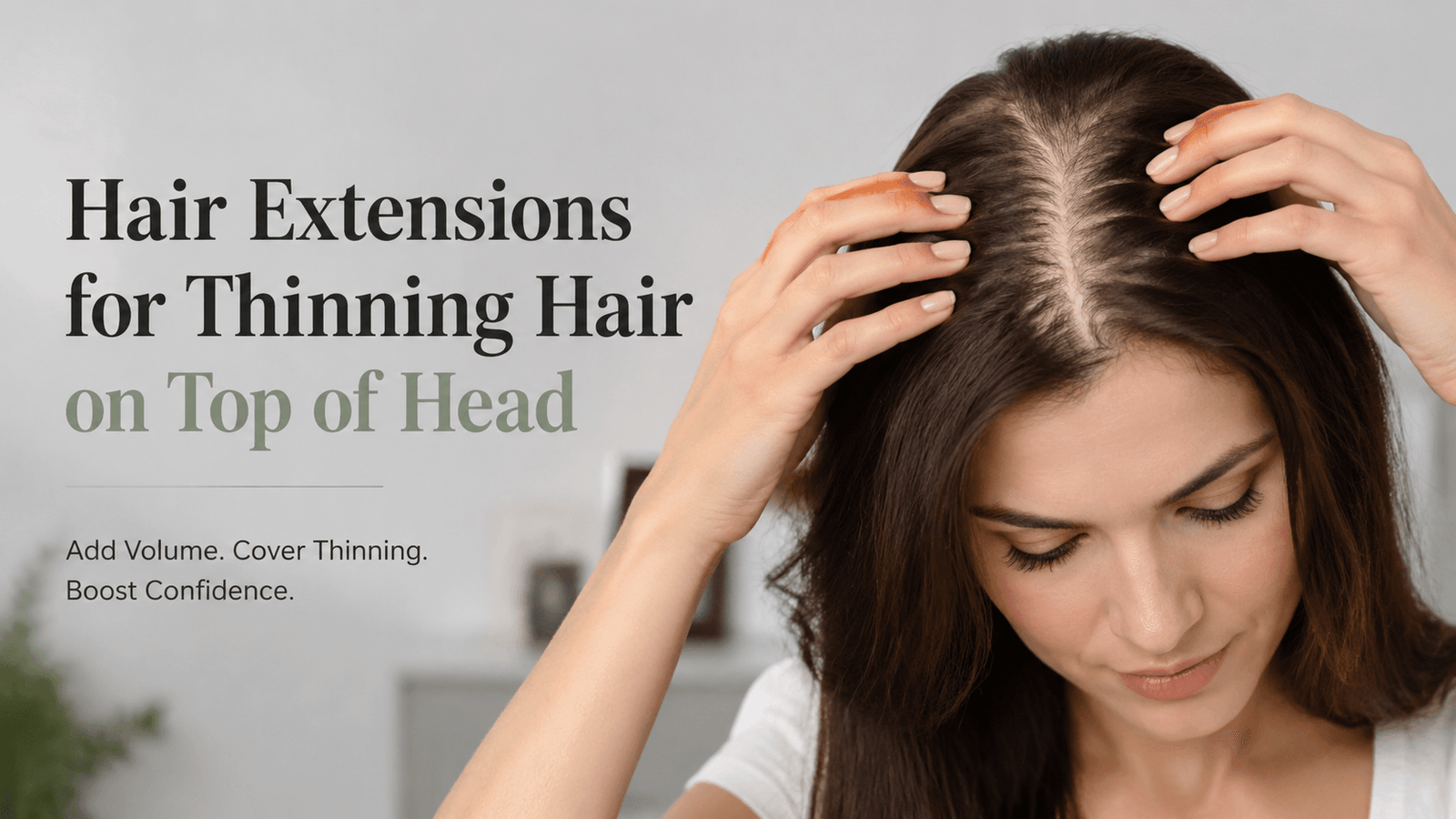
When most people think of hair extensions, they picture long, flowing wefts sewn or taped into the back and sides of the head. While standard extensions are excellent for adding length and bulk to the lower half of your hair, they are practically useless for covering thinning at the crown or parting line. In fact, placing traditional extensions too high on the scalp can expose the tracks and bonds, making it obvious you are wearing artificial hair.
If you are dealing with sparse spots or localized hair loss at the top, you need a different category of product. This is where hair extensions for top of head -- commonly known as crown extensions or hair toppers -- come in. Designed specifically to sit flat on the crown, these pieces blend seamlessly with your natural hair to restore fullness right where you need it most.
What Are Crown Extensions and How Do They Work?
Unlike standard wefts, crown extensions for thinning hair are built on a specialized base rather than a narrow track. This base is typically made of a breathable mesh (like lace or monofilament) or a skin-like silk material, through which individual hairs are hand-tied. The base is shaped to fit the curvature of the crown and is secured using pressure-sensitive clips, micro-beads, or medical-grade adhesives.
Once secured, your natural hair is pulled through or blended around the edges of the piece. The hand-tied construction ensures that the hair falls naturally in all directions, mimicking the organic growth pattern of a real scalp. This makes it virtually impossible to tell where the hairpiece ends and your natural hair begins.
The Different Types of Extensions for Thin Hair on Top of Head
Selecting the right top-of-head extension depends on the severity of your thinning and your lifestyle. The market generally categorizes these pieces into three main types:
1. Clip-In Hair Toppers (The Easiest Entry Point)
For most women experiencing moderate thinning at the part or crown, a clip-in hair topper is the most practical solution. These pieces feature a lightweight base with 3 to 6 pressure-sensitive clips sewn along the perimeter. You simply align the piece with your part, snap the clips shut against your natural hair, and style as usual. They are easy to put on, take off daily, and require no chemical adhesives or professional installation fees.
2. Semi-Permanent Crown Extensions (Professional Installation)
If you prefer a solution you don't have to remove every night, semi-permanent hair extensions for thinning hair on top of head are a popular alternative. These are installed by a professional stylist using one of two methods:
- Micro-Link Integration: The topper's base is secured to your natural hair using tiny, silicone-lined metal beads. This keeps the piece locked in place for 4 to 8 weeks before it needs to be adjusted as your hair grows.
- Mesh Integration Systems: A hypoallergenic mesh is fitted to your scalp, your natural hair is pulled through, and the topper is sewn directly onto the mesh. This is highly recommended for women with advanced hair loss who want a secure, semi-permanent system they can wash and style like their own hair.
3. Tape-In or Bonded Top Pieces
For areas with severe thinning where there is not enough natural hair to support clips or beads, bonded top pieces are used. These are secured directly to the scalp using medical-grade liquid adhesive or specialized double-sided tape. They can be worn continuously for 2 to 4 weeks, allowing you to shower, exercise, and sleep without removing the piece. They require professional maintenance to clean the scalp and reapply the adhesive safely without damaging the remaining natural hair.
Choosing the Right Base Material: Silk, Mono, or Lace?
The base material is what determines how realistic the "scalp" looks when someone looks down at the top of your head. The three most common options each carry distinct pros and cons:
| Base Type | Realism Level | Breathability | Durability |
|---|---|---|---|
| Silk Base | Highest (looks exactly like real skin) | Moderate | High |
| Monofilament (Mono) | High (transparent mesh) | High | High |
| Lace Base | Moderate-High (very thin and flat) | Highest | Moderate (delicate) |
For the most realistic parting line, a silk base is the gold standard. It features a layer of silk fabric that hides the hair knots beneath, making the hair look like it is growing directly out of a real human scalp. If you live in a hot climate or exercise heavily, a monofilament or lace base offers superior breathability while still delivering excellent realism once blended with concealer.
Practical Tips for Blending and Styling
Installing the piece is only half the battle; blending it is what makes it look natural. Follow these styling rules for the best results:
- Get a professional cut: Do not wear a crown topper straight out of the box. Take it to a professional stylist while wearing it, and have them cut face-framing layers and blend the density to match your natural hair length and thickness.
- Match the color, not the roots: When buying extensions for thin hair on top of head, match the color of the piece to the mid-lengths and ends of your natural hair, not your roots. Your roots can easily be blended using a root spray or colored dry shampoo.
- Keep the density natural: It is tempting to buy a thick, high-density piece to compensate for thinning, but a sudden jump to 150% density will look obvious. Choose a natural density (110% to 130%) that matches your remaining hair for a subtle, believable transition.
- Wash gently: Since these pieces do not receive natural oils from your scalp, they do not need frequent washing. Wash them every 15-20 wears using sulfate-free shampoos, and always air dry them on a stand to maintain the base shape.
Frequently Asked Questions
Can crown extensions cause further hair loss or damage my scalp?
If chosen and installed correctly, crown extensions will not cause further damage. However, the risk of damage is real if you use a method that does not suit your hair's strength. For women with fragile, highly active hair loss (such as active alopecia), clip-in toppers can apply tension to weak roots, potentially causing traction alopecia. In these cases, a professional mesh integration system or a bonded scalp topper is much safer because it distributes the weight of the hairpiece across a larger surface area or avoids tension on the natural hair entirely. For women with stable, moderate thinning, clip-ins are perfectly safe as long as you rotate the clip placement slightly, avoid clipping them onto wet hair, and never sleep in them. Consulting with a hair restoration specialist or a trained stylist is the best way to determine which installation method will protect your natural hair while giving you the coverage you need.
How do I choose the correct base size for my thinning crown?
Choosing the correct base size requires measuring the actual area of your thinning, rather than guessing. Use a flexible measuring tape to measure the width and length of the sparse area on the top of your head, then add at least one inch to both measurements. For example, if your thinning area is 3 inches wide by 4 inches long, you should look for a topper with a base size of at least 4x5 inches. The extra inch ensures that the clips or beads secure onto healthy, strong hair outside the thinning zone, rather than pulling on weak, sparse hairs. Securing a topper directly onto thinning hair is the most common cause of discomfort and slippage. If you have advanced hair loss that covers most of your crown, you may need a larger base size like 6x6 or 8x8 inches, or even a full wig if the thinning extends down the sides and back of your head.
If you are a salon owner, hair loss specialist, or boutique retailer looking to source premium silk-base toppers and integration systems at wholesale pricing, contact our sourcing team. We supply high-grade human hair toppers and crown extensions for businesses worldwide.
WhatsApp: +86 17347350405
Email: hello@voretrade.com