Fabric Softener for Synthetic Wigs: How to Use It, How Long to Soak, and Why It Works So Well
July 30, 2026 · Marcus Vore
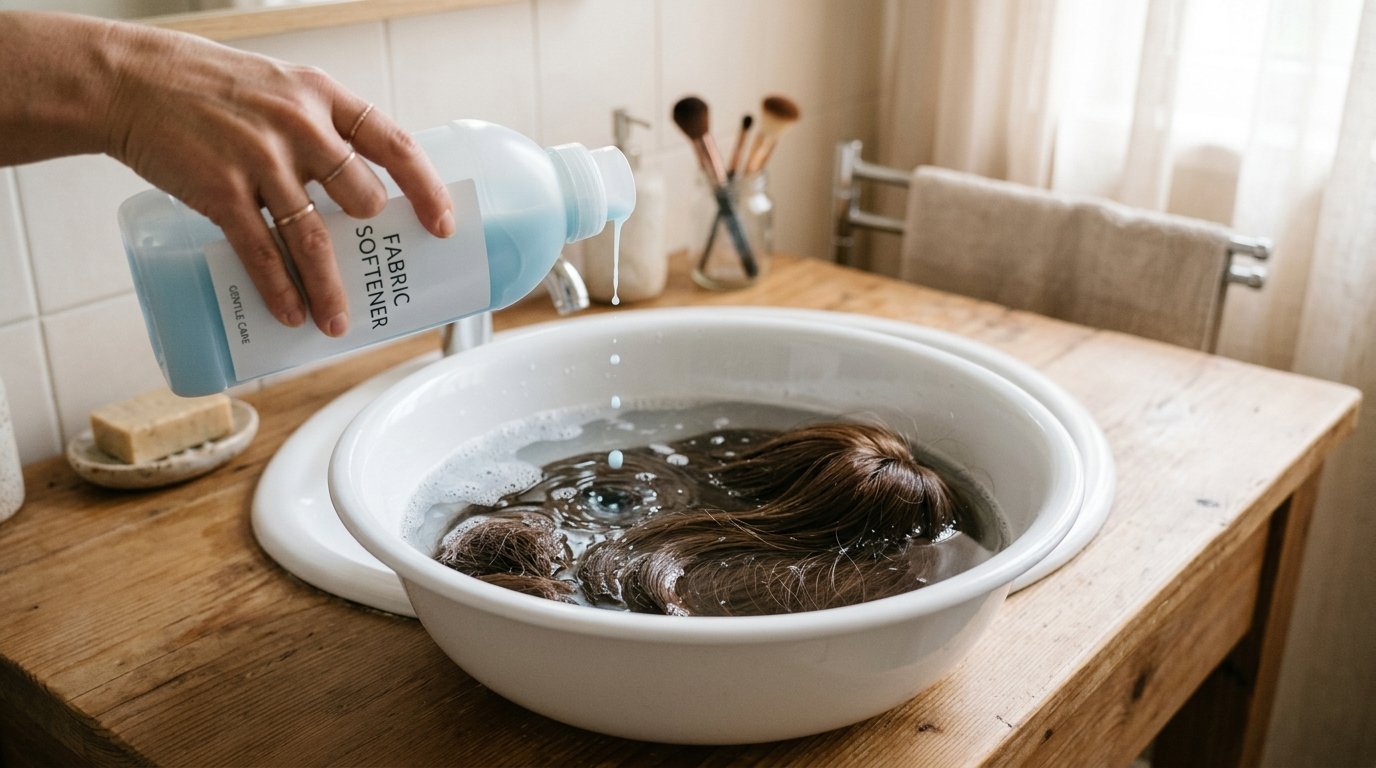
If you have been in synthetic wig care communities for any length of time, you have seen fabric softener mentioned as a wig care solution. It might seem like an odd recommendation -- why would a laundry product work on hair? -- but once you understand what synthetic fiber actually is and how fabric softener works, the recommendation makes complete and obvious sense. This guide covers the full picture: why fabric softener works on synthetic wigs, both methods of using it (soak and spray), exactly how long to leave your wig in fabric softener, and what to realistically expect from the results.
Why Fabric Softener Works on Synthetic Hair
Synthetic wig fiber is a polymer -- the same family of materials as polyester, acrylic, and the other synthetic fibers used in clothing and soft furnishings. Fabric softener is specifically formulated for synthetic and natural fabrics, and it works by depositing cationic surfactants (positively charged detergent-like molecules) on fiber surfaces, where they create a thin lubricating film that reduces fiber-to-fiber friction and dissipates static charge.
Both of these effects -- friction reduction and static reduction -- are exactly the problems that matter most in synthetic wig care. Synthetic wig fiber tangles because the polymer surface has high inter-fiber friction. Synthetic wigs frizz and separate because polymer fiber accumulates static charge more readily than natural hair. Fabric softener addresses both through the same mechanism it uses on polyester shirts and microfiber towels: a thin coating that makes the fiber surface slippery and conductive enough to discharge static.
Regular hair conditioner, by comparison, is designed to work on biological hair's cuticle through a different chemistry. On synthetic fiber without a cuticle, most regular conditioner ingredients cannot bond as intended and either provide minimal benefit or accumulate as residue. Fabric softener, designed for synthetic materials, works directly on what synthetic fiber is.
Method 1: How to Wash a Synthetic Wig With Fabric Softener (The Soak Method)
This is the primary method -- used as a conditioning rinse after shampooing the wig. It produces the most thorough and even conditioning result.
What You Need
- A clean basin large enough to fully submerge the wig
- Liquid fabric softener (any standard brand -- unscented if possible, or lightly scented)
- Cool water
- A wide-tooth comb
- A wig stand for drying
Steps
1. Shampoo the wig first. The fabric softener step works best on a clean wig. Wash with a gentle synthetic wig shampoo or baby shampoo first (using cool water throughout), then rinse completely.
2. Prepare the fabric softener solution. Fill the basin with cool water. Add one tablespoon of liquid fabric softener. Stir gently to combine. This dilution ratio is important -- too much fabric softener leaves a residue that makes the fiber feel slightly waxy and attracts dust. One tablespoon in a standard-sized basin (roughly 8-10 liters of water) is the correct proportion.
3. Submerge the wig. Place the freshly shampooed, rinsed wig into the fabric softener solution. Use your hands to gently swirl it so the solution contacts all sections of the fiber evenly.
4. How long to leave the wig in fabric softener. Two minutes is sufficient for a conditioning rinse. Some sources recommend longer soaks for severely frizzy or matted wigs -- five to ten minutes in the fabric softener solution provides extra friction reduction that helps with detangling severely tangled synthetic hair. For a standard post-wash conditioning step with a wig in normal condition, two minutes is all that is needed. There is no significant benefit to leaving it longer than ten minutes, and extended soaking does not improve results further.
5. Rinse with cool water. After soaking, lift the wig out and rinse with fresh cool water -- one full basin change is typically enough. This step removes excess fabric softener so it does not accumulate on the fiber. The wig should not feel slippery or waxy after rinsing; a properly rinsed wig feels soft but clean.
6. Dry on a wig stand. Gently press (do not wring) excess water from the wig and place on a wig stand to air dry completely away from direct sunlight and heat.
Method 2: Fabric Softener Spray for Wigs (Between-Wash Maintenance)
A fabric softener spray for wigs is a diluted fabric softener solution in a spray bottle, applied lightly to the wig between washes for ongoing static reduction and friction control. This is particularly useful for daily wear wigs that accumulate static and surface frizz between wash cycles.
How to Make It
Fill a small spray bottle with water. Add one teaspoon of liquid fabric softener (approximately 5ml). Shake gently to combine. That is the entire recipe. Store in a cool place and shake before each use as the solution can settle.
How to Use It
Hold the spray bottle approximately 30cm (12 inches) from the wig and apply a fine, even mist over the hair. Do not saturate -- a light mist is sufficient. Use your fingers to gently smooth the fiber after applying. Allow to dry naturally or style as usual.
This between-wash spray application provides real static reduction and some friction reduction, extending the period before the wig needs a full wash while keeping it feeling smoother and more manageable. Because the dilution is higher (more water, less fabric softener) than the soak method, there is minimal buildup risk from light spray application.
Using Fabric Softener for Severely Matted Synthetic Wigs
For a synthetic wig that has become severely matted -- tight, compressed fiber tangles that resist normal detangling -- an extended fabric softener soak is one of the most effective recovery methods available.
Fill a basin with cool water and add two tablespoons of fabric softener (a more concentrated solution than the standard conditioning rinse). Submerge the wig and allow to soak for ten to fifteen minutes, gently swirling occasionally. The extended contact with the fabric softener significantly reduces inter-fiber friction throughout the matted sections. After soaking, while the wig is still wet, begin detangling immediately using the ends-upward technique with a wide-tooth comb. The combination of the fabric softener lubrication and the water weight makes severely tangled sections much more workable than they would be when dry.
After detangling, rinse thoroughly with cool water and dry on a wig stand. This approach rescues many wigs that seem beyond recovery -- the realistic expectation is that most of the matting can be resolved, though sections where the fiber has physically frayed or broken from repeated rough handling may not fully restore.
Fabric Softener for Synthetic Weave
Fabric softener works equally well on synthetic weave -- whether it is installed in a sew-in or used as clip-in extensions. For installed synthetic weave, the spray method is more practical than the soak method since you cannot submerge an installed style in a basin. A diluted fabric softener spray applied lightly to the weave hair (not the scalp) reduces static and frizz between wash days and keeps the install looking fresh longer.
For clip-in synthetic extensions removed for washing, the full soak method works identically to wig washing -- submerge in the diluted fabric softener solution after shampooing, soak two minutes, rinse, and allow to dry completely before clipping back in.
What Fabric Softener Cannot Do
Being clear about the limitations helps set accurate expectations. Fabric softener conditions the surface of synthetic fiber -- it does not repair fiber that has been damaged by heat, does not restore faded color, does not fix permanently frizzy sections caused by heat damage, and does not restore a wig's factory style. It makes good synthetic fiber feel better and behave better. It cannot transform poor-quality or damaged fiber into something it is not.
Frequently Asked Questions
Can I leave my synthetic wig in fabric softener overnight?
There is no benefit to leaving a synthetic wig in fabric softener for extended periods beyond ten to fifteen minutes, and a full overnight soak is not recommended. The conditioning effect of fabric softener on synthetic fiber is achieved within the first few minutes of contact -- the cationic surfactants coat the fiber surface relatively quickly and additional soaking time does not add more conditioning. Leaving the wig in fabric softener solution overnight risks a heavier residue coating that requires more thorough rinsing to remove, and may make the fiber feel slightly waxy rather than conditioned. For severely matted wigs where extra soak time helps with detangling, ten to fifteen minutes is the practical upper limit that provides real benefit without excess residue. Standard post-wash conditioning needs only two minutes.
Will fabric softener make my synthetic wig smell like laundry?
Possibly a light scent initially, yes -- most liquid fabric softeners have a noticeable fragrance, and some of that fragrance remains on the fiber after rinsing. Whether this is noticeable during wear depends on the fabric softener's scent intensity and how thoroughly you rinse. Unscented or very lightly scented fabric softeners are the best choice if this is a concern. A thorough rinse with fresh cool water after the fabric softener soak removes most of the scent along with the excess product -- the objective is a lightly conditioned fiber surface, not a saturated application that retains heavy fragrance. If any scent remains after drying that you find noticeable, a second cool water rinse after the initial one addresses it. Some wig wearers find the light laundry scent that remains after proper rinsing is not unpleasant and may prefer it to the faint chemical smell that unwashed synthetic fiber can have after environmental exposure.
If you are a wig retailer or beauty business looking to source synthetic wigs and care accessories at wholesale pricing, contact our team. We supply quality synthetic hair alongside the full range of wig care products.
WhatsApp: +86 17347350405
Email: hello@voretrade.com