Curly Synthetic Wigs: How to Choose, Style, and Maintain Synthetic Hair Curls That Actually Last
August 10, 2026 · Marcus Vore
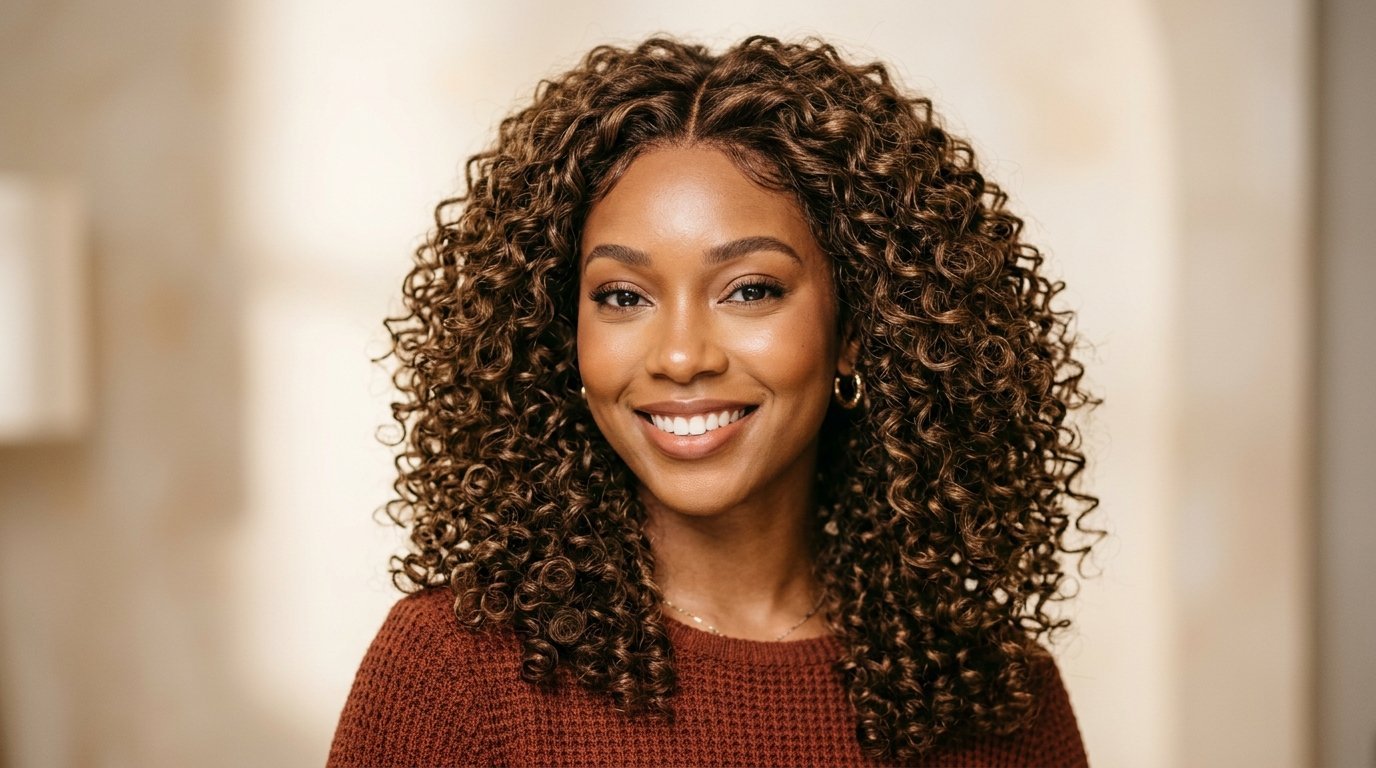
Curly wigs are beautiful when they are right and frustrating when they are wrong. Frizzy, misshapen, or flattened curls that refuse to spring back into their original pattern are one of the most common disappointments in the synthetic wig market, and they are almost always the result of a mismatch between how the buyer handled the wig and what the synthetic fiber actually needs to maintain its curl pattern.
The good news: curly synthetic wigs are significantly easier to maintain than naturally curly hair, once you understand what the fiber responds to. The curl pattern is already built in and stable -- you are not trying to create or maintain a curl through ongoing styling work. You are trying to protect a pre-existing curl structure from the forces that disturb it. That is a different and generally simpler problem.
How Curls Are Built Into Synthetic Wigs
The synthetic hair curls in a wig are not styled into the fiber after production -- they are heat-set into the fiber during manufacturing. Synthetic fiber is a type of plastic polymer. When it is heated to a specific temperature and wound around a rod or former, then cooled while still on the rod, the fiber permanently retains the shape it was set in. This is how the curl pattern in a curly synthetic wig is created: the raw straight fiber is wound, heat-set, and cooled, and the resulting curl is part of the fiber's permanent structure.
The implication of this manufacturing process is important for maintenance: the curl is stable under normal wearing conditions but can be disrupted by heat (which re-softens the fiber and allows it to lose shape) and by mechanical force (brushing, friction, and rough handling that physically deforms the curl before it can spring back). Protecting the curl means protecting it from these two forces.
Types of Synthetic Curl Patterns
Curly synthetic wigs come in a range of curl patterns, each suited to different aesthetics and management needs:
Loose Waves (S-Wave / Beach Wave)
The most manageable curl pattern in synthetic wigs. Loose waves have a wide S-pattern that gives the hair movement and body without tight coiling. They are the most forgiving of the synthetic curl types in terms of maintenance -- minor disturbance does not significantly disrupt the pattern, and the waves spring back more readily than tighter curls. Loose wave synthetic wigs are popular for everyday wear because they look natural and require the least active maintenance.
Spiral Curls (Medium-Tight Ringlets)
The classic curly wig pattern -- defined spirals that range from roughly pen-diameter to finger-diameter in width. Spiral curls look visually dramatic and full, with good definition when maintained correctly. They are more sensitive to frizz than loose waves because the tighter curl structure traps and expands with humidity. Well-constructed spiral curl synthetic wigs with good fiber quality maintain their definition well under normal conditions.
Kinky Curly (Coiled/Afro Pattern)
The tightest curl pattern available in synthetic wigs -- a coiled structure that produces significant volume and the texture associated with naturally coily afro-textured hair. Kinky curly synthetic wigs produce the most volume relative to hair length of any curl pattern. They are the most complex to maintain because the tight coil structure is the most sensitive to frizz and the most difficult to restore once disrupted. High-quality kinky curly synthetic wigs with appropriate fiber texture are significantly better performers than lower-quality options in this category.
Body Wave
A large, loose wave pattern that sits between a straight wig and a curl wig -- the hair has gentle undulation rather than defined curls. Body wave is the most natural-looking synthetic wave pattern and the easiest to manage, making it very popular for everyday wear in women curly synthetic wigs.
Synthetic Hair That Can Be Curled: Heat-Resistant Fiber
Standard synthetic fiber cannot be restyled with heat tools -- applying a curling iron to standard synthetic fiber will melt and fuse it, permanently damaging the hair. But a significant portion of the curly synthetic wigs market now uses heat-resistant fiber (sometimes called Futura fiber, Kanekalon premium, or simply "heat resistant synthetic") that can tolerate curling iron temperatures up to approximately 300-350°F (150-175°C).
Heat-resistant synthetic hair that can be curled opens up significantly more styling flexibility:
- You can restyle a pre-curled wig from its original curl pattern into a different curl size or type
- You can refresh flattened or disturbed curls by re-curling individual sections with a wand
- You can straighten sections that have become frizzy and then re-curl them cleanly
- You can create entirely custom curl configurations different from the wig's factory pattern
When shopping, check the product description for "heat resistant" or a maximum temperature specification. If neither is mentioned, assume the fiber is standard synthetic and cannot be heat-styled.
Curly Lace Wigs Synthetic: What to Look For
A curly lace wig synthetic combines the curl pattern of a curly synthetic wig with the natural-looking hairline of lace front construction. These are the most complete curly synthetic option for buyers who want both the look of defined curls and a convincing hairline that does not require glue or tape.
What makes a curly synthetic lace wig work well:
- Pre-plucked hairline: The baby hairs along the lace should be pre-plucked to varying densities to create a gradual, natural-looking density transition from the hairline into the full wig. Unplucked hairlines on curly wigs look particularly artificial because the abrupt edge between hairline and wig body is more visible against the texture contrast of curly hair.
- Curl definition at the hairline: The curls at the very front of a curly synthetic lace wig should be as well-defined as the curls throughout the rest of the wig. Lower-quality curly lace wigs sometimes have the front section looser or less defined than the rest -- a visible inconsistency.
- Lace color matching: Transparent or HD lace blends better against most skin tones than standard dark lace for curly styles, where the natural movement of the hair can shift the lace into visibility.
How to Maintain Synthetic Wig Curls
The correct maintenance approach for synthetic wig curls is the single most important knowledge for any curly synthetic wig owner:
Detangling: Never Brush Curly Synthetic Wigs
Brushing a curly synthetic wig is the most destructive thing you can do to the curl pattern. Brushing separates the curls into individual strands and creates a frizzy, undefined cloud of fiber that no longer has a recognizable curl pattern. Once a synthetic curl is brushed out, restoring it requires either re-wetting and resetting (for standard fiber) or re-curling with a heat tool (for heat-resistant fiber). Always use a wide-tooth comb or your fingers to gently separate and detangle curly synthetic wigs, working from the ends upward.
Washing Without Losing the Curl
Wash curly synthetic wigs by gently submerging the wig in cool water with diluted synthetic-specific shampoo. Squeeze the shampoo through the hair gently rather than rubbing or scrubbing. Rinse by holding the wig under cool running water without rubbing. Apply synthetic-safe conditioner in the same squeeze-through method. Rinse thoroughly. Gently squeeze excess water out without wringing. Place the wig on a wig head and allow to air dry completely -- the curls will partially lose their spring while wet and regain their shape as they dry, provided they are not disturbed during drying.
Refreshing Flattened Curls
For standard synthetic fiber: dampen the flattened sections with cool water mixed with a small amount of diluted fabric softener or a synthetic wig curl refresher spray, then scrunch the sections gently upward and allow to air dry on the wig head without touching. For heat-resistant fiber: use a small-barrel curling wand at the lowest effective temperature to rewind the flattened sections, allow to cool completely before releasing.
Frequently Asked Questions
Why do my synthetic wig curls go flat so quickly and how can I prevent it?
Synthetic curl flatness is almost always caused by one of three things: mechanical friction (the wig rubbing against clothing, a car seat, or a pillow during wear or storage), incorrect washing handling (rubbing or wringing the wig while wet, which deforms the curl before it can set), or brushing (which permanently separates the curl structure as described above). Prevention is straightforward once you identify which cause applies to you. For friction: wear the wig away from high-friction surfaces -- if your clothing has a rough collar or you frequently lean back against surfaces, the back of the wig will flatten from the contact. A satin or silk pillowcase and wig scarf for overnight storage helps significantly if the wig is stored rather than removed. For washing: use only the squeeze-and-release method described above, never rubbing or wringing. For brushing: stop using a brush entirely and switch to a wide-tooth comb or finger detangling for all curl maintenance. Beyond prevention, the fabric softener spray refresh method described above is the most reliable way to restore partially flattened curls in standard synthetic fiber without a heat tool.
Are curly synthetic wigs more high-maintenance than straight synthetic wigs?
In one sense yes, in another sense no. Curly synthetic hair curls require more specific handling knowledge than straight synthetic wigs -- the detangling method is different, the washing method is different, and the product approach is different. If you approach a curly synthetic wig with the same techniques you would use on a straight wig (brushing, high-heat drying, rubbing during washing), you will damage the curl pattern quickly. But if you use the correct techniques for curly synthetic fiber, the actual maintenance effort is arguably less than a straight synthetic wig -- because the curl pattern hides minor frizz and root regrowth much better than straight hair does, the wig looks presentable for longer between wash sessions, and the textured styling requires less active work to look styled than a straight wig does. The key is learning the correct techniques once rather than repeatedly fighting the fiber with methods that do not work for this hair type. For women curly synthetic wigs worn daily, a spray bottle of water-fabric softener mix, a wide-tooth comb, and a wig head for storage is all the equipment the correct maintenance routine requires.
If you are a wig retailer or beauty supply business looking to source curly synthetic wigs -- in body wave, spiral curl, kinky curly, and lace front configurations -- at wholesale pricing, contact our sourcing team. We supply curly synthetic wigs for retail businesses at competitive wholesale pricing.
WhatsApp: +86 17347350405
Email: hello@voretrade.com