Can You Use Heat on Synthetic Hair? The Complete, Honest Answer for Wigs and Extensions
July 30, 2026 · Marcus Vore
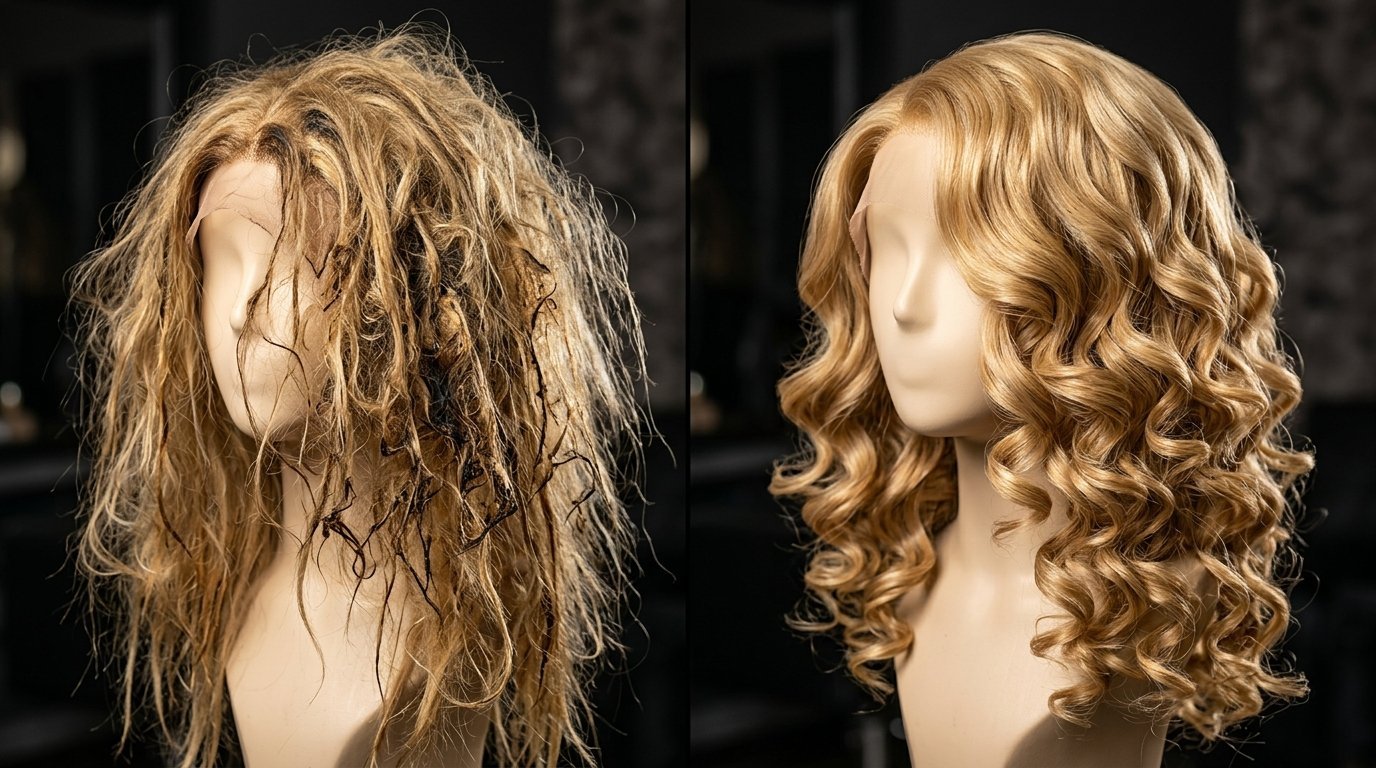
This question comes up constantly, and the standard one-line answer -- "no, you can't use heat on synthetic hair" -- is outdated and incomplete. It was accurate twenty years ago, when virtually all synthetic wigs and extensions were made from basic acrylic or polyester fiber that melted or frizzed permanently at any temperature a styling tool would reach. It is no longer universally true because heat-resistant synthetic fiber is now widely available and has been for over a decade.
The accurate answer in 2024 is: it depends on the fiber. Standard synthetic hair cannot handle heat from styling tools without sustaining permanent damage. Heat-resistant synthetic hair -- sometimes labeled "heat friendly," "heat proof," or "high temperature fiber" -- is specifically manufactured to tolerate moderate styling tool heat. Understanding which type you have, and what that means for how you can use it, is the essential first step before applying any heat.
What Happens When You Put Heat on Standard Synthetic Hair
Standard synthetic hair fiber -- basic acrylic, polyester, or similar polymer blends without heat-resistant treatment -- has a thermal deformation point of approximately 70 to 90°C (160 to 195°F). This is the temperature at which the polymer structure begins to soften and deform permanently.
Most consumer heat styling tools -- flat irons, curling irons, curling wands -- operate at temperatures between 150°C and 230°C at their lowest settings. This means that even the lowest heat setting on a typical flat iron is already 60 to 160°C above the point where standard synthetic fiber begins to permanently deform.
What this looks like in practice: the fiber at the point of tool contact melts slightly. As it cools, it fuses together in a glazed, shiny, permanently distorted clump. The affected section does not return to normal with washing or treatment -- the polymer has physically deformed and cannot be restored. In severe cases, the fiber burns and creates a chemical smell. In milder cases, the fiber simply becomes stiff, fused, and obviously damaged at the contact point.
This damage is irreversible. There is no product or technique that restores melted synthetic fiber. The affected section has to be cut away, and if the damage is extensive, the wig or extension is effectively ruined.
What Happens When You Put Heat on Heat-Resistant Synthetic Hair
Heat-resistant synthetic hair uses a different fiber formulation -- most commonly modacrylic or a specially engineered synthetic blend -- with a thermal deformation point significantly higher than standard fiber, typically 130 to 200°C (265 to 390°F) depending on the specific product and formulation.
When heat is applied within this range, the fiber softens slightly, accepts the shape imposed by the styling tool, and then holds that shape as it cools -- the same basic mechanism as human hair styling, but driven by polymer physics rather than biological protein behavior. The result is a style that holds until the next significant heat or water exposure resets it.
Within the safe temperature range, heat-resistant synthetic hair responds to styling tools without damage. The fiber takes curls from a curling iron, straightens under a flat iron, and can be restyled repeatedly within the same temperature limits. Outside the safe range -- above the fiber's maximum temperature tolerance -- the same melting and deformation that affects standard fiber occurs.
The key practical difference from human hair: heat-resistant synthetic fiber responds to heat styling at lower temperatures than natural hair does. A flat iron setting that requires 200°C+ to effectively style coarse natural hair will over-style heat-resistant synthetic fiber at the same temperature. The appropriate working range is typically 140 to 170°C -- meaningfully lower than what most people use on natural hair.
How to Tell If Your Synthetic Hair Can Handle Heat
Before applying any heat to a synthetic wig or extension, you need to know whether it is standard or heat-resistant fiber. The listing should tell you -- look for any of these labels:
- "Heat resistant" or "heat resistant fiber"
- "Heat friendly"
- "Heat safe" or "heat proof"
- "High temperature fiber" or "HT fiber"
- A specific maximum temperature rating in °C or °F
If none of these labels appear anywhere in the product listing or on the packaging, assume the hair is standard synthetic fiber and cannot be safely heat styled. "Can be styled" in a product description does not necessarily mean heat styling -- it may refer to combing, finger styling, or roller setting without heat.
If you are unsure and want to test before committing, the safest test method is: cut a small section of hair from an inconspicuous area (the nape is ideal). Hold the section with tongs or your fingers away from your body. Apply a flat iron set to its absolute lowest temperature for exactly two seconds. If the fiber shows no change in texture, sheen, or flexibility after cooling, it is likely heat resistant to at least that temperature level. If it shows any glazing, fusing, or stiffening, it is standard fiber and cannot be heat styled.
Can You Use Heat on Synthetic Hair Extensions?
The same rules apply to synthetic hair extensions -- clip-ins, tape-ins, weft extensions, and sew-in tracks -- as to synthetic wigs. Standard synthetic extensions cannot be heat styled. Heat-resistant synthetic extensions can be, within their temperature limit.
For installed synthetic weave in a sew-in, there is an additional consideration beyond the fiber type: the heat from a styling tool should not reach the braided base or the adhesive if tape-in extensions are used. Working section by section, keeping the flat iron or curling iron away from the root area and any bonding points, and not applying sustained heat to any single location reduces the risk of affecting the install integrity along with styling the hair itself.
One specific concern with heat on synthetic hair extensions in any format: the fiber at the weft (the sewn edge of extension hair) is typically the same fiber as the rest of the extension, but it is the most heat-sensitive point because it is the thinnest section of fiber. Applying heat directly to the weft edge of an extension -- even a heat-resistant one -- risks weakening the thread or bonding that holds the weft together. Keep heat styling away from the very top of any extension weft.
Safe Heat Styling Rules for Synthetic Hair -- Any Type
Even with confirmed heat-resistant synthetic hair, these rules reduce the risk of damage:
- Start at the lowest tool temperature and work up only if needed. Most heat-resistant synthetic hair styles effectively at 140 to 160°C. Starting higher than necessary means less margin for error.
- Never hold the tool stationary on one section. Keep it moving. Two seconds of continuous contact is a safe maximum; longer risks heat concentration damage even within the safe temperature range.
- Test on an inconspicuous section first. Every product is slightly different. Even with a heat-resistant label, a quick test protects the visible sections of the wig or extension from being the first place you discover a lower-than-expected tolerance.
- Allow each section to cool completely before handling. Styled synthetic fiber sets in position as it cools. Touching or arranging before it has set disrupts the new shape.
- Do not use hair dryers on standard synthetic hair at high heat. Hair dryers on high heat settings reach temperatures that damage standard synthetic fiber, particularly at close range. Low-heat dryer settings or a diffuser are safer, but air drying on a stand is the safest option for standard synthetic wigs and extensions.
Alternatives to Heat Styling for Standard Synthetic Hair
If your synthetic hair is standard fiber and cannot handle styling tools, the heat-free styling methods from our styling guide still give you real options: flexi rods and foam rollers with a damp set, the hot water set method (which uses near-boiling water instead of a tool), and finger styling with a light mist of detangling spray. These methods work on all synthetic fiber regardless of heat resistance and produce genuinely good results for waves, curls, and volume.
Frequently Asked Questions
What temperature can you use on synthetic hair extensions?
For standard synthetic hair extensions -- the kind without a heat-resistant label -- the answer is: none. Any heat styling tool temperature will damage standard synthetic fiber, because even the lowest settings on consumer flat irons and curling irons exceed the thermal deformation point of standard synthetic fiber. For heat-resistant synthetic hair extensions, the safe range is typically 130 to 180°C depending on the specific product -- always check the maximum temperature stated for your specific extensions rather than assuming a number. If no temperature is specified, start at 130°C, test on a small section, and increase only if needed and the test shows no damage. The important practical point: heat-resistant synthetic extensions require lower tool temperatures than human hair extensions, so reduce your usual styling temperature significantly when transitioning to synthetic fiber, even heat-resistant synthetic.
I accidentally used heat on my synthetic wig and it melted -- can it be fixed?
Unfortunately, no. Melted or fused synthetic fiber cannot be restored. The polymer has physically deformed, and no product, treatment, or technique reverses this. The practical options are: if the damage is confined to a small section, that section can be cut away and the wig may still be wearable with a modified style. If the damage is extensive or in a visible area that cannot be cut away without affecting the wig's overall look significantly, the wig is not recoverable. This is genuinely one of the most frustrating outcomes in wig care because the damage is so immediate and so total -- a few seconds of contact with a too-hot tool can ruin a section permanently. The prevention is entirely in checking the fiber type before any heat application and testing before styling the full wig. If you are finding that your current wig cannot be heat styled and you want that flexibility, the path forward is sourcing a heat-resistant synthetic wig rather than trying to force heat styling on standard fiber.
If you are a retailer or beauty supplier sourcing synthetic wigs and extensions -- including heat-resistant options clearly labeled with temperature ratings -- contact our team. We supply both standard and heat-resistant synthetic hair products and can help you stock inventory with clear, accurate specifications.
WhatsApp: +86 17347350405
Email: hello@voretrade.com