Wigs, Wigs, and More Wigs: What Nobody Tells You About Building a Real Wig Wardrobe
June 22, 2026 · Marcus Vore
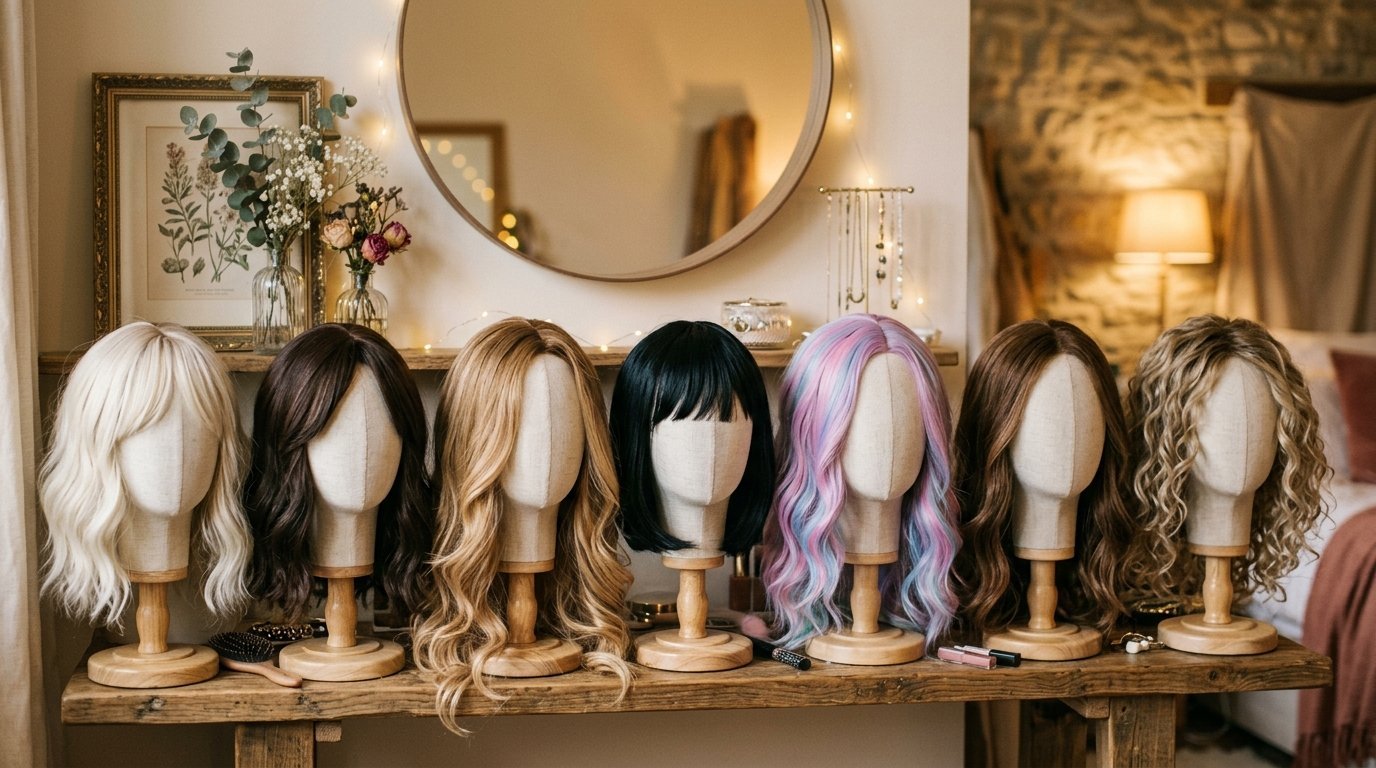
It starts with one wig. Maybe you bought it for a costume, or a bad hair day, or a big event where you wanted to look different. And then something happened that nobody warned you about: it worked. You liked it. You felt good in it. And you started thinking — if one wig can do this, what would two do? What about three?
Welcome to the part of the wig world that most guides skip over. Most wig buying advice is aimed at first-timers deciding on their first purchase. But there is a whole different conversation worth having about what comes after that — about wigs, hair, and more hair, about building an actual wig wardrobe rather than just owning a single piece. That is what this guide is about.
Why People End Up With Multiple Wigs (And Why That Is Completely Reasonable)
If you have never owned more than one wig, the idea of building a collection might sound excessive. But it follows the same logic as owning more than one pair of shoes or more than one outfit. Different situations call for different things. A short, professional-looking wig works for a work meeting. A long, wavy style works for a night out. Something fun and colorful works for a festival or a costume party. The idea that one wig should cover all of those situations is about as sensible as wearing the same shoes to the gym, the office, and a wedding.
For people dealing with hair loss — from alopecia, chemotherapy, or other conditions — a wig wardrobe has specific practical value beyond style variety. Having multiple wigs means you always have a clean, ready one while another is being washed and dried. It means one wig can rest while another is in use, which significantly extends the lifespan of both. It means you are not trapped wearing the same style every single day, which matters more than most people realize for confidence and mental well-being over the long term.
For wig enthusiasts who wear wigs by choice rather than necessity, wigs, wigs and more wigs is simply how the hobby works. Hair — whether natural or worn — is one of the most expressive parts of personal style, and the ability to change it entirely without any permanent commitment is genuinely unique to wigs. People who wear wigs by choice are often the most thoughtful about building their collection, because they have the freedom to be strategic about it.
How a Wig Wardrobe Actually Gets Built
Very few people plan a wig wardrobe from the start. Usually it grows organically — one piece leads to another, a specific situation creates a gap in the collection, a sale or a good deal makes a purchase easy to justify. But there is a better way to think about it, especially if you are starting to accumulate wigs, hair, and more hair accessories and want the collection to be functional rather than just a pile of impulse purchases.
Start With a Workhorse, Then Expand Outward
A "workhorse" wig is your most reliable, most versatile piece — the one you would reach for on any given day without much thought. Usually this is a style close to your natural hair color and a length that works for most situations. It should fit well enough that wearing it does not require effort. This is the piece you invest in most when it comes to quality, because it will take the most wear.
Once the workhorse is established, expansion becomes easier because you know what you already have covered. From there, a wig wardrobe tends to grow in one of two directions: filling practical gaps (you need something shorter for summer, or something you can exercise in, or something for formal occasions), or following curiosity (you have always wanted to try red, or you want to see what you look like with a pixie cut, or a fashion wig in a color you would never dye your real hair).
The Role of Synthetic Wigs in a Mixed Collection
Most serious wig collections contain both human hair and synthetic pieces, and there is logic to that mix. Human hair wigs are the premium option — they look and feel the most real, they can be heat-styled, and they last the longest with proper care. But they are expensive, and buying ten human hair wigs is not realistic for most people.
Synthetic wigs fill specific roles in a collection very effectively. A high-quality synthetic wig in a fun color or a dramatic style that you would only wear occasionally does not need to be human hair — you are not going to wear it daily, and the cost of a quality synthetic is far easier to justify for a piece you put on three times a year. Synthetic wigs also hold their style without resetting after washing, which is useful for pieces with elaborate shapes or specific styling that you want to stay consistent.
A practical collection often looks something like: one or two human hair wigs for daily or frequent wear, and several synthetics for variety, fun colors, occasional wear, and styles you want to try without the full commitment of a human hair investment.
Building Your Wigs and Hair Accessories Together
A wig wardrobe is not just wigs. Wigs hair and more — meaning the full ecosystem of wig-related products — matters for how the collection actually functions. Wig stands or heads for storage (one per wig, ideally). Wig grips or grip bands for secure wear. A good detangling brush and a wide-tooth comb. Wig-specific shampoo and conditioner. A few extra wig caps in different shades. Heat tools if you have heat-resistant pieces.
The accessories often get skipped or under-budgeted, and then the collection suffers for it. A $300 human hair wig stored badly — crumpled in a drawer, not on a stand — degrades faster than a $60 synthetic stored carefully on a foam head. The maintenance infrastructure is not glamorous, but it is what separates a functioning wig wardrobe from an expensive pile of increasingly damaged hair.
Mistakes People Make When Building a Wig Collection
Buying too many variations of the same thing is probably the most common. People find a style that works and then buy it in four different colors, and end up with a collection that offers very little actual variety. A better approach is to vary length and texture as much as color — a straight shoulder-length brunette, a wavy long blonde, and a short natural black are more versatile as a trio than three long straight wigs in different shades of brown.
Neglecting fit is another consistent problem in larger collections. A wig that technically fits but has always felt slightly loose gets worn less, matters less, and eventually gets forgotten in the back of the wardrobe. If a piece does not fit well, adjust it — most wig caps have adjustable straps, and wig stylists can also resize caps that are genuinely too large or too small. A collection of wigs that all fit well is more useful than a larger collection where half the pieces feel wrong.
Finally, buying cheap wigs impulsively and convincing yourself they were bargains. At a certain point, a collection full of $15 wigs that none of them looks particularly good is less valuable than a smaller collection of pieces you actually love wearing. It is better to own fewer wigs that genuinely work than wigs, wigs, and more wigs that collectively never quite deliver.
Frequently Asked Questions
How many wigs is "too many"?
There is no objective answer, but a practical one: too many wigs is when you have more than you can maintain. A wig that sits unused for a year without being properly stored will deteriorate. A collection you cannot keep track of will result in pieces being worn past their lifespan because you forgot to rotate them. Most experienced wig wearers land somewhere between five and fifteen pieces as a functional collection — enough variety to be genuinely useful, manageable enough to stay on top of maintenance. Beyond that, it becomes more of a collector's hobby than a practical wardrobe, which is fine if that is what you enjoy, but carries its own storage and maintenance demands.
Should I invest in one really good wig or several cheaper ones?
One really good wig almost always wins. This is the piece of advice experienced wig wearers give most consistently and that beginners least want to hear. A $350 human hair wig that fits well, looks natural, and lasts three years costs less per wear than three $120 wigs that each last one year and never look quite as convincing. The good wig also tends to change how you think about the rest of your collection — once you know what genuinely good looks like, you stop settling for pieces that do not actually work. Start with the quality anchor piece. Build from there when you have a clear sense of what gaps actually exist in your wardrobe and what you genuinely want to fill them with.
If you are a retailer, boutique, or wig business sourcing wigs at scale — whether you specialize in fashion wigs, everyday wear, or medical hair solutions — reach out to our team. We supply wig businesses with consistent inventory across styles, lengths, and constructions that let you build the kind of selection your customers are looking for.
WhatsApp: +86 17347350405
Email: hello@voretrade.com