Best Wig Shampoo and Conditioner: What Actually Works for Synthetic and Human Hair Wigs
July 30, 2026 · Marcus Vore
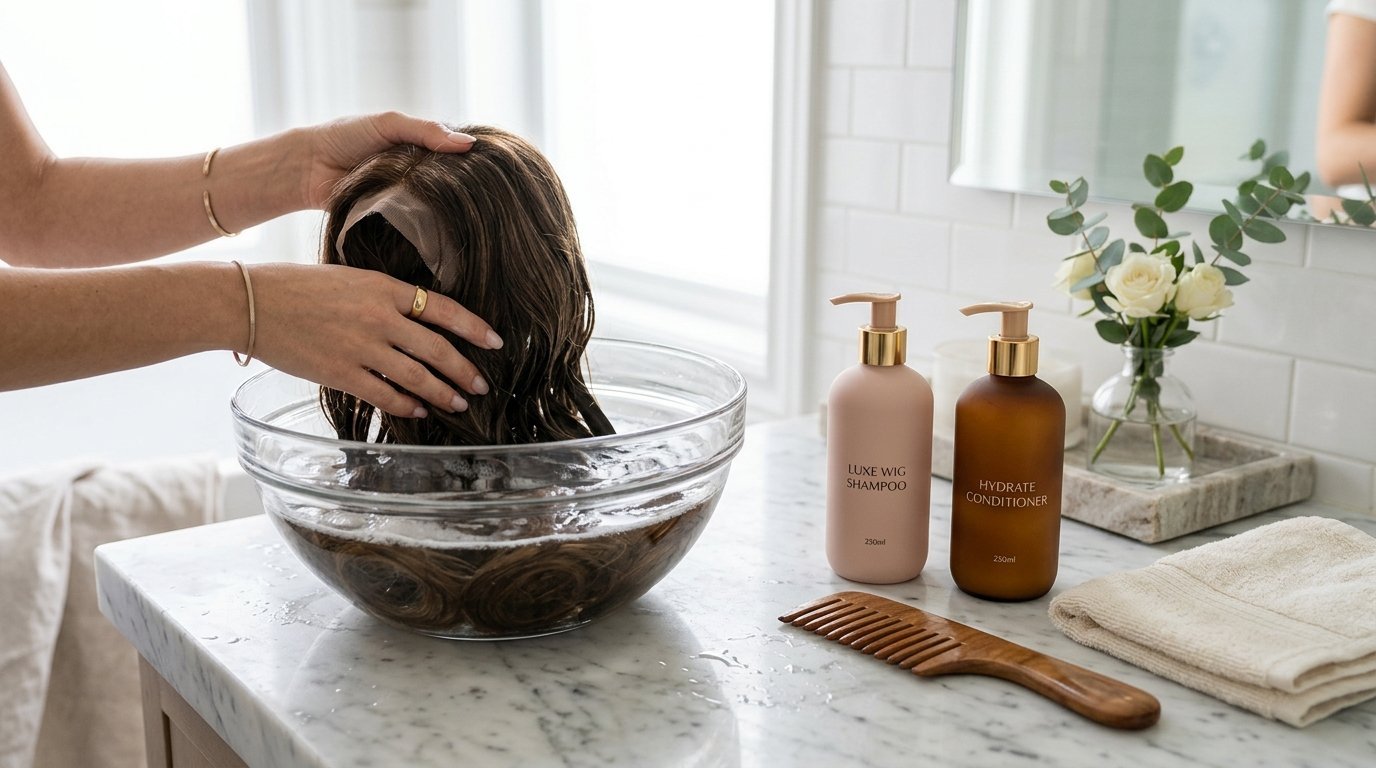
Washing a wig seems simple enough -- shampoo, rinse, condition, dry. But the details of which products you use and how you apply them make a significant difference to how long your wig continues to look good. A wig washed correctly with appropriate products every two to three weeks can maintain its appearance for a year or more. The same wig washed with the wrong products or with the wrong technique can show visible degradation within a few months -- dulled fiber, progressive tangling, style that will not reset properly after washing.
The fundamental issue is that shampoos and conditioners are formulated for specific fiber types, and human hair and synthetic fiber are genuinely different materials with different needs. A product that works beautifully on natural hair may do nothing useful on synthetic fiber -- or may actively harm it. And a product designed for synthetic wigs does not provide the moisturizing benefits that human hair wigs need. Getting the right product for the right fiber type is where wig washing goes right or wrong.
Wig Shampoo for Synthetic Hair: What You Actually Need
Synthetic hair fiber does not absorb moisture, does not have a cuticle, and does not produce or need natural oils. The job of a synthetic wig shampoo is therefore simple and narrow: remove product buildup, body oils transferred from the hands and scalp area, and environmental residue (smoke, cooking smells, dust) from the fiber surface without stripping the surface coating that gives synthetic hair its sheen and texture.
A dedicated synthetic wig shampoo is formulated specifically for this narrow job -- gentle surfactants that clean without stripping, no heavy conditioning agents designed for human hair cuticles, and no proteins or oils that are intended for biological fiber and leave residue on synthetic strands.
If a dedicated synthetic wig shampoo is not available, the most suitable substitute is a mild, clear shampoo with a minimal ingredient list -- baby shampoo is the most frequently recommended alternative because it has gentle surfactants and virtually no conditioning agents that would create buildup on synthetic fiber. A gentle clarifying shampoo (the kind designed to remove product buildup from natural hair without conditioning) also works adequately on synthetic fiber.
What to avoid in shampoo for synthetic wigs: sulfate-heavy formulas (too stripping for the fiber coating), conditioning shampoos or 2-in-1 shampoos (the conditioning agents build up on synthetic fiber), color-protecting shampoos (the active ingredients are irrelevant to synthetic fiber and some create buildup), and anything with heavy silicones or oils prominently listed.
Best Shampoo for Human Hair Wigs: Different Requirements
Human hair wigs respond to shampoo much like natural hair does -- because it is natural hair. The best shampoo for human hair wigs should clean thoroughly while maintaining the hair's moisture balance, which is more important in wigs than on natural hair because wigs do not receive the constant natural oil replenishment from a scalp.
A moisturizing or hydrating shampoo formulated for dry or processed hair is generally the best starting point for human hair wigs. Human hair wigs -- particularly those that have been dyed or processed to achieve their color -- have more in common with color-treated or chemically processed hair than with virgin natural hair, and they need comparable care. A color-safe, sulfate-free moisturizing shampoo preserves the hair's moisture and any color treatment without the drying effect of sulfate-based formulas.
For virgin human hair wigs (hair that has never been chemically processed), a gentle but thorough shampoo is appropriate -- the hair is in better condition than processed hair and does not require the intensive moisturizing support, but it still benefits from gentler formulations than harsh sulfate shampoos.
Clarifying shampoo has a specific role for human hair wigs: used once every four to six washes to remove product buildup that regular shampoo leaves behind over time. This is the same role clarifying shampoo plays in natural hair care routines, and it prevents the gradual dulling effect of accumulated product residue. Do not use clarifying shampoo every wash -- it is too stripping for regular use on wigs.
Best Conditioner for Wigs: Synthetic vs Human Hair
The conditioner question splits clearly between synthetic and human hair because the two fiber types respond to conditioning ingredients in completely different ways.
Conditioner for Synthetic Wigs
Standard hair conditioner deposits moisture and smoothing agents onto the hair cuticle through a chemical bonding process that requires the presence of a hair cuticle to work. Synthetic fiber has no cuticle. The conditioning ingredients that make regular conditioner effective on natural hair cannot perform their intended function on synthetic fiber -- they sit on the surface without bonding and eventually create buildup rather than conditioning.
What actually works as a conditioner for synthetic wigs is any product that reduces inter-fiber friction and static without requiring a cuticle to bond to. Dedicated synthetic wig conditioner is formulated for this. The widely-used alternative is diluted fabric softener -- approximately one tablespoon of fabric softener diluted in a basin of cool water as a conditioning rinse. Fabric softener reduces static and friction in synthetic fabric, and it works on synthetic fiber in wigs through the same mechanism. Applied as a rinse (not concentrated), left for one to two minutes, then rinsed with cool water, it leaves synthetic fiber noticeably softer and easier to comb.
Best Conditioner for Human Hair Wigs
Human hair wigs benefit from genuine moisturizing conditioner -- the kind that penetrates the hair shaft and deposits moisture and smoothing agents at the cortex. Because wig hair receives no natural scalp oil, the ends in particular tend to dry out over time, and a good moisturizing conditioner applied regularly addresses this.
A leave-in conditioner for human hair wigs is one of the most useful product investments for everyday maintenance -- applied after washing and before styling, it provides ongoing moisture support through wear. The best leave-in conditioner for human hair wigs is lightweight enough not to make the hair feel heavy or oily, but substantive enough to meaningfully maintain moisture between washes.
Deep conditioning treatment -- a more concentrated conditioner left on for fifteen to thirty minutes before rinsing -- is useful for human hair wigs every four to six washes, particularly for wigs that are showing signs of dryness, tangles, or brittleness. This is the same treatment used on natural dry or processed hair, and it works on wig hair for the same reasons.
The Complete Wig Washing Routine
The product choice matters, but the washing technique is equally important. Here is the correct approach for both wig types:
For synthetic wigs: Fill a basin with cool water (never warm -- heat affects synthetic fiber). Add a small amount of synthetic wig shampoo and mix gently. Submerge the wig and swirl gently for one to two minutes without rubbing or scrubbing. Rinse thoroughly with cool water. Apply diluted synthetic conditioner (fabric softener dilution or dedicated synthetic wig conditioner), leave two minutes, rinse. Gently squeeze -- do not wring -- excess water. Place on a wig stand and air dry completely.
For human hair wigs: Detangle thoroughly before wetting -- wet hair is more prone to breakage. Fill a basin with lukewarm water. Apply a small amount of wig shampoo to the wig, work through gently from roots to ends without circular rubbing that causes tangling. Rinse with lukewarm water until completely clean. Apply conditioner from mid-lengths to ends (not the cap or roots, where product buildup at the wefts causes problems). Leave two to five minutes. Rinse thoroughly. For a leave-in conditioner, apply a small amount to damp hair before styling. Air dry on a wig stand or use a diffuser on low heat.
How Often Should You Wash Your Wig?
Washing frequency is a common question with a practical answer: wash when the wig visibly needs it, not on a fixed schedule regardless of condition.
For daily wearers, this typically means washing every two to three weeks. For occasional wearers, once every four to six wears is a reasonable guideline. Signs that a wig needs washing regardless of schedule: visible dullness, any stiffness or slightly sticky feeling from product buildup, odor absorbed from the environment, or a general flatness that cannot be resolved by styling.
Over-washing is a real problem that shortens wig life -- every wash removes some of the surface coating from synthetic fiber and some natural moisture from human hair fiber. Washing less frequently than needed and using a wig refresh spray between washes to maintain appearance extends the wig's appearance life.
Frequently Asked Questions
Can I use regular shampoo on a human hair wig?
Yes -- human hair wigs respond to regular shampoo in the same way natural hair does, so most gentle shampoos designed for human hair work adequately on human hair wigs. The key qualifications: avoid very harsh, high-sulfate shampoos (the kind that strip oil aggressively, like some dandruff shampoos) because wigs cannot replenish moisture the way scalp-attached hair does. Moisturizing shampoos, color-safe shampoos, and gentle everyday shampoos all work well on human hair wigs. The best shampoo for human hair wigs is therefore not a specific product category but a product quality: gentle, moisturizing, sulfate-free or low-sulfate. The same shampoo you would use on color-treated or dry natural hair is appropriate for a human hair wig. If you have a wig that is showing dryness or brittleness, a more intensively moisturizing formula (argan oil shampoo, hydrating shampoo for dry hair) can help. What you should definitely not use on any wig: two-in-one shampoo-conditioner combinations, which leave a conditioning residue that builds up at the weft and cap over repeated use.
What is the mildest shampoo safe for all wig types?
Baby shampoo is consistently cited as the mildest shampoo safe for both synthetic and human hair wigs, and for good reason: it is formulated to be gentle enough for infant skin and hair, which means its surfactants are mild and its ingredient list is minimal. It contains no heavy conditioning agents that build up on synthetic fiber and no harsh detergents that strip human hair. It cleans effectively without the risks of either excessive stripping (harsh shampoos) or accumulation (conditioning shampoos). The main limitation of baby shampoo for human hair wigs is that it is so gentle it may not remove heavy product buildup effectively in a single wash -- for very product-coated human hair wigs, a gentle clarifying shampoo once every four to six washes is more effective than baby shampoo alone for a deep clean. For synthetic wigs, baby shampoo is a reliable everyday wig shampoo option when a dedicated synthetic product is unavailable.
If you are a wig retailer or beauty supplier looking to source wig care products -- shampoo, conditioner, and full wig care kits -- alongside wig inventory at wholesale pricing, contact our team. We supply wig accessories and care products for businesses of all sizes.
WhatsApp: +86 17347350405
Email: hello@voretrade.com