Best Oil for Wigs: What Works for Human Hair Wigs vs. Synthetic Wigs and How to Apply It Right
August 13, 2026 · Marcus Vore
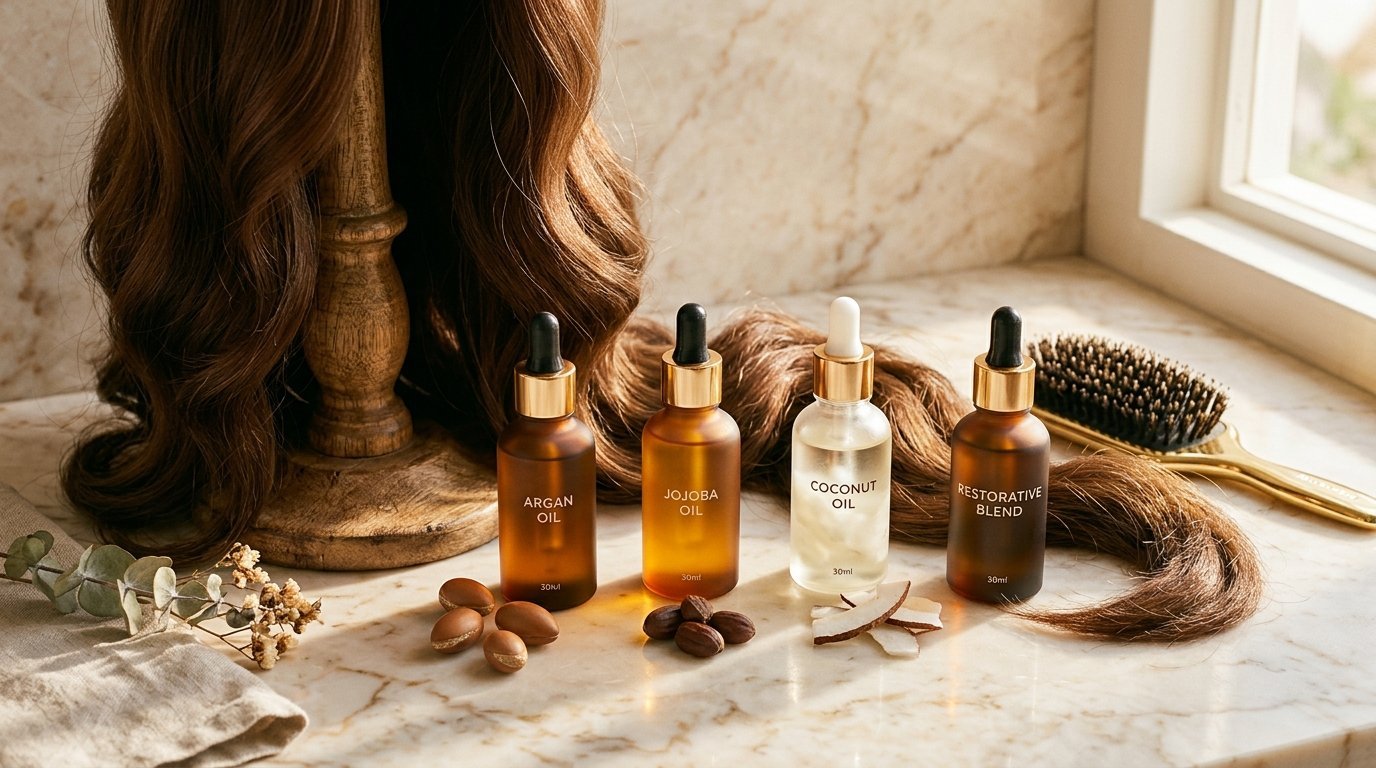
Oil and wigs have a complicated relationship. The instinct to add oil to dry, dull-looking wig hair is correct -- oil does improve both appearance and manageability. But what oil you use, how much you use, and where you apply it differs significantly depending on whether the wig is human hair or synthetic, and what texture it has. Get this right and you add noticeable life and luster to your wig. Get it wrong and you add greasiness, buildup, and potentially accelerated wig cap deterioration.
This guide covers the best oil for wigs across both human hair and synthetic fiber, why the two categories need different approaches, and exactly how to apply oil to a wig for the best results without the common mistakes.
Oil for Human Hair Wigs vs. Synthetic Wigs: Fundamentally Different Goals
Before getting into specific products, it helps to understand that oil serves a completely different purpose in human hair wigs versus synthetic wigs:
Human Hair Wigs: Oil for Moisture and Penetration
Human hair is a biological material -- keratin protein with a lipid-containing cuticle layer. Natural hair benefits from oil both at the surface (smoothing the cuticle, reducing friction and frizz) and internally (certain oils can penetrate the hair shaft and support moisture retention from within). A best oil for human hair wigs needs to address the wig's specific condition: dryer than natural growing hair due to the absence of scalp oil supply, and often more porous from processing history. The right oils provide internal moisture support, surface smoothing, and improved manageability without heaviness or buildup.
Synthetic Wigs: Oil for Surface Treatment Only
Synthetic fiber is a plastic polymer. It cannot absorb oil the way human hair does -- oil sits on the surface rather than penetrating the fiber. The benefit of using the best oil for synthetic wigs is therefore surface-level: reducing static electricity buildup (which causes synthetic fiber to frizz and cling), adding surface lubrication that reduces tangling between strands, and improving the visual appearance by adding a controlled sheen. The key with synthetic fiber is using oils that are extremely lightweight and that can be applied in tiny amounts without leaving a residue -- because on synthetic fiber, any excess has nowhere to absorb and simply sits on the surface looking greasy.
Best Oil for Human Hair Wigs
Argan Oil (Top Recommendation)
Argan oil is the most consistently recommended oil in the wig care community for human hair wigs, and the recommendation is well-earned. Its molecular structure is small enough to penetrate the hair shaft to some extent while also providing excellent surface conditioning. It is relatively light in texture compared to other nourishing oils, which means it can be applied in meaningful amounts without leaving the hair looking or feeling greasy. Argan oil improves shine, reduces frizz, and provides ongoing moisture support between wash sessions. It also provides mild UV protection, which helps slow the color degradation that direct sunlight causes in human hair wigs over time.
Best used as: a daily or every-other-day finishing treatment. 2-4 drops warmed between the palms and smoothed from mid-shaft to ends.
Jojoba Oil (Best for Scalp Area and Cap)
Jojoba oil is technically a liquid wax rather than a true oil, which gives it unique properties relevant to wig care. Its molecular structure closely resembles the structure of human sebum -- the scalp's natural oil. Applied lightly to the area near the wig cap (the roots of the wig hair), jojoba oil provides conditioning that most closely mimics what scalp oil would naturally provide to growing hair. It is also non-comedogenic and unlikely to cause any skin irritation if it comes into contact with the forehead or scalp skin around the wig perimeter. Jojoba is one of the most stable oils and resists rancidity, which means it does not develop an unpleasant smell over time the way some other natural oils do.
Best used as: a targeted treatment near the root/cap area where the hair is driest. 1-2 drops applied with fingertips to the hair nearest the cap.
Coconut Oil (Best for Intensive Moisture on Dry or Damaged Wigs)
Coconut oil is one of the most studied penetrating oils for human hair. Its lauric acid content allows it to penetrate the hair shaft and reduce protein loss -- a property that makes it particularly valuable for wigs that have been damaged by processing or heat styling. However, coconut oil is significantly heavier than argan or jojoba oil, which means it must be used sparingly and typically as a treatment rather than a daily finish. It works best applied as a pre-wash oil treatment (applied to the wig, left for 30-60 minutes, then washed out) rather than as a leave-in product, where the risk of buildup is higher. Important note: coconut oil solidifies below about 76°F (24°C). If you are using solid coconut oil on a wig, warm it between your hands until fully liquid before applying -- never apply solid coconut oil directly to wig hair.
Best used as: a pre-wash intensive treatment for dry or processed wigs. Not recommended as a daily leave-in product.
Sweet Almond Oil (Best for Fine or Straight-Textured Wigs)
Sweet almond oil is lighter than coconut oil but richer than argan in its surface conditioning properties. It is particularly well-suited to fine-textured straight human hair wigs where heavier oils like coconut or olive would weigh the hair down and reduce volume. Sweet almond oil provides excellent shine and softness at very small amounts, making it a versatile finishing oil for lightweight wig textures.
Avocado Oil (Best for Thick or Dry-Textured Wigs)
Avocado oil is one of the heavier penetrating oils, with a richness that makes it better suited to thicker, dryer, or coarser human hair wig textures than to fine or straight ones. For kinky, coily, or very textured human hair wigs that require substantial moisture, avocado oil provides both penetration and a more generous surface conditioning than lighter alternatives. Use in moderation on any wig -- a little goes a long way even with thicker textures.
Best Oil for Synthetic Wigs
The options for best oil for synthetic wigs are more limited because synthetic polymer fiber does not absorb and benefit from oil the way human hair does. The practical options:
Silicone Serum (Strongest Recommendation for Synthetic)
Technically not an oil but functions similarly for synthetic fiber care -- a pure silicone serum (dimethicone or cyclomethicone) applied in tiny amounts to synthetic wig fiber provides the most consistent benefit of anything in this category. It reduces static, adds a controlled sheen, smooths the fiber surface to reduce tangling, and improves the way the fiber moves without leaving a greasy residue. This is the product that wig care specialists most commonly use on synthetic wigs. A single drop distributed over both palms and then smoothed through the wig's lengths and ends is typically sufficient.
Argan Oil (Light Application Only)
Argan oil can be used on synthetic wigs in extremely small amounts -- one to two drops maximum -- to add surface sheen and reduce static. At this quantity, it provides a visual improvement without leaving visible residue. The risk with argan oil on synthetic fiber: using more than a tiny amount results in an obviously greasy appearance that does not improve and does not absorb. Err strongly on the side of too little rather than too much.
Glycerin-Based Anti-Static Spray
For synthetic wigs specifically struggling with static -- frizzing, flyaways, fiber that clings to fabric -- a diluted glycerin spray (a few drops of vegetable glycerin in water) addresses the static issue without adding any oil weight to the fiber. This works differently from oil-based products: glycerin is a humectant that attracts moisture from the air to the fiber surface, which neutralizes the static charge rather than coating it. In moderate humidity environments, this is often more effective than any oil-based approach for static control on synthetic wigs.
How to Apply Oil to a Wig: The Right Technique
- Start with less than you think you need: The most common oil application mistake is using too much. With any wig type, start with 1-3 drops maximum, warm between palms, then apply. You can always add a small amount more; removing excess oil requires washing.
- Apply from mid-shaft to ends, not at the roots: The ends are the driest part of any wig and the most in need of oil. The root area, near the cap, already has the most protected environment. Applying oil at the roots first concentrates product where it is least needed and can cause the cap area to feel heavy and look oily near the hairline.
- Do not apply oil directly to the cap: Oil saturating the cap material can weaken adhesives, deteriorate certain cap materials over time, and cause an unpleasant smell as the oil interacts with sweat residue in the cap.
- Apply after washing and conditioning, not before: Oil applied after the hair is clean and has been conditioned seals in the conditioning benefit. Oil applied to unconditioned hair on top of product buildup simply adds to the buildup rather than helping.
Frequently Asked Questions
Can I use olive oil on my human hair wig?
Olive oil can be used on human hair wigs, but it is better suited as a treatment than a regular leave-in product due to its weight. Extra virgin olive oil has good penetration properties for thicker hair types and can provide excellent moisture in a pre-wash treatment (apply, wait 30-60 minutes, then wash out). As a leave-in product, however, olive oil is quite heavy and can weigh down the wig significantly -- particularly in longer or finer-textured wigs -- and can develop a faintly rancid smell over time if used repeatedly as a leave-in without frequent washing. If you want to use olive oil on your wig, the pre-wash hot oil treatment approach (slightly warmed olive oil applied generously, covered with a plastic cap for 30-60 minutes, then washed and conditioned as normal) gives you the penetrating moisture benefit of the oil without the buildup and heaviness risks of using it as a leave-in. For regular daily or between-wash use, lighter oils like argan or jojoba provide similar benefits with significantly less risk of buildup or odor development over time.
Will using oil on my wig cause buildup, and how do I prevent it?
Oil buildup is a real concern with any wig, and it affects both human hair wigs and synthetic ones -- though it is easier to remove from human hair through washing than from synthetic fiber, where it can sit on the fiber surface and accumulate more persistently. Prevention is more effective than treatment: use the smallest effective amount of oil (typically 1-3 drops per application), choose lighter oils over heavier ones for regular use (argan over coconut for daily application), and follow a consistent washing schedule. Signs that oil buildup has developed on a human hair wig: the hair near the roots and mid-shaft looks or feels persistently greasy even after the immediate post-application period, the wig feels heavier than usual, and it may have a slightly rancid or stale smell if oil has accumulated without being fully removed in washing. The fix: a clarifying wash with a mild clarifying shampoo (used once, not as a regular practice) removes accumulated oil effectively from human hair wigs. For synthetic wigs with oil buildup: a gentle soak in cool water with a small amount of dish soap (which cuts oil effectively) followed by thorough rinsing and a fabric softener conditioning rinse is the most effective approach to removing oil from synthetic fiber without damaging the fiber's surface treatment.
If you are a wig retailer, beauty supply business, or salon operator looking to source human hair wigs and synthetic wigs at wholesale pricing, contact our sourcing team. We supply wigs across fiber types and cap constructions for retail businesses at competitive wholesale pricing.
WhatsApp: +86 17347350405
Email: hello@voretrade.com